

For a long time, the fullback was associated with a relatively simple role: defend their flank, support attacks and provide an outside option for the ball carrier. But the evolution of football has gradually transformed the position. With the widespread use of wingers who move inside, midfielders capable of making forward runs and possession-based systems, the spaces on the flanks are no longer always occupied by fullbacks. Some coaches now ask them to leave their flank and move into midfield.
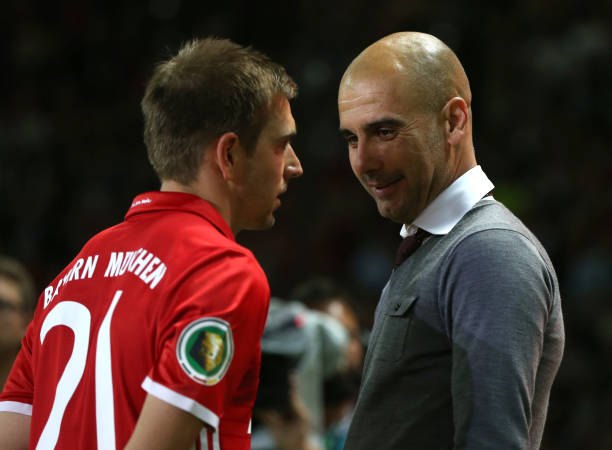
This evolution has given rise to the concept of the inverted fullback. A term particularly associated with Pep Guardiola, but one that is part of a broader tactical evolution. From Philipp Lahm to Manchester City, through Trent Alexander-Arnold and Enzo Maresca’s teams, the fullback has become a genuine tool for building and controlling the game.
From traditionnal flank player to positional player

Originally, the fullback was primarily an outside defender. In a back four, they occupy the spaces close to the touchline and must protect their side while providing width when their team attacks. As systems have evolved, their attacking role has developed considerably: modern fullbacks have become capable of making repeated runs, overlapping their winger, crossing or contributing to the progression of the ball.
But this evolution has also created a new problem. When the winger moves inside to get closer to the striker or midfielder, the fullback can find themselves with the entire flank to occupy alone. They can then choose to push forward to create an overlap, or do exactly the opposite: temporarily abandon the flank and move closer to the heart of the game.
This is where the inverted fullback comes in. Unlike a wingback, which is primarily an attacking role in a back-three system, the inverted fullback remains a defender in a back four but adopts a more central position when their team has the ball. Their movement is designed in particular to create a numerical advantage in midfield and provide an additional passing option for defenders and midfielders.
The idea is therefore not simply to ask a fullback to “play midfield.” It is about a movement designed within a collective system: the player changes zones in order to modify their team’s structure in possession.
The role of full back moving inside
The principle is particularly visible in teams that look to build from the back. When a fullback leaves their flank to move into the center, they add a player to the first or second line of midfield. A team initially playing in a 4-3-3 can therefore take on a different shape in possession, sometimes resembling a 3-2-4-1 or a 3-4-3 depending on the movements of the other players.
The main objective is to create a numerical advantage in the center. The fullback becomes an additional option for playing out under pressure, combining in one or two touches and finding players positioned higher up the pitch. They can also create new passing angles for the center backs.
This position therefore requires qualities that are very different from those of a traditional fullback. The player must be able to receive the ball in much more congested areas, play under pressure, orient their first touch and find a vertical pass or switch of play. Their vision and technical ability become almost as important as their ability to defend their flank.
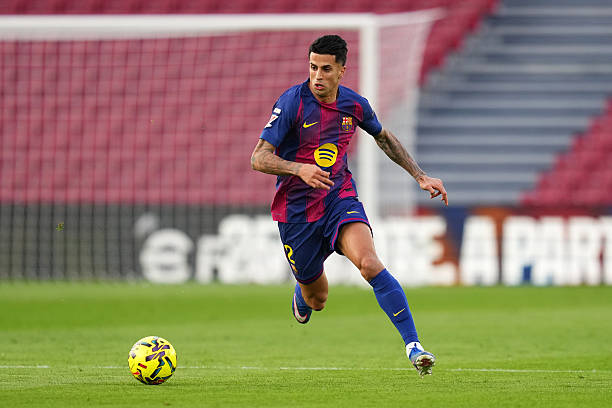
This explains why certain players are particularly well suited to the role. At Manchester City, João Cancelo could position himself very centrally while retaining the ability to progress, create and even shoot. At Liverpool, Trent Alexander-Arnold gradually evolved from a fullback heavily focused on overlapping runs into a player capable of occupying central areas and using his exceptional passing ability to control the game. Philipp Lahm had already embodied this evolution under Guardiola at Bayern Munich.
But the movement also has a defensive dimension. When the ball is lost, the inverted fullback is already in a central position. They can therefore immediately participate in the counter-press, close a passing lane or prevent the opposition from quickly finding their striker. The player is thus positioned ideally to slow down a transition before returning to their defensive position on the flank.
However, this organization also carries an obvious risk: when a fullback leaves their flank, the outside space becomes vulnerable. If the ball is lost and the opponent manages to bypass the press, the team can find itself with fewer players in its defensive line. The inverted fullback must therefore be able to understand when to move inside, but also when to quickly return to defend the flank.
A weapon for controlling game
The value of the inverted fullback ultimately goes beyond simply building from the back. It allows a team to alter its entire structure.
By adding a player to midfield, the system can give the other midfielders more freedom. An attacking No. 8 can position themselves higher between the lines, for example, because they know that an additional player is securing the circulation behind them. The fullback can also attract an opposing player inside. If the opposing defender or winger decides to follow them, this then creates space on the flank for a winger or another attacking player.
This ability to create several problems simultaneously is what makes the role so interesting. The inverted fullback can act as a passing option, attract an opponent, protect a transition and allow another player to move higher up the pitch.
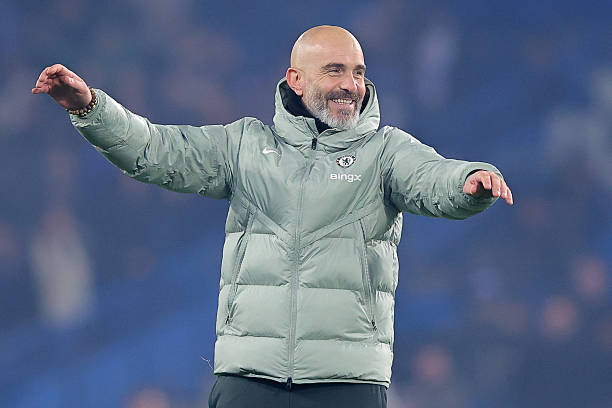
Enzo Maresca has notably relied on this logic with his teams. At Leicester, his 4-3-3 could transform with a fullback moving inside to form a double pivot alongside the defensive midfielder. This structure allowed the team to create a free player in buildup and better resist the opposition press. At Chelsea and then Manchester City, this desire to build with a highly organized structure and generate numerical advantages followed the same positional-play philosophy.
The modern fullback is therefore no longer simply the player who runs fastest down the flank. They can be the player who best understands when to leave it. Their role has become a question of geometry: occupying the right space at the right time in order to create an overload, free up a teammate or secure a transition.
From outside defender to a genuine piece of the midfield, the fullback has therefore evolved into a completely different kind of player. And in a sport where every square yard matters, their ability to move inside can sometimes be just as important as their ability to get forward on the outside.