

There is a tidy bit of symmetry to all of this. Major League Soccer exists because the United States promised FIFA it would build a professional league in exchange for hosting the 1994 World Cup. Thirty one seasons later, the world’s biggest tournament has returned to North American soil, and the league it created is no longer a fragile experiment. It is a business worth billions, standing at the most important crossroads of its history.
Don Garber has been blunt about what this summer means. The MLS commissioner does not want the World Cup to feel like a concert that empties the building the moment the lights come up. He wants it to be a front porch, the thing that pulls people inside a house they did not know they wanted to enter. Whether that vision holds is the question that will define the next decade of American soccer.

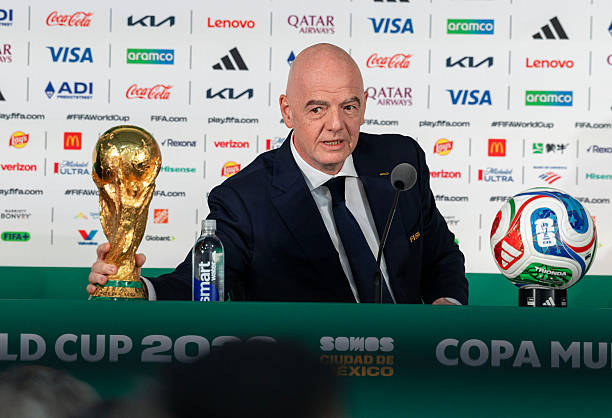
A tournament built on MLS infrastructure
What separates 2026 from past tournaments is how deeply MLS is woven into the fabric of the event. Every one of the 13 World Cup host cities in the United States and Canada is home to an MLS club. National teams are training at facilities the league spent years building. The stadiums, the academies, the staff: much of the machinery that makes this tournament run was paid for and assembled by MLS owners.
- More than 11 billion dollars has been invested in MLS stadiums and infrastructure across North America.
That number reframes the league’s role. MLS is not a spectator at its own party. It is the host, and roughly 35 of its stadiums and training centers are being used for World Cup purposes. The visibility is enormous, and the timing could not be sharper.
The audience is already arriving
The most encouraging sign is that the surge started before a single World Cup match kicked off. Through the first three months of the 2026 season, MLS averaged 7.9 million live match viewers per week across streaming and television, a jump of 62 percent compared to the same stretch last year. That is not the slow drift of a maturing league. That is a spike.
Attendance tells a similar story. The league drew an average of 22,109 fans per match through May, with more than 4.8 million fans walking through the gates in three months. Several clubs set franchise records, and three matches cleared 72,000 spectators. For a league once mocked as a retirement home for aging European stars, the buildings are full and loud.
- A record 45 MLS players are competing at the 2026 World Cup, the most the league has ever sent.
That last figure is the quiet revolution. The average MLS player is now 26 years old, and the academies are producing talent that ends up on national teams rather than padding rosters at the close of long careers.
The calendar revolution nobody saw coming this fast
Here is where the reshaping becomes literal. In November 2025, MLS owners voted to tear up the schedule the league had used since 1996 and adopt a calendar that runs from summer into spring, mirroring Europe’s biggest leagues. The change begins in 2027 after a short transition season, and it solves problems that have nagged the league for years.
Aligning with the global calendar means MLS clubs can finally buy and sell players during the windows when the rest of the world is trading. It means fewer interruptions for international breaks. It means playoffs in May instead of frozen December nights. The World Cup did not cause this decision, but it sharpened the urgency. A league that wants to be taken seriously on the global stage cannot keep playing by its own clock.
The money question
Behind the romance sits a colder calculation. MLS franchises have become genuinely valuable assets, with the average club now worth about 767 million dollars and five clubs valued above a billion. Owners did not invest in this World Cup out of patriotism alone. They are betting that global attention converts into something durable.
The next few years will test that bet directly. The league’s collective bargaining agreement with its players expires on January 31, 2028, and its media rights deal runs out in 2029. Both negotiations will be shaped by what happens after this summer. If MLS can prove that World Cup curiosity becomes loyalty to the regular season, it walks into those rooms with leverage. If the interest fades like a passing trend, it negotiates from a weaker position.
- Since the start of 2024, MLS clubs have spent or received more than 1 billion dollars in player transfers, more than the league’s first 25 years combined.
What reshaped really means
The honest answer is that nobody knows yet whether 2026 transforms MLS or merely flatters it. Tournaments have lifted host nations before, and the bounce has sometimes faded once the trophy left town. Garber and his owners clearly understand this. Their entire strategy, from the calendar overhaul to the infrastructure spending to the Apple partnership, is built to capture momentum that would otherwise evaporate.
What is different this time is preparation. MLS did not stumble into the World Cup. It spent eight years building toward it, treating the tournament as a North Star rather than a windfall. The league reaches nearly 113 million social media followers and owns the youngest fan base in American team sports. The raw materials for a lasting shift are all present.
The reshaping, then, is less about a single summer and more about whether MLS uses it correctly. The 2026 World Cup handed American soccer its loudest microphone ever. What the league says into it, and whether anyone is still listening in September, will decide whether this was a celebration or a turning point.
 Cristiano Ronaldo
 Lionel Messi