

Today, Paris Saint-Germain stand among the giants of European football. Back-to-back Champions League titles in 2025 and 2026 have transformed the French club into a historic continental powerhouse. But what if one goal, one result and one disastrous season had changed everything? What if PSG had actually been relegated to Ligue 2 in 2008?
In May 2026, Paris Saint-Germain completed another extraordinary chapter in their history. After winning their first Champions League title in 2025, Luis Enrique’s team successfully defended the trophy against Arsenal in Budapest, becoming the first French club to win Europe’s most prestigious competition twice and only the second club in the modern Champions League era to retain the title. The achievement represents the culmination of a transformation that has taken Paris from a club with limited European pedigree to one of the most powerful institutions in world football. Yet the road to this historic success could have been very different. Before Qatar Sports Investments arrived, before Neymar, Kylian Mbappé and Lionel Messi, before the Parc des Princes became a stage for the world’s biggest stars, PSG were fighting for their survival in the French top flight. In the spring of 2008, the capital club came remarkably close to relegation. A disastrous campaign, financial uncertainty and a team struggling to find its identity brought Paris to the edge of an unprecedented sporting collapse. The club eventually survived thanks to Amara Diané, whose decisive goals against Sochaux on May 17, 2008, secured a 2-1 victory and preserved PSG’s place in Ligue 1. But what if those goals had never arrived? What if Paris had lost at the Stade Auguste-Bonal and suffered relegation to the second division for the first time since 1974? This is the story of an alternative footballing universe in which one of the most important moments in PSG history never happened.
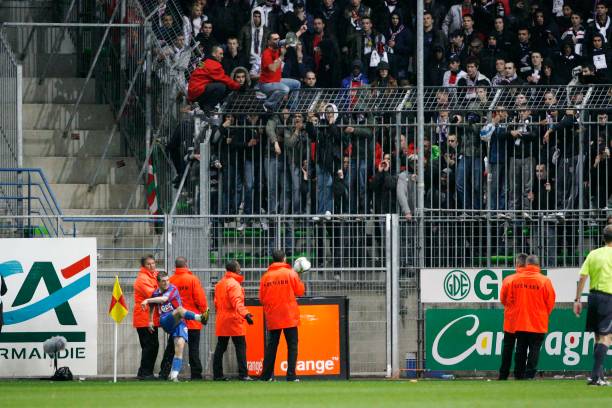
The starting point is familiar. During the 2007-08 season, PSG were experiencing one of the darkest periods in their history. Despite having a relatively substantial budget, the team struggled throughout the campaign under Paul Le Guen. Internal tensions, inconsistent performances and growing dissatisfaction among supporters created an increasingly toxic atmosphere. The defeat against Caen on April 19, 2008, was particularly devastating. Paris lost 3-0 at the Stade Michel-d’Ornano, dropping into the relegation zone with just four matches remaining. They were three points behind the first team outside the bottom three and faced the very real possibility of leaving the top division for the first time in more than three decades. Their survival ultimately depended on the final matchday against Sochaux. In reality, Diané scored twice to secure victory, while results elsewhere also helped Paris avoid relegation. In this fictional timeline, however, the Ivorian forward fails to become the club’s savior. PSG lose 2-1 at Bonal, and the final whistle confirms their relegation to Ligue 2.
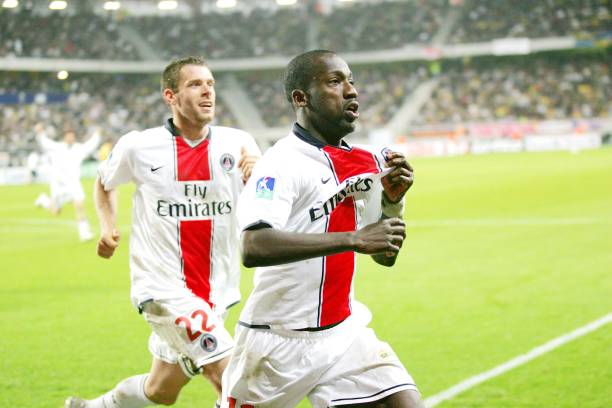
The consequences are immediate. The club enters the summer of 2008 in a state of financial and sporting uncertainty. Its commercial appeal takes a considerable hit, while the prospect of playing against smaller clubs across France creates new problems for a team accustomed to the expectations of the capital. Players who had joined PSG to compete in Ligue 1 begin considering their futures. Several senior figures depart, while the club is forced to rely on a mixture of experienced professionals, academy graduates and players willing to accept the challenge of rebuilding. Pauleta’s departure becomes an even more painful symbol of the end of an era. The Portuguese striker, already preparing to retire, leaves a club that has failed to protect its place among the country’s elite. The atmosphere around the Parc des Princes changes dramatically. Instead of dreaming about European qualification, supporters are confronted with away trips to Clermont, Tours, Sedan and Boulogne-sur-Mer.
The initial sporting objective is straightforward: return to Ligue 1 as quickly as possible. Yet the transition proves more difficult than expected. Financial pressure forces PSG to reduce their wage bill, and the club can no longer compete for the most attractive domestic players. The project becomes less about immediate success and more about rebuilding an institution that has lost credibility. In the summer of 2009, Paris finally appoint a new sporting structure and begin placing greater emphasis on youth development. The club remains competitive in Ligue 2 but discovers that promotion is not guaranteed simply because of its name. After an inconsistent first campaign, PSG secure promotion in 2010, finishing among the leading teams in the division. Their return to the top flight brings relief, but the financial damage has already altered the club’s long-term ambitions.
The qatari revolution that never happened
In reality, the summer of 2011 changed everything. Qatar Sports Investments acquired control of Paris Saint-Germain, with Nasser Al-Khelaifi becoming the club’s president. The new ownership brought unprecedented financial resources and a clear ambition: transform PSG into one of the biggest clubs in the world and win the Champions League. The arrival of players such as Javier Pastore, Thiago Silva, Zlatan Ibrahimović, Edinson Cavani, Ángel Di María and later Neymar and Mbappé gradually established Paris as a major force in European football. In our alternate timeline, however, the relegation of 2008 has created a very different environment. PSG have returned to Ligue 1, but their reputation and commercial strength have suffered. The club is no longer viewed as the obvious vehicle for an ambitious international investment project. QSI eventually decides to pursue other opportunities, leaving Paris without the financial revolution that transformed its real-life trajectory.
Without Qatari investment, PSG remain an ambitious but financially constrained French club. Their recruitment policy becomes more dependent on emerging French talent, free transfers and players looking to relaunch their careers. Instead of attracting the biggest international names, Paris attempt to establish a sustainable sporting identity. The club gradually becomes a regular contender for European qualification, but the financial gap separating it from Lyon, Marseille and the wealthiest European teams remains difficult to overcome. The absence of a major investor also changes the balance of power in French football. Lyon retain a stronger position for longer, Marseille enjoy more opportunities to compete for domestic titles, while Monaco and Lille become increasingly important competitors. PSG are no longer the club capable of buying their way to the top of the transfer market.
The consequences become particularly visible during the 2010s. In reality, Zlatan Ibrahimović arrived in Paris in 2012 and immediately changed the club’s sporting and commercial profile. His personality, goalscoring ability and international reputation helped establish PSG as a global brand. In this alternative history, however, the Swedish striker never wears the Parisian shirt. The same applies to Thiago Silva, Neymar, Mbappé and several other superstars who became central to the club’s modern identity. Instead, PSG focus on developing their academy and recruiting promising players from the French market. Their most successful seasons might involve occasional domestic cup victories, qualification for the Europa League and perhaps a memorable run in the Champions League. But the idea of dominating Ligue 1 with extraordinary financial resources remains a distant dream.
One of the biggest differences concerns the development of French football itself. The real-life PSG project changed the economic structure of Ligue 1, attracting international attention, increasing the league’s commercial visibility and creating a new reference point for ambitious clubs. Without that financial power, the French championship might have remained more competitive at the top, but it would also have struggled to generate the same global exposure. Monaco’s title-winning campaign in 2017, for example, would have taken place in a different domestic landscape, while the transfer market would have been less influenced by the extraordinary spending power of Paris. French talents such as Mbappé might still have emerged, but their careers would probably have followed different paths, with Real Madrid, Manchester City or other European giants becoming more likely destinations.
By the early 2020s, PSG could have established themselves as a respectable Ligue 1 institution, perhaps comparable to a historically important club that occasionally competes for the title without possessing the resources to dominate. Their stadium would remain an important symbol of Parisian football, but the global entertainment machine built around the real-life club would never have emerged. There would be no record-breaking transfers, no collection of Ballon d’Or winners and no extraordinary concentration of international superstars at the Parc des Princes. The club might even have faced further financial instability during periods of poor sporting results, making its long-term future dependent on a new domestic or international investor.
By November 2026, the contrast would be almost surreal. In our reality, PSG are back-to-back Champions League winners, having defeated Arsenal in the 2026 final after overcoming Bayern Munich in the semifinals. Marquinhos has become one of the defining figures of the club’s modern history, while Luis Enrique has established a team capable of combining tactical discipline, collective intensity and technical quality. In the alternate timeline, however, Paris might be preparing for another Ligue 1 campaign without any realistic prospect of European glory. The Champions League trophy would remain an impossible dream, and the club’s greatest European achievement might be a memorable quarterfinal appearance rather than consecutive continental titles.
Perhaps the most fascinating part of this scenario is how little was needed to change the course of history. Amara Diané’s goals against Sochaux were not simply decisive moments in a relegation battle. They represented a turning point for an institution whose future was hanging by a thread. Had PSG gone down, the financial and sporting consequences could have changed the club’s attractiveness to potential investors and delayed, or even prevented, the Qatari takeover. Of course, relegation alone would not necessarily have made a future takeover impossible. But it could have altered the timing, the conditions and the ambitions of any new ownership project. Football history is full of moments in which a single result changes the destiny of a club. For Paris Saint-Germain, May 17, 2008, was one of them. In the real world, Amara Diané helped preserve the foundations of a European giant. In this alternate universe, his goals never arrived, and the history of European football looks completely different.
 Paris Saint Germain