

There are seasons that define a club, and others that redefine what a team can achieve. Real Madrid’s 2011-12 campaign under José Mourinho belongs firmly in the second category. In an era dominated by Pep Guardiola’s Barcelona, a team that had made possession-based football almost impossible to challenge, Mourinho built an entirely different machine. His Real Madrid did not need to control every minute of a game to control its outcome. Instead, they turned defensive transitions into attacking opportunities, exploited space with extraordinary speed and relied on a collection of world-class individuals capable of deciding games in a matter of seconds. The result was historic: 100 points, 32 victories, 121 goals scored and a nine-point advantage over Barcelona in the final La Liga standings. Madrid also established records for away wins and goals scored, earning the nickname La Liga de los Récords.
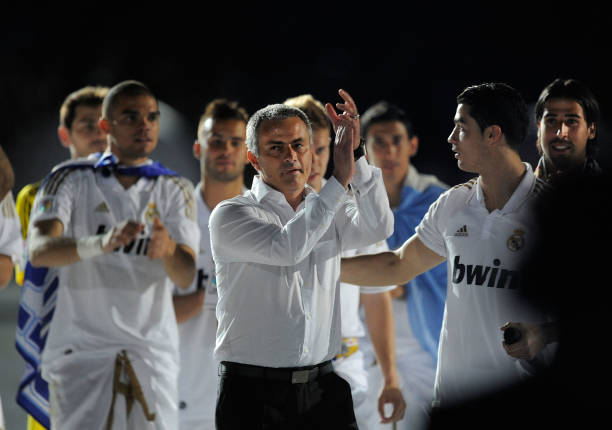
The Portuguese manager arrived in Madrid in 2010 with a clear objective: end Barcelona’s domestic supremacy. Guardiola’s side had won three consecutive league titles and lifted the Champions League in 2009 and 2011. Lionel Messi, Xavi, Andrés Iniesta and Sergio Busquets represented a footballing philosophy that appeared almost impossible to disrupt. Mourinho, however, had already demonstrated his ability to challenge the Catalans. His Inter Milan side had eliminated Barcelona in the 2010 Champions League semifinals before winning the competition. At the Santiago Bernabéu, he now had the financial resources and individual quality to build a team capable of competing with Guardiola over an entire season.
His tactical blueprint was built around a 4-2-3-1 formation. Although Real Madrid occasionally experimented with alternative systems, Mourinho overwhelmingly relied on this structure throughout the campaign. Iker Casillas protected the goal, while a defensive line featuring Sergio Ramos, Pepe, Marcelo and Álvaro Arbeloa provided a mixture of physicality, aggression and attacking support. In midfield, Xabi Alonso and Sami Khedira formed the foundation of the system. Alonso was responsible for controlling the first pass after recovering possession, while Khedira offered defensive coverage and the physical presence required to protect the spaces left by advancing teammates. Ahead of them, Mesut Özil operated as the creative link between midfield and attack, with Cristiano Ronaldo and Ángel Di María providing width, acceleration and directness around Karim Benzema or Gonzalo Higuaín.
The system was particularly effective because Mourinho understood that his players did not need long spells of possession to create dangerous situations. Real Madrid could defend in a compact shape, absorb pressure and wait for the opposition to make a mistake. Once possession was recovered, Alonso could immediately release the ball toward the attacking players. Ronaldo’s explosive acceleration, Di María’s dribbling and Özil’s vision transformed these situations into devastating counterattacks. Benzema, meanwhile, offered the movement and technical intelligence necessary to connect the different attacking profiles. Madrid could travel from their own defensive third to the opposition’s penalty area in a handful of passes, often before their opponents had time to reorganize.
The tactical formula behind Real Madrid’s historical season
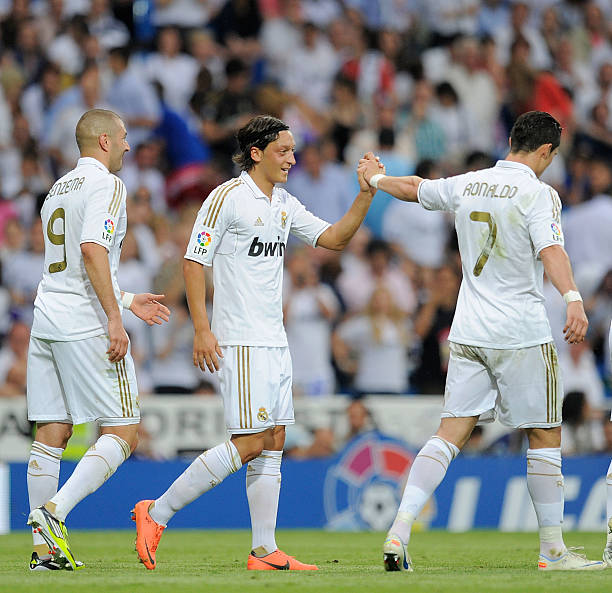
The brilliance of Mourinho’s system was not simply its speed but the way it distributed responsibilities. Ronaldo was rarely restricted to the left touchline. He frequently moved into central positions, attacked the space behind defenders and became a second striker whenever Madrid entered the final third. Di María provided a different dimension on the opposite flank, using his acceleration and ability to carry the ball to stretch defensive lines. Özil was arguably the team’s most important creative facilitator, finding pockets of space between midfield and defense and delivering the passes that allowed Madrid’s forwards to attack at full speed. His understanding with Ronaldo became one of the defining partnerships of the season. The German midfielder finished the La Liga campaign with 19 assists, while Ronaldo scored 46 league goals, establishing a remarkable personal record. Benzema and Higuaín also ensured that Madrid possessed two different solutions through the middle, with both forwards contributing significantly to the team’s attacking output.
Mourinho’s fullbacks played an equally important role. Marcelo was particularly influential, providing attacking width on the left and creating numerical advantages around Ronaldo. His forward movements were balanced by Alonso and Khedira, who were responsible for covering the spaces behind him. On the opposite side, Arbeloa generally adopted a more conservative approach, allowing the team to maintain defensive balance. This combination meant that Madrid could attack with considerable freedom without completely sacrificing their defensive structure.
One of the most impressive aspects of the 2011-12 Real Madrid side was its ability to punish even the smallest defensive mistake. The counterattacking sequence against Ajax in the Champions League became a perfect illustration of Mourinho’s philosophy. After recovering the ball, Madrid combined through Kaká, Özil, Benzema and Ronaldo before finishing an attack that took approximately 16 seconds. It was football reduced to its most devastating simplicity: recover, accelerate, exploit space and finish. The team did not need to dominate possession to demonstrate superiority. Its ability to transition between defensive and attacking phases was often enough to overwhelm opponents.
The rivalry with Barcelona nevertheless remained the central storyline. Madrid’s victory in the Spanish capital during the decisive stages of the league season, a 2-1 win at the Camp Nou on April 21, 2012, represented a symbolic turning point. Sami Khedira and Cristiano Ronaldo scored for the visitors, while Alexis Sánchez briefly restored Barcelona’s hopes. Ronaldo’s famous celebration, accompanied by his gesture asking the Camp Nou crowd to calm down, became one of the defining images of the title race. Madrid had finally demonstrated that they could beat Guardiola’s Barcelona in a decisive league encounter and maintain their advantage until the end of the season.
There were, however, limitations to Mourinho’s approach. His team could become vulnerable when opponents prevented Alonso from dictating the first pass or successfully disrupted the space available to Özil. The manager’s more conservative midfield combinations occasionally struggled against Barcelona’s technical superiority, particularly in the Copa del Rey. In Europe, Madrid also fell short of their ultimate objective. Bayern Munich eliminated Los Blancos in the Champions League semifinals after a dramatic penalty shootout at the Santiago Bernabéu. The defeat prevented Mourinho from completing an extraordinary season with a European title.
Nevertheless, the absence of the Champions League trophy should not overshadow the magnitude of Madrid’s achievement. Mourinho had taken a club that was constantly measuring itself against Barcelona and turned it into an attacking force capable of breaking almost every domestic record. Cristiano Ronaldo finished with 60 goals in 55 appearances across all competitions, while the collective attacking output reached levels rarely seen in Spanish football. More importantly, Madrid had discovered an identity that combined defensive discipline, individual brilliance and devastating transitional play.
The 2011-12 Real Madrid team remains a fascinating example of how tactical organization can maximize extraordinary individual talent. It was not the most aesthetically dominant side of its generation, nor did it attempt to reproduce Barcelona’s football. It simply found another way to win. Mourinho’s counterattacking machine conquered La Liga, ended Guardiola’s domestic reign and established a benchmark that remains difficult to surpass. For all the trophies that followed in the years ahead, La Liga de los Récords remains one of the clearest demonstrations of the Portuguese manager’s tactical influence and Cristiano Ronaldo’s extraordinary peak.
 Real Madrid
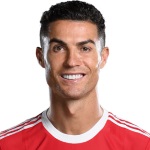 Cristiano Ronaldo