

Capable of the best and the worst, Chelsea makes the overall picture hard to read. Much like the youthful core that defines this squad, Chelsea suffers dips in form that prevent the club from consistently entering the title race. Considering the current roster and without using the transfer-window wildcard, here is an attempt to identify what can be improved.
Managing defense’s rotation

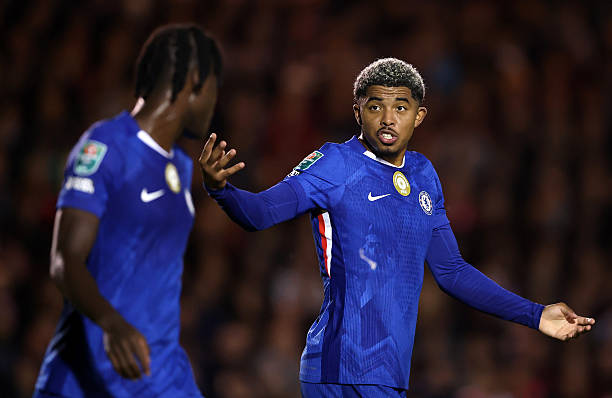
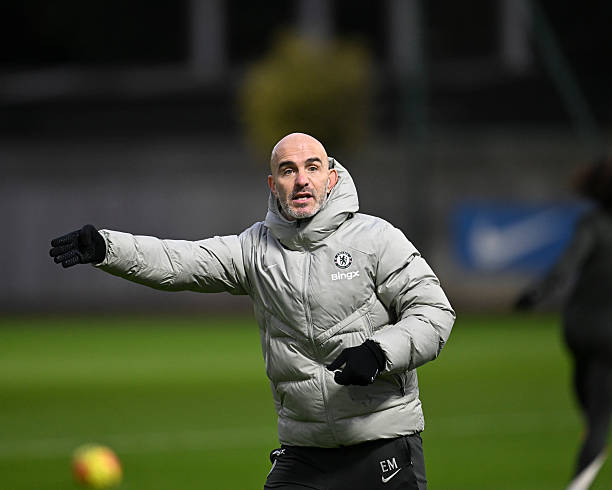
The first issue to fix is the lack of consistency in handling rotation. Enzo Maresca has adopted a more flexible squad-management approach compared to last season. In 2024-2025, there was a clear A-team and B-team with very few rotations. This year, even as the outlines of a starting XI emerge, Maresca’s constant changes disrupt the team’s structure. Regarding the center-back pairing, the ideal duo is Fofana and Chalobah—complementary profiles made to defend high. But too often, we see a different pairing each match, forcing players to rebuild chemistry on the fly. That was the case at Leeds, where the Tosin-Badiashile duo had a disastrous opening.
The perfect profile to replace Fofana—who is returning from two nearly blank seasons—would be Acheampong, a 19-year-old with pace and strong covering ability. Chalobah, while not proving clear superiority, has the advantage of being complete and adaptable to any defender at the club.
As for Tosin, his profile lowers the back line’s level. He would be ideal in a tactical context where the team defends deep, as seen in the match at Nottingham Forest last May.
By managing Fofana’s physical condition and Colwill’s return, the Fofana-Chalobah pairing is the best choice, and a cleaner rotation with Acheampong and/or Badiashile would help avoid the abrupt changes that have already cost Chelsea points.
Reducing emotional intensity in matches
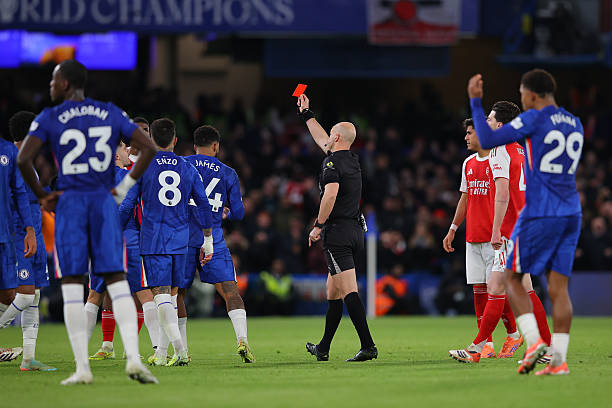
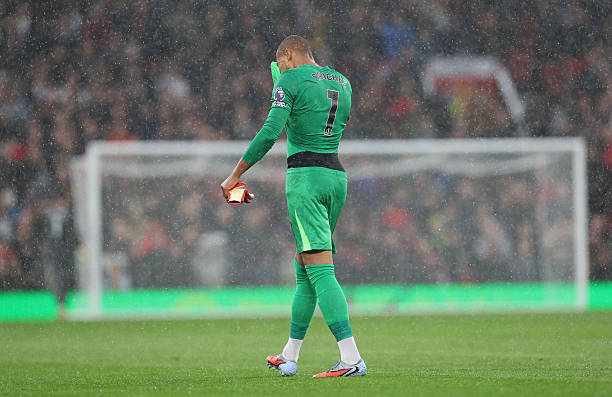
Six red cards for Chelsea this season, including four in the league. While Sunderland’s record of nine is distant, Chelsea has a major issue with emotional control. Too aggressive, too eager to do well, or prone to sudden outbursts, Chelsea approaches matches with no perspective beyond the immediate action. Against Manchester United, Robert Sanchez’s reckless challenge left Chelsea playing 10-vs-11 for 86 minutes. Chelsea might have turned things around at 1-0 down, but Sanchez failed to see beyond that moment, gifting United yet another win. Chalobah’s red card fits the same pattern, while Gusto’s vs Nottingham Forest and Delap’s in the Carabao Cup illustrate a lack of control over frustration—especially Delap, who enjoys physical battles.
Caicedo’s red card is perhaps the most “forgivable.” Extremely aggressive in his challenges, that edge is also what allows him to dominate midfield. His incredible activity and recoveries are essential in a system where his profile is vital.
With a young squad still learning Champions League football, Chelsea must manage matches with more control and maturity—classic growing pains for a youthful team trying to do well.
Simplifying the game plan in “smaller” games
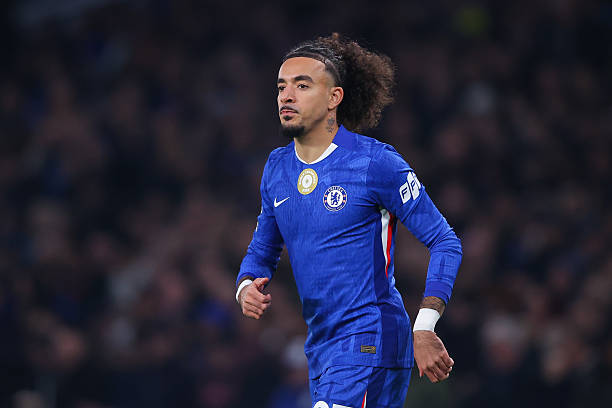
During the match against Atalanta, we saw the same flaws as in Chelsea’s 2024-2025 season: a team that overloads the middle and leaves the flanks free when defending. In their predictable 3-1-6 structure, Chelsea leaves the wings and half-spaces exposed, with only Caicedo to cover everything. The defenders are therefore exposed—forced either into emergency tackles or to drop off, giving opponents time to shoot, as seen on Atalanta’s second goal or Kevin Schade’s strike vs Brentford.
The fullbacks play too centrally and cannot use their strengths. Gusto needs to stay wide to maximize his speed and ball-carrying; inside, he is restricted and lacks the technical quality of a real midfielder.
The wingers are left isolated on their respective sides, repeatedly shut down by double-teams and lacking support such as overlaps.
In smaller games, Enzo Maresca often looks like he overthinks things and makes life harder than it needs to be.
 Chelsea