

A new Manchester derby will take place on Saturday for Matchday 22 of the Premier League. A clash between two clubs with very different objectives: the home side fighting for a Champions League spot, while the other is chasing a tenth English league title. Once upon a time, the balance of power was reversed between the two Manchester clubs. Let’s take a closer look at this shift to better understand the dynamics that reshaped both institutions.
2010 : The summer Manchester City shifted into a higher gear
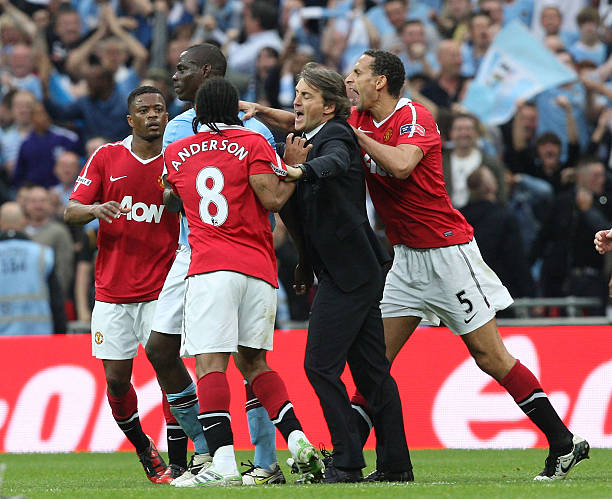
Two names help illustrate the scale of Manchester City’s transfer window in the summer of 2010. After an encouraging fifth-place finish in the first season under Roberto Mancini, highlighted by the revelation of Vincent Kompany and the emergence of a hero in Carlos Tevez (reviled at Manchester United), City realized that challenging United required greater aggression and star signings.
But not just any stars. City built their recruitment strategy around key players from strong mid-tier clubs—regular European contenders but far from domestic titles. Valencia and Wolfsburg come to mind with the signings of David Silva and Edin Džeko. City also showed intelligence by targeting players struggling at elite clubs. Yaya Touré, out of favor at Barcelona, was brought in, while Mario Balotelli, fresh off a Champions League triumph with Inter Milan, embraced the Manchester City challenge.

This recruitment improved quality but City still remained far behind Manchester United in the league. Built on a well-oiled, experienced squad, the Red Devils appeared untouchable domestically. Despite a podium finish, City were left frustrated—armed to fight for the title, yet far from it.
That season, however, broke a psychological barrier. Manchester City won the FA Cup—41 years after their last major trophy. The cherry on top came with a semifinal victory over Manchester United, the first crack in the rivalry.
2011-2012 : Sky Blue’s madness vs Red Devil’s calm
“Do you want to simply be part of a long history, or do you want to create a new one?”
With those words, Samir Nasri perfectly summed up Manchester City’s philosophy.
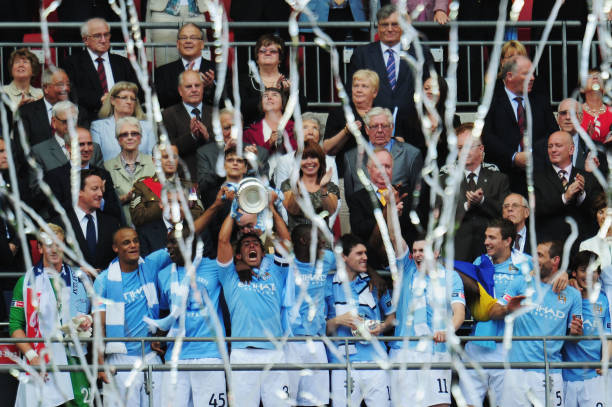
City wanted to rewrite history and challenge the order long dominated by Manchester United. Fully aware of their inferior prestige, City used ambition and immediacy as their driving force. While United began a squad renewal (with De Gea, Ashley Young, and Phil Jones becoming starters), City’s recruitment reflected urgency and hunger for success.
The result? October 23, 2011—Old Trafford descended into chaos. Manchester City humiliated United with an unprecedented 6–1 victory in the derby.
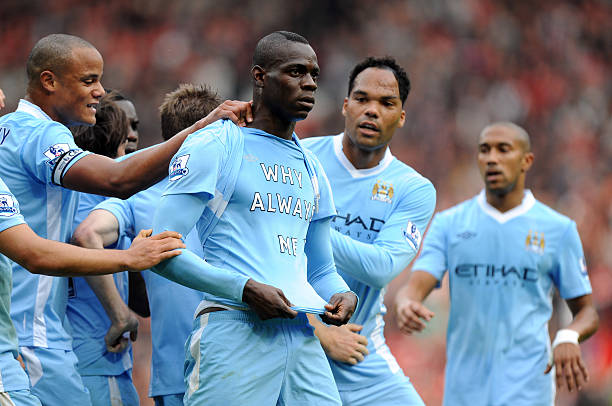
Despite a rollercoaster season—most notably Yaya Touré’s departure for the Africa Cup of Nations weakening the squad—City claimed their first league title since 1947. The final day was legendary: stoppage-time drama against QPR allowed City to snatch the title from United.
This madness, this new energy, taught City to believe until the very end—even when the title seemed lost in April. United, meanwhile, stumbled in smaller matches and perhaps paid the price for an aging squad nearing the end of its cycle.
2013 : Final act of a reversed hierarchy
On the surface, the 2012–2013 season did not seem like the conclusion of Manchester’s color shift. Manchester United won their 20th league title with an 11-point cushion, revitalized by the shrewd signing of Robin van Persie. The Dutchman displaced Wayne Rooney and scored 26 goals to deliver the title.
Across the city, City appeared in turmoil. Worn down by Roberto Mancini’s confrontational management, inconsistency plagued the squad. The low point came at Wembley: City lost the FA Cup final to Wigan, a club relegated to the Championship that same season. Mancini was dismissed.
It all looked like proof that 2011–2012 was a one-off anomaly.
But the real earthquake struck Manchester United.
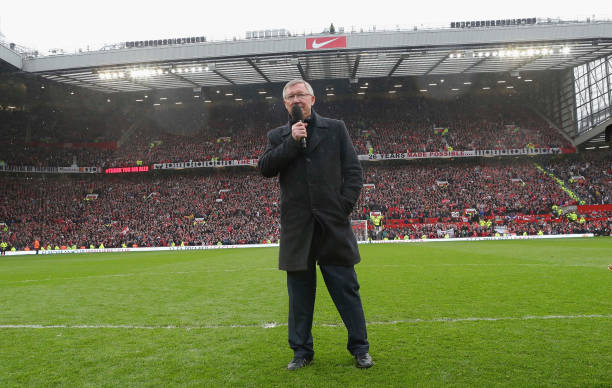
After 27 uninterrupted years in charge, Sir Alex Ferguson retired. With him went United’s stability. Ferguson had long shielded the club from its own ownership. To understand this, we must return to 2005, when the Glazer family became majority shareholders.
Through leveraged buyouts, the Glazers acquired United by loading the club with debt via Red Football Ltd. Banks approved the loans, confident that United’s sporting success would generate enough revenue to service the debt. Between 2005 and 2013, United won five league titles, one Champions League, and several domestic cups.
Under Ferguson, United continued smart recruitment (Tevez, Berbatov, Nani, Young, De Gea) and relied on a rock-solid core—Van der Sar, Vidic–Ferdinand, Fletcher, Carrick, Scholes, plus the creativity of Giggs and Rooney.
Ferguson’s departure at the end of the 2013 season exposed the leadership’s footballing incompetence. Only one signing arrived in the first post-Ferguson transfer window: Marouane Fellaini.
Meanwhile, across town, City sacked Mancini—but their aggressive, intelligent recruitment model remained. It delivered the Premier League title in 2014.
Six to zero.
Since 2013, Manchester City have won the Premier League six times, compared to zero for Manchester United.
City broke United’s record for consecutive league titles with a four-peat between 2021 and 2024. They achieved a domestic quadruple in 2019 and matched United’s legendary 1999 treble by winning the Premier League, FA Cup, and Champions League.
Since 2013, the dominance has been unquestionable—and tomorrow’s derby reflects that reality. Manchester City will aim to move closer to a tenth league title, while Manchester United will attempt to launch the Carrick era in the best possible way.
Yet another managerial change on the Red Devils’ bench—perhaps the ultimate symbol of a club trapped in instability.
 Manchester City
 Manchester United