

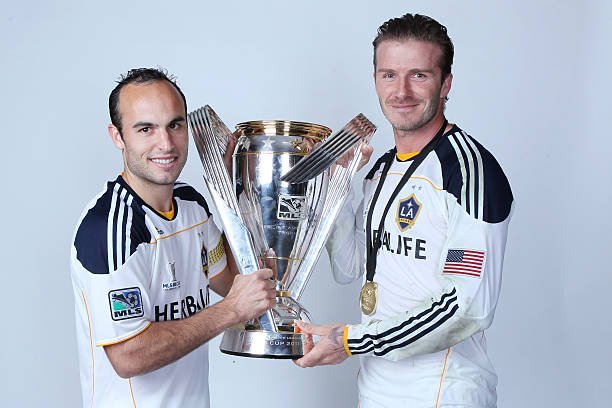
Few clubs in American soccer carry the legacy, prestige, and expectations of the LA Galaxy. Since the birth of Major League Soccer in 1996, the California franchise has been the league’s most decorated club and arguably its most recognizable global brand. From the era of David Beckham and Landon Donovan to more recent stars, the Galaxy have built a reputation as the flagship franchise of American soccer.
The club’s trophy cabinet reflects that dominance. The Galaxy have won six MLS Cup titles (2002, 2005, 2011, 2012, 2014, 2024)—the most in league history and two more than the next closest club.
For decades, the Galaxy have set the benchmark for success in MLS, appearing in ten MLS Cup finals and maintaining a reputation for attracting star players and competing for championships.
In 2024, the club once again reminded the league of its pedigree. But what followed in 2025 was one of the most shocking collapses in MLS history.
The high point : a historic MLS Cup in 2024
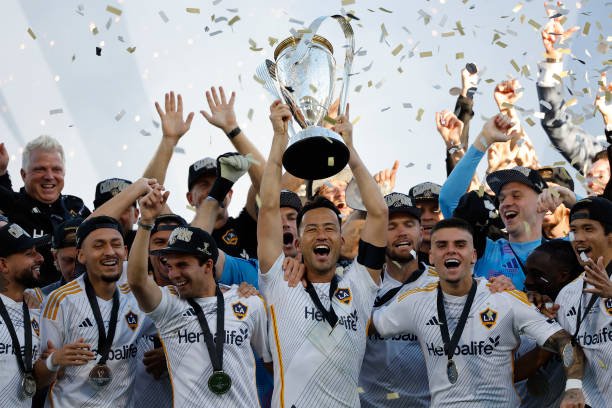
The 2024 season marked a triumphant return to the top for the Galaxy after a decade without an MLS Cup. Under head coach Greg Vanney, the team combined attacking flair with strong chemistry to deliver one of the most exciting seasons in the club’s modern history.
The campaign culminated in a 2–1 victory over the New York Red Bulls in the 2024 MLS Cup Final, played at Dignity Health Sports Park.
Midfielder Gastón Brugman was named MLS Cup MVP, while striker Dejan Joveljić scored the decisive goal that secured the championship.
The triumph was historic for several reasons. First, it ended a 10-year title drought, the club’s longest since the league’s early years. Second, it gave the Galaxy a record-extending sixth MLS Cup, further cementing their status as the most successful franchise in league history.
The 2024 squad was also remarkably productive offensively. The Galaxy scored 87 total goals across the regular season and playoffs, the most ever by an MLS Cup champion.
Players such as Riqui Puig, Gabriel Pec, and Joveljić formed one of the league’s most dangerous attacking trios. Their creativity, speed, and technical ability made Los Angeles one of the most entertaining teams in MLS.
At the end of 2024, the Galaxy looked ready to begin a new dynasty.
But soccer, especially in MLS, rarely follows a predictable script.
The collapse : a catastrophic 2025 season
If 2024 represented the peak of the Galaxy’s modern era, 2025 quickly became its most painful fall.
The defending champions endured a nightmare campaign, finishing 14th in the Western Conference with a record of 7 wins, 9 draws, and 18 losses, totaling only 30 points.
For a club with championship ambitions, it was a staggering drop—from league champion to near the bottom of the standings in just one year.
The season began disastrously. At one point, the Galaxy were winless through their first 12 matches, the worst start ever by a defending MLS Cup champion.
Defensively, the team struggled from the opening weeks. The Galaxy conceded goals at an alarming rate, allowing 28 goals in their first 12 games, while scoring only eight.
Losses piled up quickly. A humiliating 7–0 defeat to the New York Red Bulls, the same team they had beaten in the previous year’s final, symbolized how dramatically the club had regressed.
By the middle of the season, the defending champions were sitting at the bottom of the conference.
In MLS history, few champions have experienced such a rapid decline.
Why did the Galaxy fall so fast?
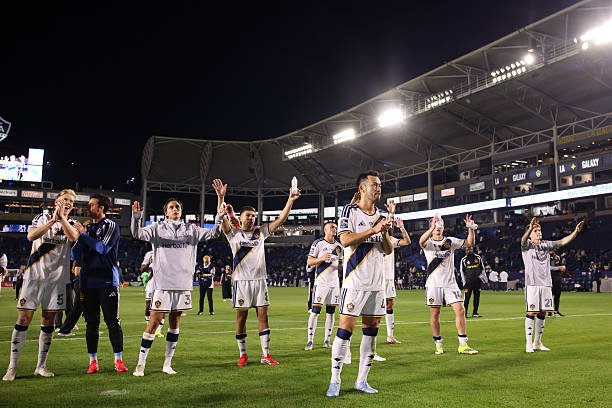
Several factors contributed to the Galaxy’s dramatic collapse in 2025.
1. Injuries to key players
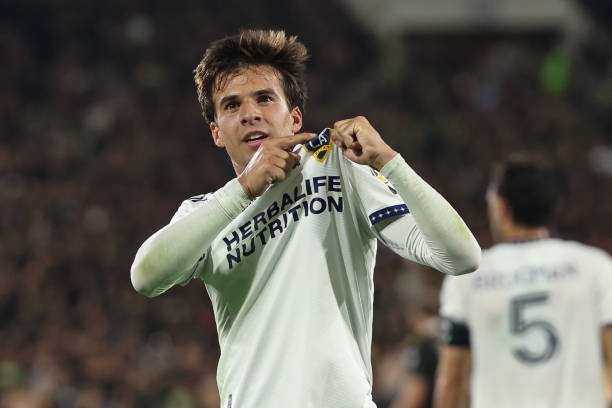
The biggest blow came from injuries to crucial attacking players. Midfield maestro Riqui Puig, the creative engine of the team, missed the whole season after suffering a serious knee injury.

Without Puig orchestrating the attack, the Galaxy struggled to control matches or create consistent scoring opportunities.
Other offensive players, including Joseph Paintsil, also dealt with injuries during the campaign.
The result was a team that looked far less dynamic than the one that dominated in 2024.
2. Defensive fragility
Defense was arguably the Galaxy’s biggest weakness in 2025.
Throughout the season, the team conceded goals at an alarming rate, finishing the year with 66 goals allowed—one of the worst defensive records in the league.
Defensive errors, inconsistent goalkeeping, and poor organization repeatedly cost the team points.
In a league where parity is high and games are often decided by small margins, those defensive issues proved fatal to the Galaxy’s playoff hopes.
3. Roster changes and MLS salary cap rules
Another challenge came from roster turnover.
MLS’s strict salary cap rules often force successful teams to make difficult decisions after a championship season. Several players from the 2024 squad departed or saw their roles reduced, while new signings needed time to adapt.
Even experienced players such as Marco Reus struggled to compensate for the missing chemistry that had defined the previous season.
Reus still contributed with eight goals and nine assists in 2025, but it was not enough to lift the team out of its slump.
4. Psychological pressure
Finally, there was the psychological factor.
Defending a championship brings immense pressure. Opponents treat the defending champions as the team to beat, and expectations from fans and media increase dramatically.
For the Galaxy, every loss magnified the sense that the team had fallen far from the standard expected of the league’s most successful club.
Stability amid chaos : trusting Greg Vanney
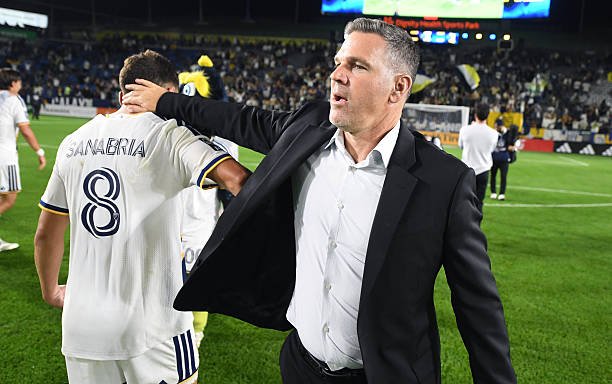
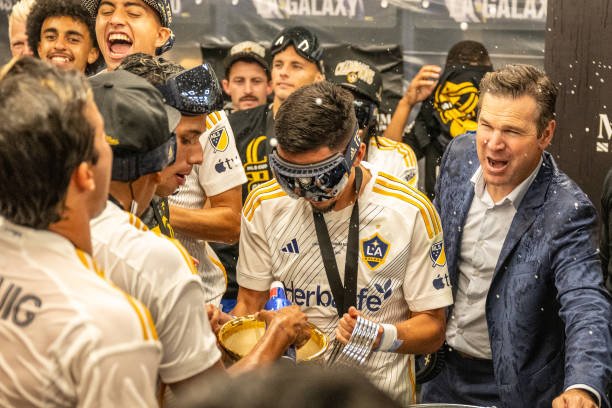
Despite the disastrous results, the Galaxy’s front office chose stability over panic.
In the middle of the struggling season, the club extended head coach Greg Vanney’s contract through 2028.
The decision signaled that management still believed in Vanney’s long-term vision. After all, he had delivered the MLS Cup just months earlier.
Vanney himself remained optimistic, emphasizing that rebuilding confidence and improving squad depth would take time.
The club also made internal changes to strengthen its analytical and technical departments, hoping to modernize its recruitment and performance analysis.
Rebuilding for the future
Following the disappointing 2025 season, the Galaxy began working on a plan to return to contention.
Defensive reinforcements
One of the club’s priorities has been fixing its defensive problems.
Reports in late 2025 indicated that the Galaxy were pursuing defender Jakob Glesnes, a former MLS Defender of the Year and multiple-time All-Star, in order to stabilize the back line.
Adding experienced defenders could help address the team’s biggest weakness from the previous season.
Roster continuity
The club also focused on retaining core players. By the end of the year, 17 players were already guaranteed contracts for the next season, providing a foundation to rebuild around.
Maintaining continuity will be essential if the Galaxy want to recreate the chemistry that fueled their championship run.
Veteran leadership
Veteran figures such as Marco Reus are expected to play a key role in guiding younger players.
Even during the difficult 2025 season, Reus remained one of the team’s most productive players and a respected voice in the locker room.
Leadership will be crucial as the team attempts to restore its winning mentality.
The stakes for this season
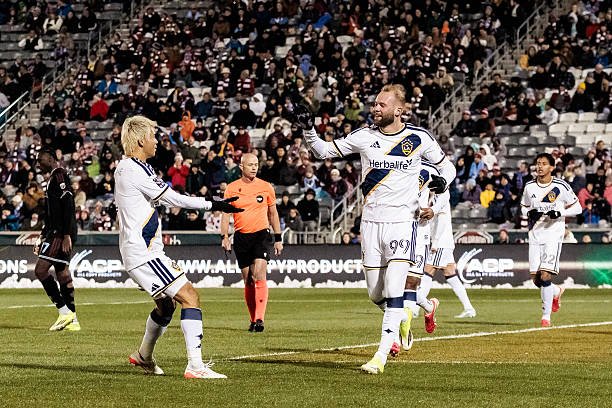
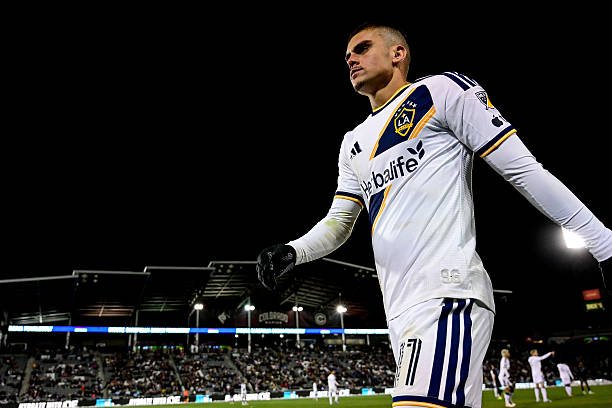
The current MLS season represents a turning point for the Galaxy.
For a club with such a rich history, consecutive disappointing seasons are simply unacceptable. Supporters expect the Galaxy to compete for trophies—not merely fight for playoff qualification.
There are also broader implications for the league.
The Galaxy remain one of MLS’s most important brands, particularly in the massive Los Angeles market. A competitive Galaxy team benefits the league’s visibility and global appeal.
The team will also compete in international competitions such as the CONCACAF Champions Cup, offering another opportunity to rebuild momentum and regain confidence.
Success in those tournaments could help restore belief within the squad and among fans.
A club defined by comebacks
History suggests that writing off the Galaxy would be a mistake.
This is a club that has repeatedly reinvented itself over the decades—transitioning from the Donovan-Beckham era to new generations of stars while maintaining a championship culture.
The fall from champion to 14th place was dramatic, but it may ultimately prove to be a temporary setback rather than a long-term decline.
If the Galaxy can stay healthy, fix their defensive problems, and rediscover the attacking chemistry that defined their 2024 title run, a return to the top of MLS is entirely possible.
For the most successful club in league history, anything less than competing for trophies would feel like unfinished business.
And in Los Angeles, the expectation is always the same:
Championships.