

After nine seasons wearing the Reds jersey of Liverpool, Mohamed Salah has announced his departure, bringing to a close one of the most defining chapters in the club’s modern history. Arriving in 2017 from Roma, the Egyptian not only embodied Liverpool’s success but also established himself as one of the most impactful players in the history of the English league.
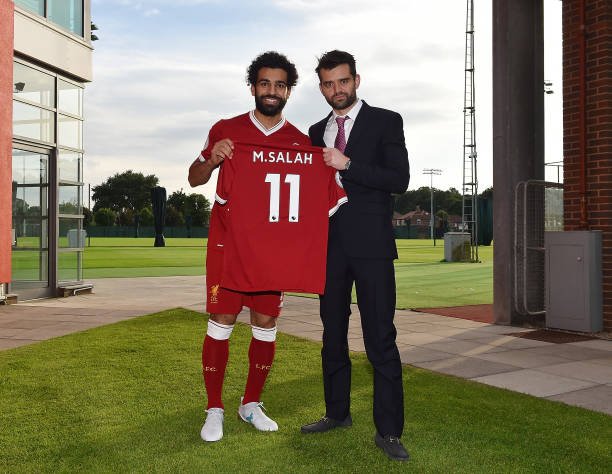
Salah : symbol of Liverpool’s revival

When Salah arrived at Liverpool in the summer of 2017, the club was just beginning to resurface. Under Jürgen Klopp, the foundations of an ambitious project had been laid, far removed from the instability that had defined Liverpool since 2009. However, something was still missing—an extra spark capable of transforming an exciting team into a winning machine, something previously embodied by players like Steven Gerrard or Luis Suárez. Salah would become that turning point.
Very quickly, the Egyptian became the face of this modern Liverpool: fast, vertical, intense, and above all ruthless. His first season set the tone. With 32 league goals, he broke the record for the most goals scored in a 38-game Premier League season. But beyond the numbers, it was the manner that stood out: sharp runs, clinical finishing, and the ability to decide a game on his own. Salah blended perfectly into Jürgen Klopp’s “heavy metal” football.
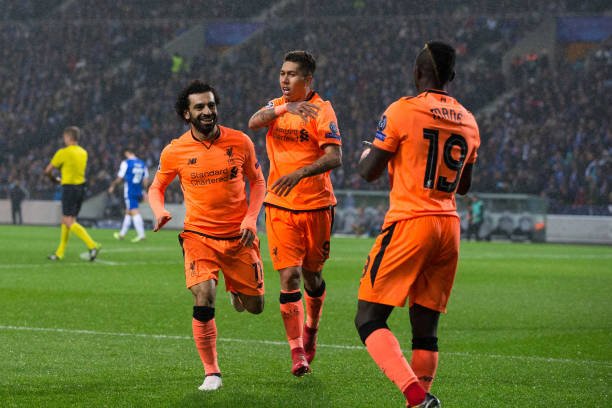
In Klopp’s system, Salah was not just a winger. He was a constant source of imbalance, capable of stretching defenses, creating space, and opening gaps for his teammates. Alongside Sadio Mané and Roberto Firmino, he formed an attacking trio that became legendary. In his first season, Salah was a devastating sprinter. Above all, he was a player of rupture. His speed was his main weapon. He attacked depth, exploited space, and constantly drove toward goal.
In this ultra-vertical Liverpool setup, Firmino would draw defenders, Mané would fix the left side, and Salah would burst in behind defenses. Their complementary qualities meant that Salah could also drop deeper and create for his teammates, much like Firmino. The perfect example of Salah’s first-season brilliance remains the Champions League semifinal first leg against Roma in 2017-2018.
He was a transition player, perfectly suited to counterattacking football. This trio alone embodied Klopp’s Liverpool philosophy: intense pressing, constant movement, and interchangeable roles. Firmino dropped deep, Mané attacked space on the left, and Salah arrived from the right to finish. It was an almost perfect system that terrorized defenses across Europe.
Over the next eight seasons, Salah evolved into a true offensive orchestrator. Less reliant on pure speed, he developed his vision, passing quality, and ability to organize attacks. He became more involved in build-up play and embraced a technical leadership role. This transformation proved crucial, allowing Liverpool to remain competitive despite changes in the squad.
In 2021-2022, with Firmino’s decline in form and the arrival of a more direct profile like Luis Díaz, Salah took on more of a playmaking role, especially with Sadio Mané operating more centrally. With this trio, Liverpool came close to a historic quadruple, finishing second in the Premier League and reaching the Champions League final.
After that remarkable season, several factors reshaped his role: the departure of key figures like captain Jordan Henderson, as well as Mané and Firmino, and the arrival of more technical midfielders such as Thiago (in 2020), followed by Mac Allister, Szoboszlai, and Gravenberch. These changes led to tactical evolution at Liverpool. The team shifted toward a slower, more possession-based style, relying on technical quality to break down deeper defensive blocks.
With opponents sitting deeper, Liverpool needed a more refined approach, and Salah adapted once again. He could no longer rely solely on finishing. He became a more complete player, capable of linking play and creating as well as scoring.
A return of dominance
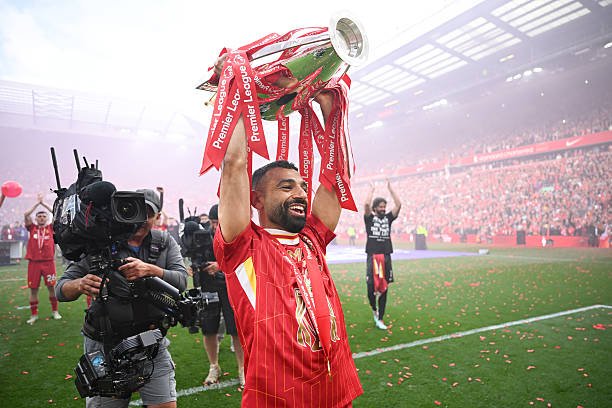
With Salah leading the way, Liverpool returned to the top:
- Five Premier League title races (2018-2019, 2019-2020, 2021-2022, 2023-2024, 2024-2025)
- Two league titles (2020 and 2025)
- Three Champions League finals (2018, 2019, 2022)
- One Champions League title (2019)
- Several domestic trophies (FA Cup in 2022, League Cup in 2022 and 2024)
Salah was present in all of these moments. He scored, created, and delivered in crucial situations. He was often the man for big occasions, the one who stepped up when pressure was at its highest.
This evolution in his achievements highlights his ability to remain at the top level, compensating for physical decline with a sharper understanding of the game. Over time, Salah transcended his status as just a player and became a symbol. He embodied the rebirth of a historic club that had long lived in the shadow of its past glories.
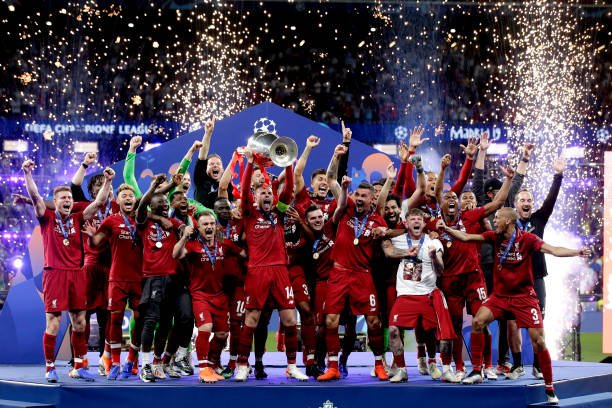
Like the great legends of Anfield, he became a generational reference point. In a 21st century where Liverpool had never been as consistently strong, Salah was the common thread. He was the face of the historic 2020 title, ending a 30-year league drought, and of a team that rivaled Pep Guardiola’s Manchester City—one of the greatest sides in English football history—while also helping Liverpool secure a 20th league title to match Manchester United’s record.
An iconic player in the Premier League history
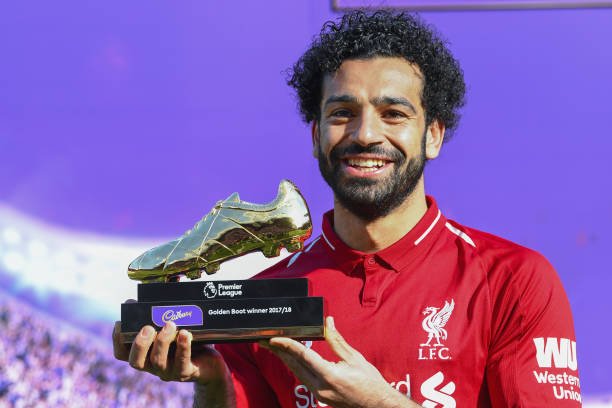
If Salah’s legacy at Liverpool is immense, his influence on the Premier League is just as significant. From his very first season, he set new statistical standards for a winger.
The 2017-2018 season remains one of the most impressive in league history. With 32 goals, he set a record at the time, finishing as both top scorer and Player of the Year—especially remarkable given his difficult spell at Chelsea shortly before.
But that was only the beginning. Season after season, Salah maintained exceptional consistency, regularly surpassing 20 league goals. In a league known for its intensity and competitiveness, such consistency is rare. He quickly became one of the most decisive players in Premier League history, combining goals and assists with ruthless efficiency.
The question naturally arises: does Salah rank among the greatest players in Premier League history? Undoubtedly. From a statistical standpoint, he competes with the best attackers of the modern era. He has broken records, including becoming the all-time top African scorer in Premier League history, recording one of the best individual seasons ever, and entering the top five scorers in Liverpool’s history.
Through his longevity, he has proven his durability at the highest level. Through his influence on the game, he has redefined the role of the right winger. Salah combines individual performance, consistency, collective impact, and team success. This combination makes him a legitimate candidate among the league’s legends.
Beyond the pitch, Salah has also had a massive cultural and symbolic impact. As a global star from the Arab and African world, he has become a role model for millions of fans. His success in Europe has helped elevate the visibility of African football and inspired an entire generation.
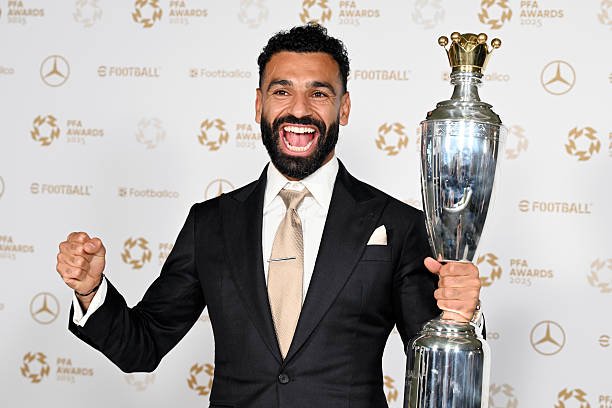
 Liverpool
 Manchester City
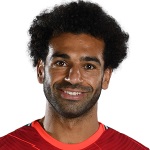 Mohamed Salah