

Star power, smart management, and a relentless winning culture. Here is how the LA Galaxy became the most successful club in MLS history.

Every sport has its dynasty. The New England Patriots of the Brady era. The Chicago Bulls of the nineties. The New York Yankees across decades of baseball dominance. In Major League Soccer, there is one club that stands above all others when the conversation turns to sustained excellence, cultural impact, and sheer winning pedigree.
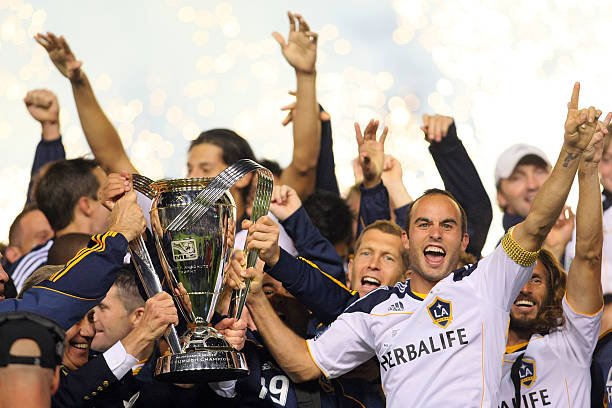
The LA Galaxy are MLS royalty. Five championships, a global brand, and a roster of legends that reads like a who’s who of world soccer. But dynasties do not happen by accident. They are built through vision, smart decisions, and a willingness to do things differently. Here is the story of how the Galaxy became the benchmark that every other MLS club still measures itself against.
The foundation years
The LA Galaxy were one of the ten founding clubs of Major League Soccer when the league launched in 1996, and from the very beginning they carried themselves like a club with ambition. Playing in Los Angeles — the second largest city in the United States, a global entertainment capital with a massive Latino soccer culture already in place — gave them advantages that most other clubs simply did not have.
Their early years were competitive but not yet dominant. They reached the first ever MLS Cup final in 1996, losing to DC United, before bouncing back to win their first championship in 2002. It was a solid foundation, but the Galaxy were still a good club rather than a great one. That was about to change.
The Cobi Jones era and building an identity
Before the era of global superstars, the Galaxy built their identity around homegrown talent and a connection to the local community. Cobi Jones was the embodiment of that identity. The energetic winger became the face of the franchise through the late nineties and into the 2000s, earning a record number of caps for the United States national team and becoming one of the most recognizable soccer players in the country.
Jones was not a superstar in the European sense of the word. He was something more valuable for a young club trying to establish itself in a skeptical sports market: he was authentic. He represented what MLS was trying to be — a league with its own identity, its own heroes, and its own culture. The Galaxy built their early fanbase on players like Jones, and that foundation made everything that came later possible.
Landon Donovan changes everything
If Cobi Jones built the identity of the LA Galaxy, Landon Donovan defined their golden era. The greatest American soccer player of his generation arrived at the Galaxy and immediately elevated the entire club. His combination of technical quality, speed, and soccer intelligence was unlike anything MLS had produced domestically, and he became the engine around which everything at the club was built.
Donovan won multiple MLS Cups with the Galaxy, scored goals in the biggest moments, and carried the club through periods when the roster around him was not particularly strong. He was the constant. The one player opponents had to plan for, the one name that made opposition coaches uncomfortable.
But Donovan alone, as extraordinary as he was, could not have built the dynasty on his own. What the Galaxy did next changed not just their own trajectory but the trajectory of American soccer as a whole.
The Beckham effect
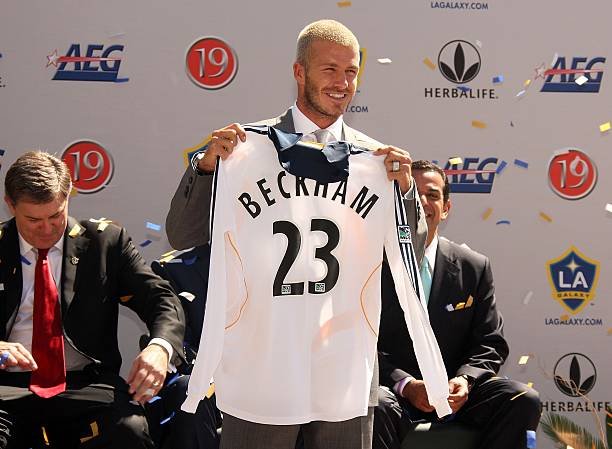
On January 11, 2007, the LA Galaxy announced the signing of David Beckham from Real Madrid. The soccer world stopped. The mainstream American sports world stopped. Everyone stopped.
Beckham was not just a soccer player. He was one of the most famous human beings on the planet, a global brand unto himself, and his decision to join MLS when he could have played for virtually any club in Europe sent a message that resonated far beyond the sport. Suddenly, Major League Soccer was on the front page of newspapers that had never previously covered a single MLS match. Late night hosts were talking about it. Fashion magazines were talking about it.
The immediate on field impact was complicated by injuries that robbed Beckham of significant playing time in his first couple of seasons. But the cultural shift was immediate and enormous. Attendance figures across the entire league jumped. Sponsorship deals followed. International media coverage of MLS increased dramatically. Beckham did not just sign for the Galaxy, he legitimized the entire league in the eyes of a global audience that had previously ignored it entirely.
And when he was fit and playing, he was still one of the finest passers and dead ball specialists in the world. His partnership with Donovan gave the Galaxy a combination that no other MLS club could match.
The superstar era peaks
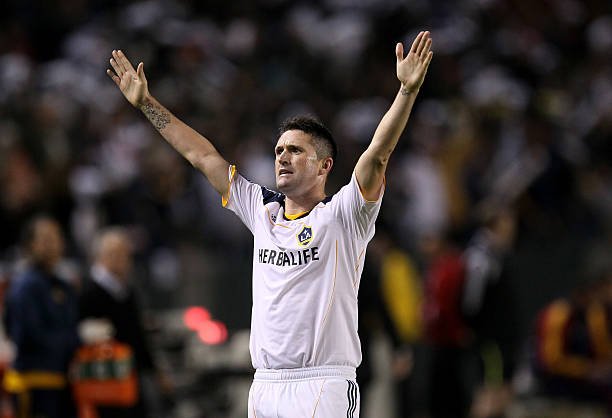
The Galaxy doubled down on their superstar strategy in the early 2010s, adding Robbie Keane from Tottenham. Suddenly they had Donovan, Beckham and Keane, three players who had collectively won league titles, and Champions Leagues across Europe all wearing the same jersey.
The results followed. The Galaxy won back to back MLS Cups in 2011 and 2012, with Keane proving to be one of the smartest signings in league history. The Irishman was clinical, consistent, and perfectly suited to the Galaxy system. He became the club’s all time leading scorer and one of the most beloved figures in the franchise’s history.
Those two championship seasons represented the absolute peak of the Galaxy dynasty. They were the best team in the league by a significant margin, and they had the trophies to prove it.
The Legacy
The LA Galaxy’s dynasty did not last forever. No dynasty does. The departures of Beckham, Donovan, and eventually Keane left gaps that proved difficult to fill, and the club went through a difficult transitional period in the late 2010s.
But the infrastructure they built, the brand they created, and the standard they set transformed MLS permanently. Every club that has since chased a marquee international signing, every team that has tried to build a winning culture around a global name — has been following a blueprint that the Galaxy wrote.
And with Riqui Puig emerging as a genuine star and the club continuously investing in quality, the Galaxy have never stopped believing that another dynasty is possible.
In MLS, all roads still lead back to Los Angeles.
Are you a Galaxy fan? Do you think they can build another dynasty? Let us know in the comments.
 David Beckham
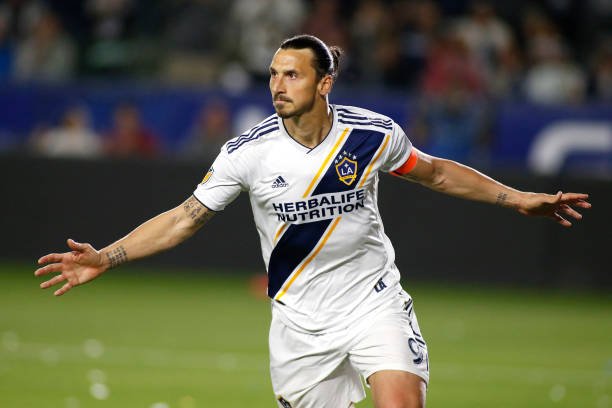
 Zlatan Ibrahimovic