

Soccer is decided by fine margins, and few things expose that better than a contested refereeing call. A single whistle, a missed offside flag or a wrongly awarded penalty has decided World Cups and rewritten the history of clubs and nations. Long before VAR existed, referees were left alone to officiate the fastest-growing sport on earth, and some of their calls became legendary for all the wrong reasons. Ignored handballs and phantom goals changed results and, in time, changed how the game itself is policed. Goal line technology and video assistant referees were a direct response to decades of officiating chaos, and yet the arguments never stop. What follows is a look back at the calls that broke hearts and forced the sport to change.
The hand of God, Mexico 1986
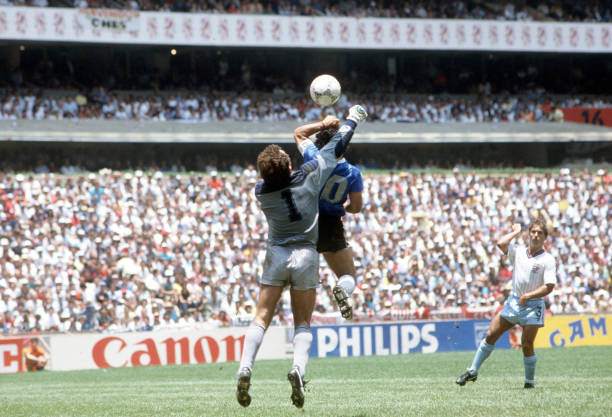
Any list like this has to start here. On June 22, 1986, in the quarterfinal of the World Cup between Argentina and England, Diego Maradona rose to meet a looping ball inside the English box and punched it past goalkeeper Peter Shilton. Tunisian referee Ali Bin Nasser, with his linesman Bogdan Dochev failing to intervene, allowed the goal to stand. Maradona would later famously describe it as having been scored “a little with the head of Maradona, and a little with the hand of God.”
- Final score: Argentina 2 England 1
- Argentina went on to win the World Cup that summer
- The decision remains the most debated call in soccer history
The fallout was enormous. England were eliminated, Argentina went on to lift the trophy, and the geopolitical undertones, given the Falklands War only four years earlier, gave the moment an even sharper edge. The Hand of God became shorthand for refereeing failure on the biggest stage.
Frank Lampard’s ghost goal, South Africa 2010
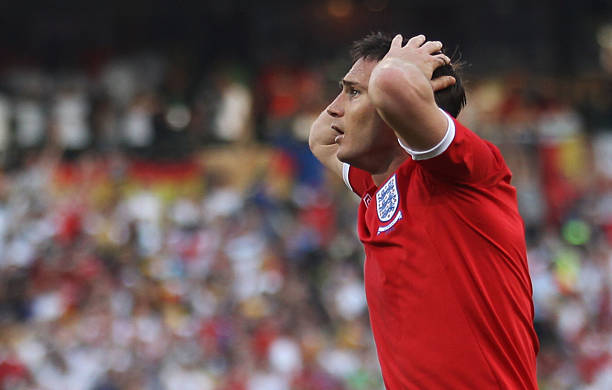
Fast forward to the World Cup in South Africa and England were on the wrong end of another infamous decision. Trailing Germany 2-1 in the round of 16, Frank Lampard struck a curling effort from the edge of the box that smashed against the crossbar and bounced clearly over the goal line before spinning back into play. Uruguayan referee Jorge Larrionda waved play on, and German keeper Manuel Neuer wasted no time launching the ball forward.
- The ball crossed the line by roughly 60 centimeters
- Germany went on to win the match 4-1
FIFA president Sepp Blatter, who had long resisted technology in soccer, publicly apologized to the English Football Association. Within two years, goal line technology was approved for use, and by the 2014 World Cup it was operational. Lampard’s disallowed goal was the moment soccer finally accepted that the human eye was no longer enough.
Thierry Henry’s handball, Paris 2009
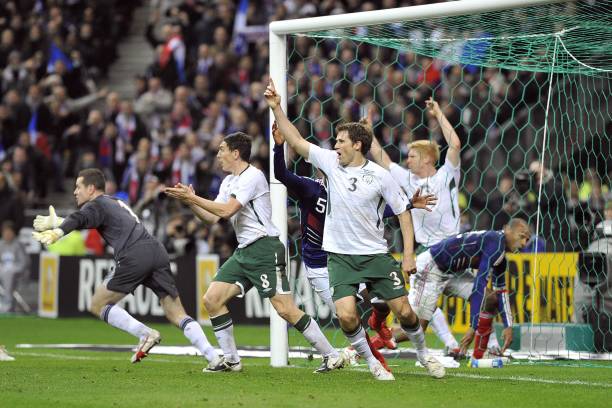
The road to the 2010 World Cup ended in heartbreak for Ireland thanks to one of the most blatant unpunished handballs ever seen at the elite level. In a playoff second leg against France at the Stade de France, Thierry Henry controlled a ball with his hand, not once but twice, before squaring it for William Gallas to score the goal that sent France through on aggregate. Swedish referee Martin Hansson and his officials missed it entirely.
- Ireland were eliminated 2-1 on aggregate
- FIFA refused Ireland’s request for a replay
- The Irish FA later received a confidential payment of around 5 million euros from FIFA
The incident sparked diplomatic tension between France and Ireland and pushed FIFA closer to embracing additional officials behind the goal, which was trialed in subsequent competitions.
Tom Henning Ovrebo and Chelsea against Barcelona, 2009
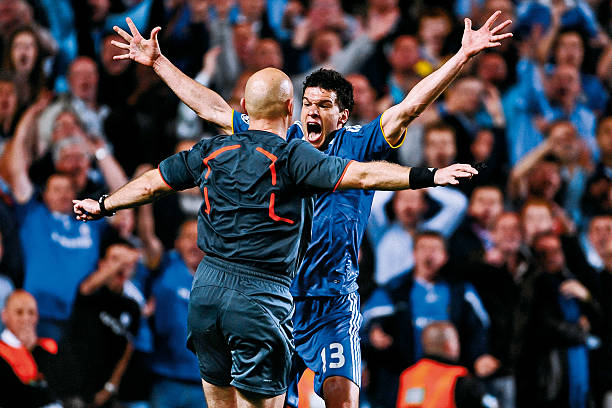
The Champions League semifinal second leg at Stamford Bridge on May 6, 2009 remains one of the most explosive refereeing performances of the modern era. Chelsea, leading 1-0 on the night through Michael Essien’s stunning strike, appealed for no fewer than four penalties against Barcelona, with multiple incidents involving handballs and a clear foul by Gerard Pique on Nicolas Anelka. Norwegian referee Tom Henning Ovrebo turned down every single one. When Andres Iniesta struck in the 93rd minute to send Barcelona through on away goals, Chelsea’s players lost all composure, with Didier Drogba screaming into a pitchside camera that the result was “a disgrace.”
- Chelsea were denied at least three legitimate penalty claims
- Barcelona advanced on away goals and went on to win the Champions League
- Ovrebo required a police escort out of London and never officiated a Chelsea match again
The match has been cited by Chelsea fans and former players for over a decade as the most painful refereeing experience in the club’s history. Barcelona went on to defeat Manchester United in the final in Rome and lift the trophy under Pep Guardiola, completing a historic treble.
Byron Moreno and South Korea’s run, 2002
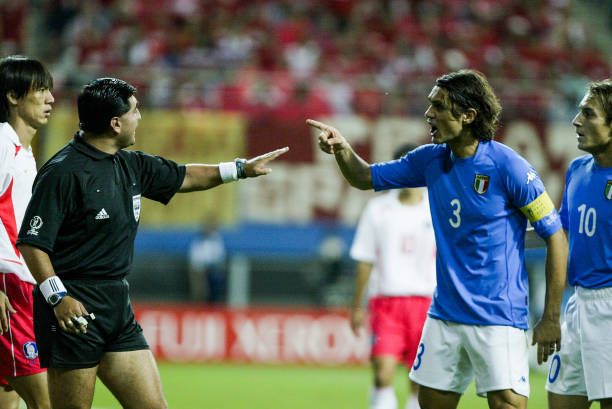
The 2002 World Cup co-hosted by South Korea and Japan saw the home nation reach the semifinals in stunning fashion, but their journey remains clouded by refereeing controversy. Ecuadorian referee Byron Moreno’s handling of the round of 16 match between South Korea and Italy is particularly notorious, including a disallowed Italian goal, a red card for Francesco Totti for diving when replays suggested a legitimate foul, and several uncalled fouls on Italian players.
- South Korea beat Italy 2-1 in extra time
- Moreno later served jail time in the United States on unrelated drug charges
- The match remains one of the most scrutinized in tournament history
Spain suffered a similar fate in the following round against South Korea under Egyptian referee Gamal Al Ghandour. Two Spanish goals were disallowed for reasons that remain hotly debated, fueling accusations that have followed the tournament ever since.
What these moments taught soccer
Bad refereeing calls have always been part of soccer, and they are also the reason almost every officiating reform exists. Goal line technology, VAR, extra assistant referees and semi-automated offside all came out of moments like these. The game is still caught between human judgment and machine precision, and even with more tools than ever, fans keep arguing in pubs and living rooms about a call that went the wrong way. For better or worse, that argument is never going away.
 Chelsea
 FC Barcelona
 Argentina
 England
 France
 Thierry Henry