

Four days after dismantling Tunisia 4-0 in group play, Japan arrive at AT&T Stadium carrying the kind of confidence that only a dominant World Cup win can generate. Sweden, by contrast, have a lot of repairing to do after being picked apart 1-5 by Netherlands just five days ago. Group Stage 3 closes out both teams’ first-round campaigns, and the standings picture makes this match meaningful for positioning, even if the exact knockout implications depend on results elsewhere. Hiroshi Moriyasu’s side has built real momentum; Graeme Potter’s has a defensive hole to plug.
What’s at stake
This is the third and final group stage match for both Japan and Sweden at the 2026 World Cup, meaning the result here directly shapes knockout-round seeding and matchup possibilities. Japan earned four points from their first two matches, drawing 2-2 with Netherlands before the 4-0 demolition of Tunisia. Sweden sit on three points after a 5-1 win over Tunisia in their opener, then that heavy 1-5 loss to Netherlands. A Japan win locks in what should be a strong group finish; for Sweden, a loss could complicate their standing depending on the Netherlands-Tunisia result running simultaneously.
A victory for Japan would signal they are not just a solid unit built on discipline but a team capable of punishing opposition at the highest level. For Sweden, the margin of defeat against Netherlands raises questions about the defensive setup Potter has in place, and another poor result here would leave a difficult impression heading into the next round. Neither side is mathematically eliminated at this point, but Japan hold the stronger position going in.
How they got here
Japan’s last five results read W, D, W, W, W: the 4-0 win over Tunisia, a 2-2 draw with Netherlands in their World Cup opener, and three straight friendly wins over Iceland, England, and Scotland ahead of the tournament. The Tunisia performance stood out for its attacking efficiency and collective pressing, with Japan looking a level above their opponents from kickoff. The draw with Netherlands showed they can compete with top opposition without being overrun. Sweden’s recent form tells a messier story: L (1-5 vs Netherlands), W (5-1 vs Tunisia), D (2-2 vs Greece), L (1-3 vs Norway), W (3-2 vs Poland in qualification). The bookend losses, especially the Netherlands hammering, are the data points Potter will want to address before this match.
Japan enter as the higher-momentum side with four points from two group games. Sweden’s three points leave them in a position where they need at least a point, and ideally a win, to guarantee a comfortable knockout berth. The contrast in confidence between these two squads after their respective matchday 2 results is likely the most relevant context of all.
Key battle to watch
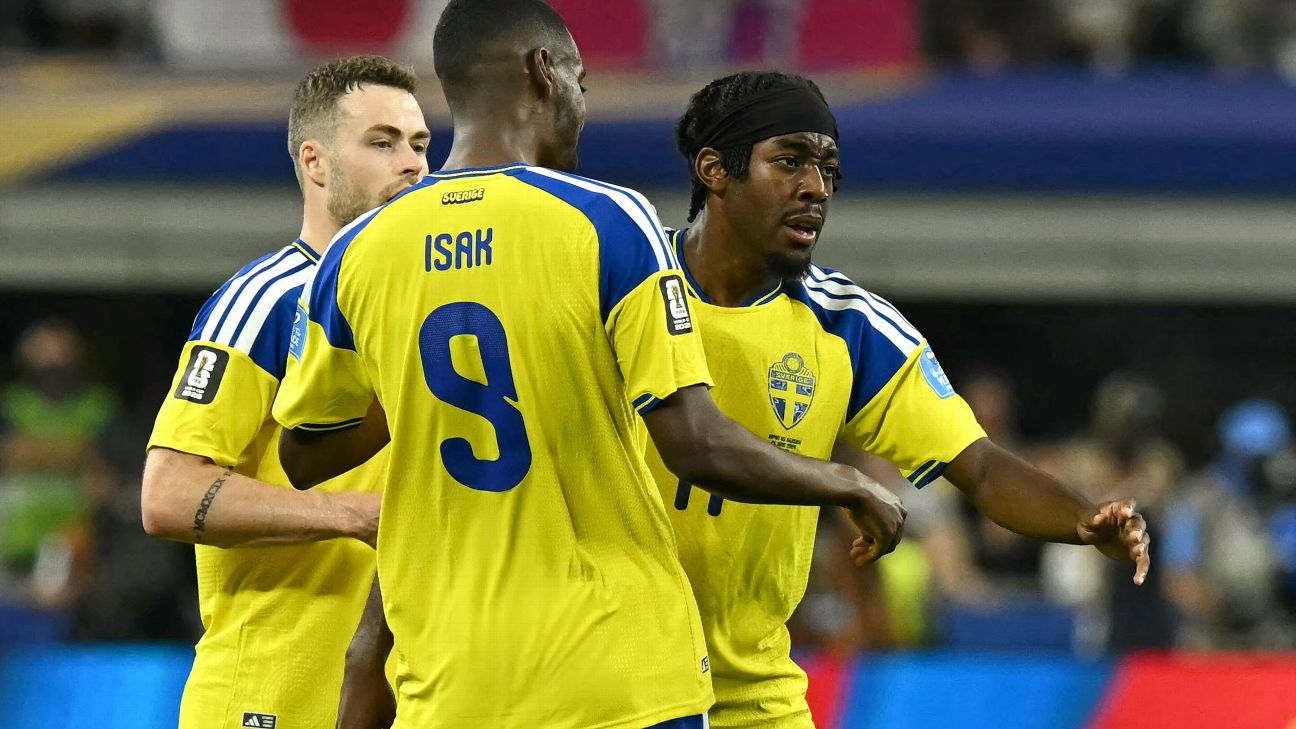
Sweden’s defensive structure, which was cut open repeatedly by Netherlands, will be tested by Japan’s ability to press high and transition quickly. Viktor Gyokeres and Alexander Isak offer Sweden a potent attacking pair, but if Japan’s midfield can disrupt supply lines the way they did against Tunisia, the Swedish attack may be isolated. The tactical duel between Sweden’s front two looking to counter and Japan’s disciplined defensive shape will likely determine how open this match becomes. If Japan can keep Sweden pinned back and limit the space Gyokeres and Isak feed off, Moriyasu’s side will be in control of the tempo.
Key Stats
Match Context

Standings
Head To Head
Our Prediction
Japan come in with better form, greater cohesion, and the psychological edge of that 4-0 result behind them. Sweden have the attacking talent with Gyokeres and Isak to threaten on the break, but the 1-5 exposure against Netherlands suggests defensive vulnerabilities that Japan’s pressing game is well-suited to exploit. Expect Japan to control large portions of this match and come away with at least a point, with a win the more likely outcome if their group stage form is any guide.
 Japan
Japan Sweden
 Viktor Gyokeres