

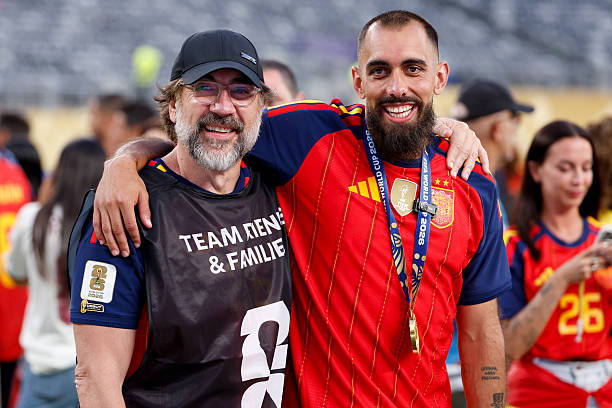
For years, Borja Iglesias was viewed as an unconventional striker. With his unmistakable beard, laid-back personality, and a career that took the long road before reaching the highest level, he never fit the mold of the modern superstar. But over time, the Spanish forward has earned a very different reputation: that of a player who never hesitates to speak his mind, even if it means drawing criticism from parts of the soccer world. Whether denouncing homophobia, standing beside Jenni Hermoso during the Luis Rubiales scandal, expressing support for Palestinians, criticizing Donald Trump, or condemning the soaring ticket prices for the 2026 FIFA World Cup Final, Borja Iglesias has consistently used his platform to defend his convictions.
At a time when most professional players avoid controversial subjects, Spain’s World Cup champion embraces a simple philosophy: soccer should never be separated from society.
The player who refuses the code of silence
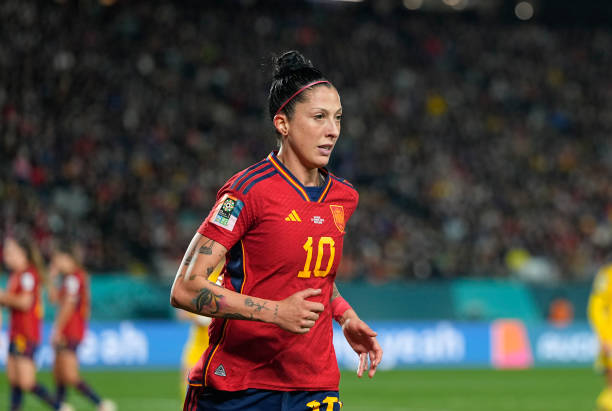
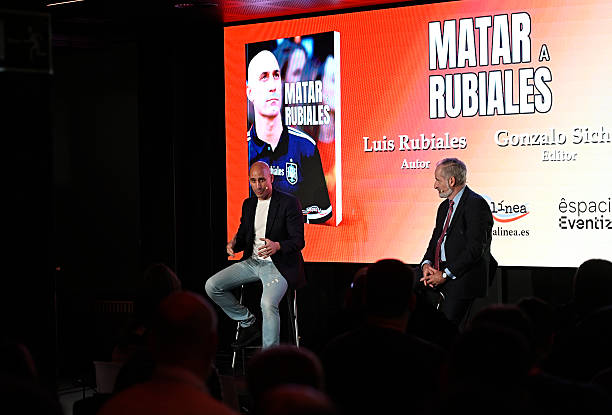
Long before becoming a World Cup champion with Spain in 2026, Borja Iglesias was already regarded as one of the most outspoken voices in Spanish soccer. The defining turning point came during the summer of 2023. After Luis Rubiales forcibly kissed Jenni Hermoso following Spain’s victory in the FIFA Women’s World Cup Final, Iglesias became one of the first male Spanish internationals to publicly respond. Believing that Spain’s soccer institutions had fundamentally failed, he announced that he would no longer represent La Roja until meaningful structural changes had been implemented. It was an extraordinary decision.
At only 30 years old, while still capable of playing a significant role for the national team, he voluntarily gave up wearing Spain’s jersey in defense of a principle. His support for Jenni Hermoso was far from opportunistic. The two players had shared a genuine friendship for several years. Following Spain’s World Cup victory over Argentina in 2026, the long embrace they shared became one of the defining images of the celebrations. For many Spaniards, that moment symbolized the triumph of a generation that chose to defend its values before chasing trophies.
Several months later, after reforms were introduced within the Spanish Football Federation, Iglesias returned to the national team. In one of soccer’s great ironies, the player who had walked away from La Roja out of conviction would eventually lift the FIFA World Cup wearing its colors. His activism, however, extends well beyond women’s soccer. For several seasons, Iglesias has been one of the very few active professional players willing to openly confront homophobia within the game.
After scoring a hat trick against Barcelona, he revealed that he had received an avalanche of homophobic abuse across social media. Rather than ignore the insults, he chose to expose them publicly. For Iglesias, the issue extends far beyond online harassment. In multiple interviews, he has argued that soccer remains trapped within an outdated vision of masculinity—one in which expressing emotion or supporting certain social causes is still viewed as weakness. According to him, that culture of “toxic masculinity” helps explain why no active elite male player has publicly come out during his professional career.
His message stands in sharp contrast to the far more cautious approach adopted by the vast majority of professional footballers.
A political voice that makes people uncomfortable
Borja Iglesias is such a polarizing figure because he refuses to limit his opinions to soccer-related issues. In 2025, he sparked significant controversy after expressing support for pro-Palestinian demonstrations that took place during the Vuelta. Writing on social media, he said he found it remarkable that the cancellation of a sporting event generated more public outrage than what he described as a “genocide.”
The comment immediately ignited intense political and media debate.
His critics argued that he should stay in his lane as a soccer player.
His response was simple. Athletes are citizens before they are athletes, and expecting them to remain silent simply because they play soccer is, in his view, fundamentally hypocritical.
Several months later, during the 2026 FIFA World Cup held in part in the United States, Iglesias once again made headlines. Asked about the protocol requiring players to greet Donald Trump before the World Cup Final against Argentina, he answered with characteristic dry humor:
“I don’t want to end up in prison.”
The remark perfectly illustrated his communication style.
He criticizes without resorting to personal insults while making his political views unmistakably clear.
Far from being an isolated publicity stunt, the comment reflected a consistent belief that athletes should never be expected to surrender their freedom of expression simply because they wear a national team jersey.
Fighting for a more accesible game
Even after becoming a World Cup champion, Borja Iglesias continued using his popularity to criticize what he sees as the excesses of modern soccer. Only hours before the 2026 World Cup Final between Spain and Argentina, he publicly condemned FIFA’s ticket pricing.
Seats cost hundreds—and in some cases thousands—of dollars. In his view, such pricing policies are steadily driving genuine supporters out of stadiums. He described the situation as “a disgrace,” lamenting that countless Spanish families would be unable to attend the biggest match in their national team’s history because ticket prices had become completely unaffordable. That criticism was entirely consistent with the values he has defended throughout his career. From the very beginning, Iglesias has argued that soccer belongs first and foremost to the supporters who live and breathe it every single week. At a time when players are often encouraged to avoid controversy in order to protect carefully managed commercial images, Borja Iglesias has deliberately chosen the opposite path.
Whether speaking out against homophobia, supporting victims of gender-based violence, defending human rights, or criticizing the decisions of soccer’s governing bodies, he has accepted the personal and media consequences of standing by his beliefs.
Not everyone agrees with his opinions. But very few players of his generation have been willing to take so many risks in order to defend them. By becoming a World Cup champion in 2026, Borja Iglesias achieved the greatest honor in soccer. Yet his legacy already reaches far beyond the game itself.
He represents a generation of athletes convinced that silence is not an obligation—and that wearing a national team jersey does not require abandoning one’s conscience as a citizen.