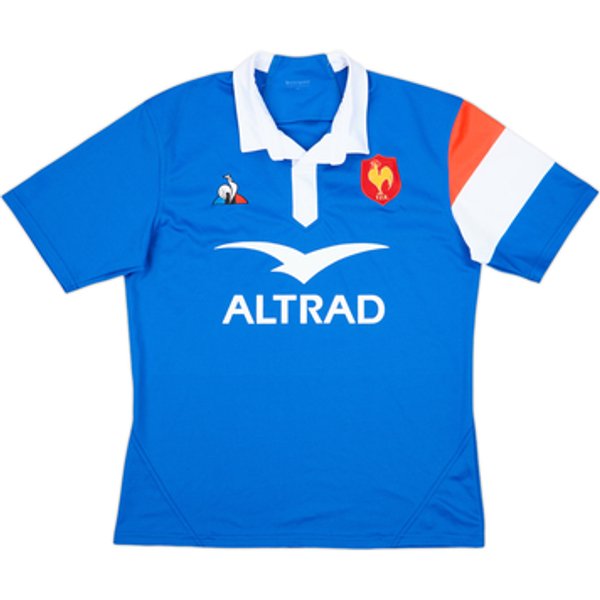

On July 18, 2026, just days after France’s 2-0 defeat to Spain in the FIFA World Cup semifinal, Didier Deschamps officially stepped down as head coach following Les Bleus’ third-place match against England.
One of the most significant chapters in French soccer history had come to an end. Appointed in July 2012 to lead a national team still haunted by the Knysna scandal and the disappointment of Euro 2012, the former France captain leaves behind a remarkable legacy—one that is difficult to summarize because it combines historic achievements, restored stability, and constant debate over his style of play. For fourteen years, Deschamps became synonymous with the French national team.
His tenure is the longest in Les Bleus’ history and one of the most successful in terms of results.
Yet he will also be remembered as one of France’s most divisive coaches, admired by many as one of the game’s greatest competitors while criticized by others for a style of soccer often viewed as overly cautious.
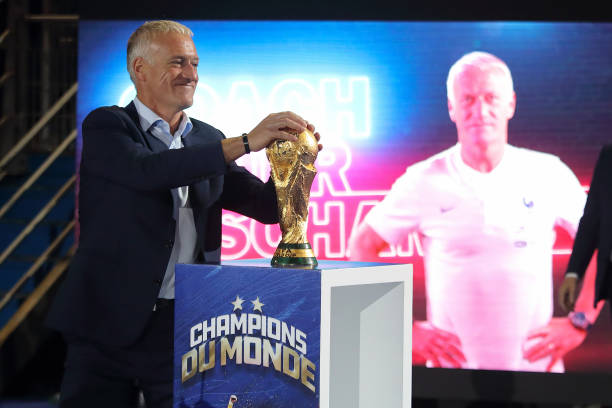
The man who rebuilt Les Bleus
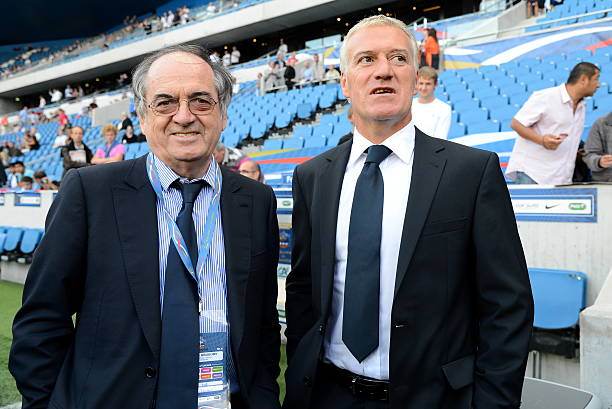
When Didier Deschamps took charge in 2012, France was still trying to recover from one of the darkest periods in its modern history. His mission extended far beyond tactics. He had to restore a winning culture while reconnecting the national team with its supporters. That mission truly began to bear fruit in 2013, when France produced a memorable comeback victory over Ukraine in the 2014 World Cup qualifying playoffs. Under his leadership, Les Bleus gradually rediscovered a clear identity. Discipline once again became a defining value. Internal conflicts disappeared. The team achieved a level of stability rarely seen in previous generations.
Deschamps established a clear hierarchy within the squad, consistently protected his players, and built a national team in which the collective always came before individual stars. His man-management is widely regarded as one of his greatest strengths.
Throughout his tenure, he either introduced or helped develop multiple generations of elite players, from Paul Pogba, Antoine Griezmann, and Raphaël Varane to Kylian Mbappé, Aurélien Tchouaméni, William Saliba, and Désiré Doué. From a statistical standpoint, very few international managers can match Deschamps’ résumé. Across fourteen years, he coached more than 180 matches, setting an all-time record for a French national team manager.
His winning percentage remained comfortably above 60 percent, making him the most successful long-term coach in France’s history.
His accomplishments include:
- 2018 FIFA World Cup champion;
- 2021 UEFA Nations League winner;
- runner-up at UEFA Euro 2016;
- runner-up at the 2022 FIFA World Cup;
- semifinalist at UEFA Euro 2024;
- semifinalist at the 2026 FIFA World Cup.
Perhaps even more impressive, France reached at least the semifinals in five of the six major international tournaments contested between 2016 and 2026.
That level of consistency is exceptionally rare in modern international soccer. Another remarkable statistic reinforces his legacy. Under Deschamps, France reached three major international finals within six years—Euro 2016, the 2018 World Cup, and the 2022 World Cup—lifting two major international trophies along the way.
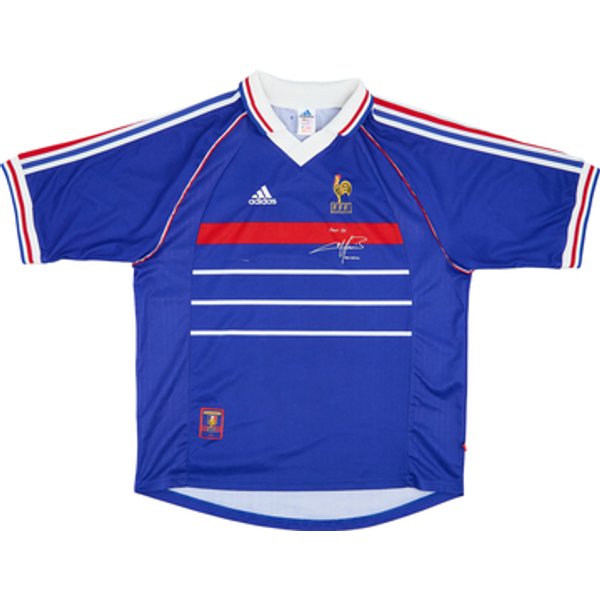
Pragmatism before entertainement
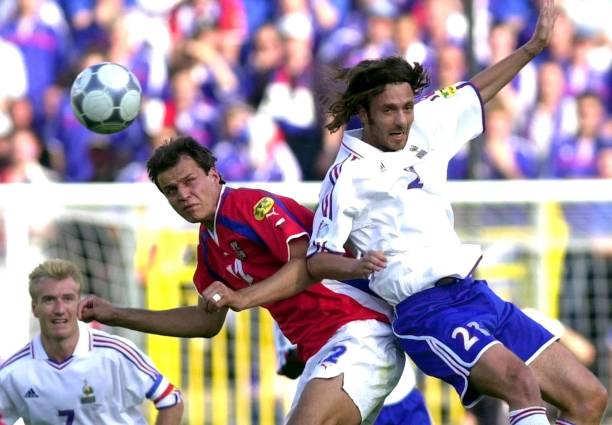
If the results speak for themselves, his style of soccer has never achieved universal approval.
Throughout his career, Didier Deschamps openly embraced a pragmatic philosophy.
For him, international soccer ultimately has one objective: winning. Unlike Luis de la Fuente’s Spain or Lionel Scaloni’s Argentina, whose teams gradually evolved toward possession-based dominance and territorial control, Deschamps’ France generally relied upon:
- defensive organization;
- rapid transitions;
- ruthless efficiency;
- and constant tactical adaptation to each opponent.
That philosophy delivered France’s second World Cup title in 2018.
It also became the source of growing criticism whenever results became less convincing. Many supporters argued that Deschamps never fully unlocked the attacking potential of what was widely considered France’s most talented generation since the legendary 1998 squad. Over the final four years of his tenure, however, the limitations of the project became increasingly visible. After losing the unforgettable 2022 World Cup Final to Argentina, France continued making deep tournament runs but could no longer reach the summit.
At Euro 2024, Les Bleus reached the semifinals despite performances widely described as uninspiring.
France managed only one goal from open play during the entire tournament—Randal Kolo Muani’s strike against Spain in the semifinal. Then came the 2026 World Cup. Facing a Spanish side that was collectively superior in nearly every aspect of the game, France suffered a convincing 2-0 semifinal defeat. The match came to symbolize the tactical limitations of Deschamps’ approach. Criticism focused heavily on his inability to solve Spain’s relentless pressing and technical superiority.
The loss also marked France’s third consecutive defeat against Spain in a major international competition following Euro 2024 and the 2025 UEFA Nations League.
Among the most outspoken critics was former French international Johan Micoud. Micoud argued that Deschamps’ achievements should be evaluated in light of the extraordinary pool of talent available to him. In his view, France possessed perhaps the deepest collection of players in world soccer for nearly a decade and therefore should have dominated international football even more convincingly. He also noted that Lionel Scaloni with Argentina and Luis de la Fuente with Spain had already assembled comparable—or even superior—résumés over much shorter periods. Micoud further criticized Deschamps for lacking attacking ambition and argued that tournaments such as Euro 2024 and the 2026 World Cup exposed the limitations of a philosophy built primarily around managing difficult moments rather than imposing games. His comments reflect a debate that has followed Deschamps throughout his entire tenure: should a national team coach be judged solely by trophies?
Or should the style of play also matter?
An unforgettable legacy
Despite those criticisms, very few people question Didier Deschamps’ place in French soccer history.
As both a player and a manager, he won the FIFA World Cup, joining one of the most exclusive groups in the sport’s history. He leaves behind a French national team that has once again become one of world soccer’s benchmark programs—a team that consistently reaches the latter stages of major tournaments and has rediscovered the winning mentality that appeared lost in the early 2010s. His widely expected successor, Zinedine Zidane, will inherit one of the world’s most talented squads. He will also inherit enormous expectations. Because beyond every tactical debate and every stylistic criticism, one undeniable truth remains: for fourteen years, France entered virtually every major tournament as a genuine contender to win it all.
In an era of international soccer where successful cycles often disappear as quickly as they emerge, that remarkable consistency may ultimately prove to be Didier Deschamps’ greatest achievement.