

A joke about a meme, three commercial partnerships terminated, television broadcasts suspended and a series of public apologies. The controversy between Kylian Mbappé and China quickly moved beyond the world of soccer. Behind the Real Madrid striker’s remarks about Mao Zedong lies a power struggle involving a global superstar, Chinese institutions and La Liga, a competition heavily dependent on its international reach.
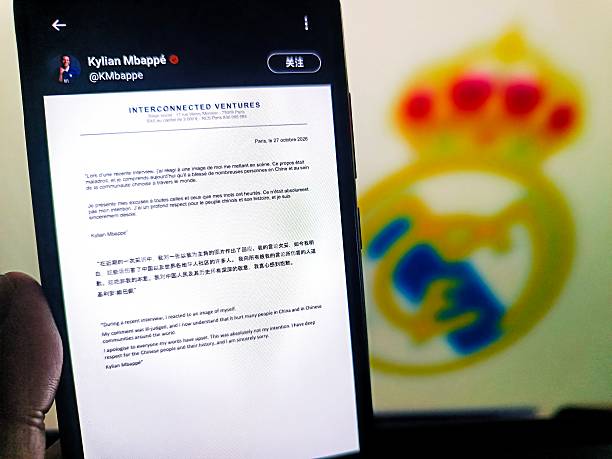
Kylian Mbappé probably never imagined that a humorous clip filmed several months earlier would end up triggering such a crisis. Yet just a few seconds from an interview with the French show The Bridge were enough to set off a chain reaction thousands of miles away from Madrid. Asked about the memes featuring his image, the French international explained that he particularly enjoyed an edit in which his face had been superimposed onto that of a “Chinese dictator.” The reference was to Mao Zedong, founder of the People’s Republic of China and a historical figure whose portrayal remains extremely sensitive in the country.
The timing of the video’s circulation also played an important role. The clip resurfaced on October 26, 2026, the day after the Ballon d’Or ceremony, which Harry Kane won ahead of the Frenchman. It was quickly shared across Chinese social media platforms, particularly Weibo, triggering a wave of hostile reactions. To understand the scale of the controversy, it is necessary to look beyond the question of humor. Mao Zedong occupies a unique place in China’s political memory. Despite the enormous human consequences of some of his decisions, his legacy remains closely associated with the founding of modern China and the historical legitimacy of the Communist Party. Chinese legislation also protects national heroes and martyrs against attacks on their reputations. A joke that might seem harmless in a European context therefore takes on a very different political meaning when interpreted within China.
The commercial consequences were not long in coming. Several Chinese companies announced that they were terminating their partnerships with the Real Madrid striker. Among them were Dongpeng, a beverage specialist, Mengniu, a dairy industry giant, and Milkground. The brands justified their decisions by opposing behavior they considered capable of offending national sentiments. For Mbappé, whose image is a key component of his commercial value, the consequences were far from symbolic. The player quickly issued an apology in French, English and Mandarin, acknowledging that his remarks had been inappropriate and emphasizing his deep respect for the Chinese people and their history. But the issue had already taken on a different dimension: it was no longer limited to the advertising contracts of the French national team captain.
La Liga and Real Madrid confront the weight of the Chinese market
The reaction from Chinese state television turned an individual controversy into a genuine institutional problem. China Media Group, which oversees broadcasters including CCTV, announced the suspension of La Liga broadcasts, as well as coverage of matches and advertisements involving Kylian Mbappé. The decision was particularly concerning for the Spanish league, which has spent several years trying to expand its presence in international markets. China is a strategic territory for the sale of broadcasting rights, the acquisition of new fans and the commercial growth of European clubs. In a league where international revenue directly contributes to its economic competition with the Premier League, losing visibility in such an important market represents a considerable risk.
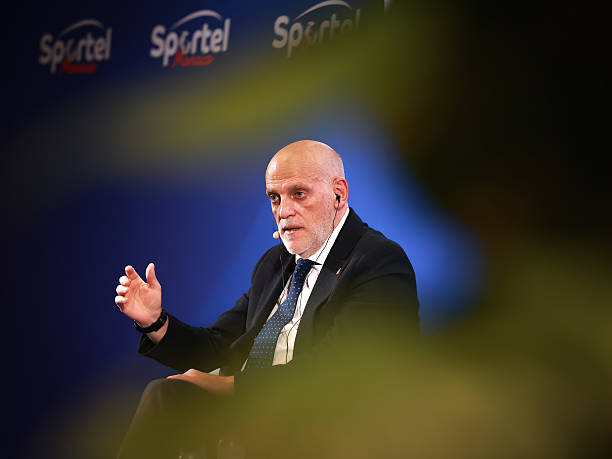
Javier Tebas quickly understood that La Liga could not afford to let the situation escalate. The league’s president publicly expressed regret over Mbappé’s comments and apologized to the Chinese people on behalf of Spanish soccer. He also met with China’s ambassador to Spain in an attempt to defuse tensions. In his public statements, Tebas emphasized that the remarks were the player’s personal responsibility, arguing that all Spanish professional clubs should not have to suffer the consequences of an individual statement. His intervention reflected an economic reality: La Liga does not simply sell soccer matches. It markets a brand, an identity and a cultural product whose reputation also depends on its relationships with foreign markets.
Real Madrid eventually followed the same diplomatic path. Approximately 24 hours after Mbappé’s initial apology and La Liga’s response, the Madrid club released its own statement apologizing to the Chinese people. This delayed intervention illustrates the importance Florentino Pérez places on protecting the institution’s commercial interests. Real Madrid has an enormous international presence, and China has long been a major market for its commercial expansion. The controversy therefore threatened to affect far more than the personal image of the club’s new superstar. However, the successive apologies did not immediately restore the situation. Chinese broadcasting authorities considered the initial explanations insufficient, maintaining the suspension of television coverage.
The affair also revealed another dimension of China’s digital environment. France 24’s The Observers tested several artificial intelligence platforms available in the country, including DeepSeek and Doubao, asking whether Mbappé had described Mao as a dictator. The responses were revealing: Doubao refused to address the question, citing its usage policies, while DeepSeek presented the information as an unconfirmed claim. By contrast, a version intended for users outside China could acknowledge the context of the controversy. This difference illustrates the constraints imposed on Chinese digital platforms and the way political regulation can influence the circulation of information.
Former China national team manager José Antonio Camacho also issued a warning to Mbappé. Drawing on his experience between 2011 and 2013, the Spaniard advised the player to “get good lawyers,” explaining that commercial relationships could be terminated abruptly and lead to complex legal proceedings. His comments serve as a reminder that economic relationships with China operate according to particular dynamics, in which political and national considerations can quickly take precedence over commercial interests.
Beyond Mbappé’s individual case, the controversy ultimately raises a fundamental question for modern soccer: how much control can a superstar have over the consequences of his statements in a world where his image circulates simultaneously across several continents? Real Madrid and La Liga chose to prioritize de-escalation in order to protect their economic interests. This approach can be understood as a form of commercial pragmatism, or even sports-related realpolitik. In an environment where broadcasting rights, sponsors and international markets represent essential resources, institutions often prefer to preserve their relationships with economic powers rather than publicly defend an individual’s position. The Mbappé-China controversy is therefore a reminder that soccer is no longer just an entertainment industry: it is also an actor in globalization, subject to the political and economic power dynamics that shape it.
 Real Madrid
 Kylian Mbappé