

For nearly two decades, one question has haunted coaches around the world:
How do you beat a team that monopolizes possession?
From Pep Guardiola’s FC Barcelona to Luis Enrique’s Paris Saint-Germain, and now Luis de la Fuente’s European and World Cup-winning Spain, modern soccer has witnessed the rise of teams capable of suffocating opponents through possession, relentless pressing, and a level of collective control rarely seen before. These sides don’t simply keep the ball—they control space, dictate the tempo of matches, and leave their opponents with virtually no opportunity to impose themselves.
Yet, as dominant as they are, they are not unbeatable.
Several high-profile defeats reveal recurring tactical patterns. Chelsea’s victory over PSG in the 2025 FIFA Club World Cup Final, Portugal’s triumph over Spain in the 2025 UEFA Nations League Final, and José Mourinho’s Real Madrid overcoming Guardiola’s Barcelona all demonstrate that there are ways to prevail.
They simply require extraordinary tactical discipline.

Nearly perfect team
Guardiola’s Barcelona revolutionized soccer through tiki-taka.
Xavi, Andrés Iniesta, Sergio Busquets, and Lionel Messi monopolized possession until opponents became mentally exhausted. Every turnover immediately triggered an aggressive counterpress designed to win the ball back within seconds.
Luis Enrique modernized that philosophy at Paris Saint-Germain.
His team doesn’t seek possession merely for the sake of controlling the ball. Instead, PSG combines rapid circulation, constant positional rotations, maximum width, and explosive acceleration in the attacking third.
The creative midfield trio of Vitinha, Fabián Ruiz, and João Neves is complemented by an attacking unit equally dangerous in possession and transition. Ousmane Dembélé operates as a false nine, constantly dropping deep or running in behind, while Désiré Doué, Bradley Barcola, and Khvicha Kvaratskhelia provide devastating pace and verticality. Fullbacks frequently drift inside, wingers attack the half-spaces, and multiple players interchange positions throughout the same sequence.
Luis de la Fuente’s Spain is arguably the most complete version of this footballing school.
While preserving Spain’s traditional technical identity, La Roja has added a far greater degree of verticality through players such as Nico Williams, Ferran Torres, and, of course, teenage sensation Lamine Yamal.
Spain can suddenly accelerate after long spells of possession while maintaining an extremely aggressive counterpress immediately after losing the ball.
The common thread linking all three teams is unmistakable.
Their objective is not simply to outperform opponents.
It is to deprive them of all initiative.

First principle : accept to defend deep
The most common mistake is trying to compete in the possession battle.
Against teams like these, attempting to dominate the ball usually means playing according to their rules.
Chelsea understood this perfectly against PSG in 2025.
The London club willingly conceded territory for long stretches while maintaining an exceptionally compact defensive block.
Portugal adopted a similar strategy against Spain.
Rather than trying to recover possession immediately, the Portuguese focused on closing the spaces between the lines, forcing Spain to complete endless passes without consistently progressing into dangerous areas.
The objective is therefore not to regain possession quickly.
It is to regain it under the best possible conditions.
Second principle : protect the center of the field
All of these teams love attacking through the half-spaces.
The greatest threat does not come solely from the wings but from creative players receiving the ball between defensive lines.
Attacking midfielders and false nines constantly lure defenders out of position before releasing teammates into the newly created space.
José Mourinho’s Real Madrid recognized this perfectly against Barcelona.
Madrid allowed lateral circulation but consistently shut down the center, preventing Lionel Messi from receiving freely between the lines.
This central compactness often forces possession teams to slow the tempo or rely more heavily on crosses—an area in which they are sometimes considerably less dangerous.
Third principle : survive the gegenpress
The most dangerous moment against these teams is not when they have possession.
It is the instant they lose it.
Guardiola’s Barcelona, Luis Enrique’s PSG, and Spain all launch an immediate and ferocious press designed to eliminate counterattacks before they even begin.
As a result, the first pass after winning possession becomes absolutely critical.
Chelsea demonstrated this masterfully against PSG.
Rather than attempting intricate combinations in congested areas, the Blues immediately looked for a player capable of breaking the first pressing line or played directly into space behind the defense.
Escaping that initial wave of pressure is often the key to destabilizing these otherwise dominant teams.

Fourth principle : attack the space behind them
The paradox of elite possession teams is that they attack with enormous numbers. Their fullbacks push extremely high. Their midfielders constantly join attacks.
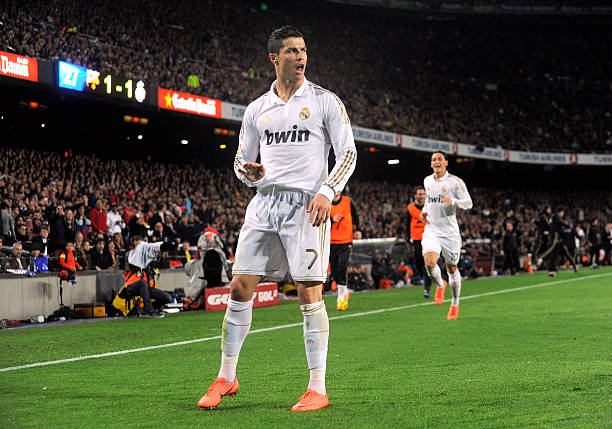
Their center backs frequently hold positions close to midfield. Such dominance inevitably creates space. Chelsea repeatedly exploited those openings against PSG by attacking quickly into the wide areas left vacant after regaining possession. Real Madrid used a similar blueprint against Barcelona, launching lightning-fast transitions toward Cristiano Ronaldo and Ángel Di María before the Catalan defense had time to recover. Against these teams, speed of execution matters far more than lengthy spells of possession.
Fifth principle : turn the game into a physical battle
Possession-based soccer demands enormous physical output. To regain possession immediately, these teams constantly sprint, change direction, and perform repeated high-intensity actions.
When opponents withstand those waves of pressure long enough while maintaining constant physical intensity, the effectiveness of the press gradually declines. Portugal successfully disrupted Spain’s rhythm by alternating controlled spells of possession, intelligent tactical fouls, and long defensive sequences without ever completely losing its defensive structure.
The objective is both physical and psychological: force this highly synchronized machine out of its natural rhythm. Beating an elite possession team is not about discovering a secret tactical trick.
Every team that has successfully accomplished it shares the same characteristics:
● flawless defensive organization;
● the ability to escape the initial press;
● devastatingly quick transitions;
● and ruthless efficiency in front of goal.
Real Madrid against Barcelona, Chelsea against PSG, and Portugal against Spain never attempted to outplay their opponents through possession. Instead, they accepted long periods without the ball. They suffered patiently without panicking. Then they ruthlessly attacked every space left behind by opponents who committed large numbers of players forward.
Against the world’s best possession teams, the question is therefore not how to have more of the ball.
The real question is what you do with it the moment you win it back.