

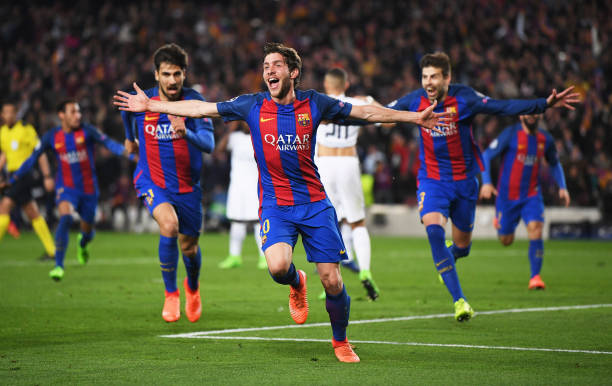
Sometimes, a single night can transform a soccer matchup into a story that extends far beyond the game itself. For Paris Saint-Germain and FC Barcelona, that night has a name: the remontada. On March 8, 2017, at Camp Nou, Barcelona overturned a seemingly insurmountable deficit against a PSG team that had won the first leg 4-0. In one of the most extraordinary comebacks in Champions League history, the Catalan club won 6-1 and eliminated Paris. For years, that defeat symbolized the limitations of PSG’s project and became a painful memory for its supporters. But the balance of power has since changed. Ahead of their next meeting on Tuesday night at the Parc des Princes, PSG is no longer simply the team trying to erase a traumatic memory. It has become a rival that Barcelona must take seriously, both on the field and beyond it.
The rivalry between Paris and Barcelona did not begin in 2017. The clubs had already faced each other in European competition during the 1990s, notably in the 1995 UEFA Cup Winners’ Cup quarterfinals, when Luis Fernandez’s PSG eliminated Barcelona. However, their rivalry took on a different dimension during the 2010s. The arrival of Qatari investment in Paris in 2011 transformed the club’s ambitions. PSG no longer wanted to dominate Ligue 1 alone. It wanted to conquer Europe. Barcelona, meanwhile, represented one of the most successful teams in world soccer, with Lionel Messi, Xavi, Andrés Iniesta, and a distinctive style of play that influenced an entire generation. The Catalan club won the Champions League in 2009 and 2011 before lifting the trophy again in 2015. Paris was still searching for a place among Europe’s genuine title contenders.
Their meetings in 2013 and 2015 showed that the gap between the two teams was not always as wide as their reputations suggested. In the 2012-13 Champions League quarterfinals, PSG pushed Barcelona to the limit but was eliminated after two draws, with the away-goals rule deciding the tie. Two years later, the clubs met again in the quarterfinals. This time, Barcelona won comfortably on aggregate, with Luis Suárez among the key figures, before continuing its run toward the title. The hierarchy appeared clear. Barcelona had the experience, the pedigree, and the players needed to deliver in the biggest European matches. Despite its investment, Paris had yet to demonstrate that it could consistently compete with the continent’s strongest teams.
When Paris want to shock the hierarchy

On February 14, 2017, PSG produced what looked like a statement victory. At the Parc des Princes, Unai Emery’s team overwhelmed Barcelona 4-0 in the first leg of their Champions League round-of-16 tie. Ángel Di María scored twice, Julian Draxler added another goal, and Edinson Cavani completed the rout. Barcelona looked powerless against a Paris side that appeared to have reached a new level. No team had ever overturned a four-goal deficit in a two-legged Champions League knockout tie. Then came March 8. Luis Suárez opened the scoring, Layvin Kurzawa put the ball into his own net, and Lionel Messi converted a penalty. At 3-0, Barcelona needed only one more goal to make the impossible seem possible. Cavani then scored for PSG, seemingly ending the comeback hopes. But Neymar struck twice in the closing minutes before setting up Sergi Roberto for the decisive sixth goal in the 95th minute. Barcelona won 6-1 and advanced. For Paris, the psychological damage was enormous. Questions about game management, individual mistakes, and controversial refereeing decisions dominated the aftermath. For Barcelona, the remontada became a defining achievement, proof that the team could overturn seemingly impossible circumstances. Yet the result did not end the rivalry. It gave the two clubs a lasting emotional connection that would shape every subsequent meeting.
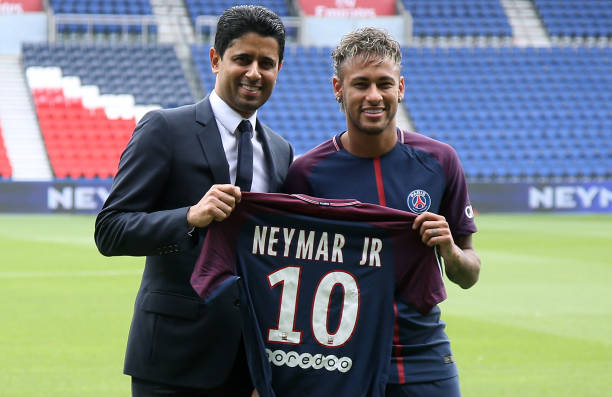
PSG would eventually look for a response through the same tools that had defined its project: elite recruitment, greater European ambitions, and a determination to turn painful defeats into experience. Neymar, in particular, became a central figure in the story. After playing a crucial role in Barcelona’s comeback, the Brazilian forward left Camp Nou for Paris in the summer of 2017 in a record-breaking $222 million transfer. His move represented more than a change of clubs. It was a symbolic statement from PSG, which now wanted to attract Barcelona’s biggest stars rather than simply endure their superiority. Lionel Messi followed a similar path in 2021, joining Paris after his financial and contractual difficulties with Barcelona made his departure unavoidable. These transfers added another dimension to the rivalry. The clubs were no longer competing only on the field; they were also fighting for elite talent, financial resources, and a place among soccer’s global superpowers.
Their reunion in 2021 delivered another important chapter. In the Champions League round of 16, PSG returned to Barcelona with the memory of the remontada still hanging over the tie. At Camp Nou, Kylian Mbappé produced one of the defining performances of his young career, scoring a hat trick in a 4-1 victory. The return leg at the Parc des Princes ended 1-1, allowing Paris to advance comfortably on aggregate. This time, PSG did not collapse under the pressure. Mbappé, who had grown into one of the most dangerous forwards in world soccer, became the face of a team capable of hurting Barcelona in its own stadium. The symbolism was unmistakable. Four years after suffering one of the most humiliating defeats in its history, Paris had eliminated its tormentor with authority.
The evolution of both clubs also helps explain the changing balance of power. PSG has enjoyed substantial financial backing, while Barcelona has endured a period of economic difficulties and sporting uncertainty. The departures of Messi and other established players forced the Catalan club to rethink its model. Youth development, financial discipline, and the search for a more sustainable squad became central priorities. Lamine Yamal emerged as the symbol of a new generation, while successive coaching appointments attempted to restore consistency and competitiveness. Paris, meanwhile, began to reconsider its own approach. After years of assembling collections of global superstars, the club increasingly emphasized collective organization, coordinated pressing, and tactical flexibility. That transition became particularly visible under Luis Enrique, the former Barcelona coach whose familiarity with the Catalan club added another layer to their meetings.
In 2024, the two sides met in the Champions League quarterfinals for another attempt to rewrite their shared history. Barcelona won the first leg 3-2 in Paris, putting itself in a strong position to advance. But PSG responded in the return leg. Despite falling behind, the French side took advantage of Ronald Araújo’s dismissal and gradually seized control of the game. Ousmane Dembélé, a former Barcelona player, scored against his old club, Vitinha put the visitors ahead, and Mbappé struck twice to complete a 4-1 victory. PSG advanced to the semifinals. The result did not erase the remontada, but it changed the way the rivalry was understood. Paris now had more recent memories of success to counter its defining trauma, while Barcelona had been reminded that its opponent possessed the quality and resilience to overturn a tie.
Tuesday’s matchup belongs to this new chapter. It is no longer simply a chance for PSG to settle a score dating back to 2017. It is a meeting between two clubs that have evolved, two projects seeking to establish themselves at the top of European soccer, and two fan bases that understand the symbolic importance of the fixture. PSG wants to reinforce its position among the continent’s elite, while Barcelona hopes to demonstrate that its rebuilding process can restore its ability to compete for the Champions League. On the field, individual matchups, the ability to withstand pressure, and clinical finishing in both penalty areas could determine the outcome. The psychological dimension, however, will be just as important. Every goal, mistake, and change of momentum will bring the history of this rivalry back into focus.
The PSG vs. Barcelona rivalry has become one of the most compelling stories in Champions League soccer because it combines several defining elements of the modern game: money, transfers, tactical identity, global superstars, and the power of collective memory. Barcelona once represented the model Paris wanted to emulate. The remontada then created an almost obsessive connection between the two clubs, before PSG’s victories in 2021 and 2024 changed the balance of the narrative. Ahead of their next meeting, one thing remains certain: history does not win soccer games, but it gives every encounter an extra layer of intensity. PSG is no longer simply the club trying to forget Barcelona. It has become a team that the Catalans must overcome to prove their own European ambitions.
 FC Barcelona
 PSG