

In soccer, some positions are difficult to define with a simple location on the field. The regista is one of them. Literally, the Italian word means “director” or “producer.” A particularly fitting definition for a player whose job is to organize the game from a deep position, usually in front of the defense. Unlike the traditional No. 10, who operates between the lines and close to the forwards, the regista influences the game from a much deeper area. He is both the first player responsible for building out from the back, the tempo setter, and the link between defense and attack.
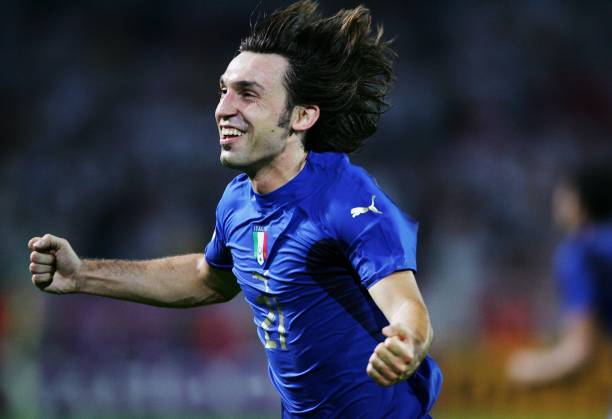
A deep-lying no.10 who organizes the game
The regista is above all a player who constantly looks to make himself available. Positioned in front of the center backs, he must be able to receive the ball from the goalkeeper or his defense under pressure, sometimes with his back to goal, while already identifying his next option. His main quality is therefore not necessarily speed or power, but his ability to quickly analyze his surroundings and make the right decision.
His role is to move the ball forward. This can involve short passes to maintain possession as well as vertical passes designed to break one or more lines. The regista must also be able to stretch the play and quickly switch the point of attack with his long passing. His deep position gives him a complete view of the field: he can speed up the game when an opening appears, but also slow the tempo when his team needs to regain control.
It is this ability to control the tempo that truly distinguishes the regista from a simple defensive midfielder. He does not just win the ball and pass it on: he decides where, when, and how his team is going to play. The term therefore refers to a genuine conductor role. Andrea Pirlo is the most famous example. After beginning his career higher up the field, the Italian was moved in front of the defense, an area where his technical ability, vision, and passing could be better utilized. He then became one of the definitive models for the position.
A playmaker who must also know how to defend
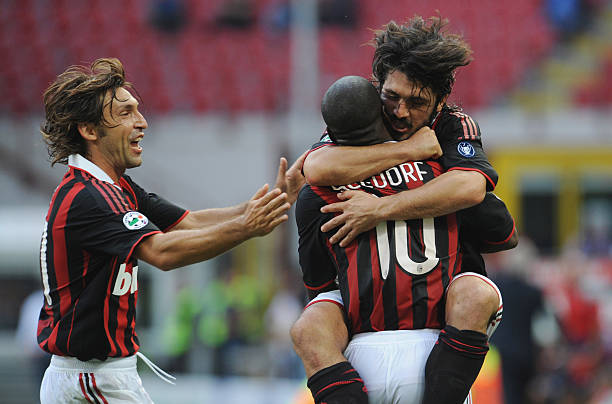
Reducing the regista to his role with the ball would nevertheless be a mistake. Because he operates in front of the defense, he also occupies a strategic position when his team no longer has possession. When the ball is lost, he must quickly return to the center to protect the defense and prevent the opponent from easily progressing through the heart of the field. In particular, he must cut off passing lanes to the forwards, intercept, and win second balls.
This defensive dimension explains why the regista cannot simply be an “artist” positioned in front of his defense. He must possess genuine positional intelligence. When a teammate leaves his area to challenge an opponent, the regista must be able to cover the space left behind without abandoning the center. His role is therefore constantly connected to the team’s overall balance.
This requirement also explains why some registas need to be partnered with more physical midfielders or players more focused on winning the ball back. At AC Milan, Pirlo played in a diamond midfield where Gennaro Gattuso, Clarence Seedorf, or Massimo Ambrosini could compensate for some of his defensive limitations. At Juventus and with Italy, he also benefited from players capable of covering ground around him. Jorginho experienced a similar situation at Napoli, and later with Chelsea and Italy.
The position therefore relies on a delicate balance: the regista must have enough freedom to create, but his team must also be structured to protect him. This explains why the profile remains relatively rare. The more valuable he is in the buildup, the more a turnover or his absence during defensive transitions can expose his team.
A role evolving with modern soccer
The position has not disappeared, however. It has evolved. One of the best recent examples is Hakan Çalhanoğlu, whose transformation at Inter Milan perfectly illustrates the evolution of the modern regista. Initially known for his attacking qualities and his activity in advanced areas, the Turkish midfielder was gradually moved in front of the defense following the departure of Marcelo Brozović. He then became a genuine anchor for Inter’s buildup.
At Inter, Çalhanoğlu can drop between the center backs to participate in the initial buildup before moving back into the heart of midfield. This mobility allows him to dictate the tempo while providing an additional option when the opponent presses high. His influence can be measured in particular by the volume of touches he gets and the number of passes he completes. In Serie A during the 2024-25 season, he completed more than 1,155 passes and made 127 passes into the final third, while maintaining a significant defensive contribution through his interceptions and recoveries.
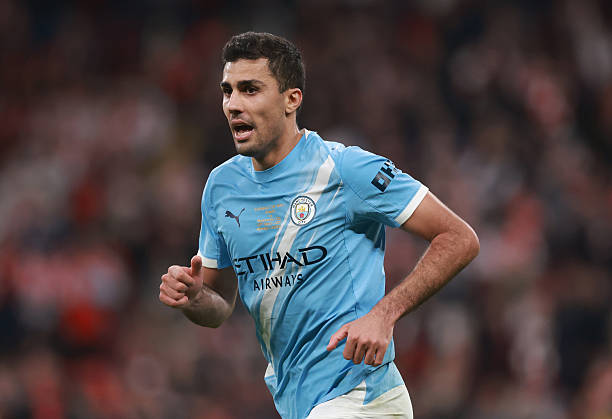
This evolution can also be seen in Pep Guardiola’s soccer. During the 2025-26 League Cup final against Arsenal, Manchester City regularly dropped Rodri between the center backs during the initial buildup phase. The Spanish midfielder could then help create a back three, while another player remained in midfield. This structure allowed City to create a numerical advantage in the buildup and vary its progression angles.
The modern regista is therefore no longer necessarily the Pirlo of the past, standing in front of his defense and tasked with delivering diagonal passes. He can become a much more mobile player, capable of joining the defensive line, moving into a half-space, or directly participating in the counter-press. But his essence remains the same: to be the player through whom control of the game flows.
Whether it is Pirlo, Jorginho, Çalhanoğlu, or, in a more hybrid version, Rodri, the regista ultimately has a mission that is simple to understand but extremely difficult to master: make everyone else play. He does not necessarily seek to be the most visible player. He seeks to be the one who gives direction to the game, controls its tempo, and allows his team to transition from winning the ball back to attacking. A true director, positioned just a few yards in front of the curtain of his own defense.