

Beaten 2-0 at the Parc des Princes in a one-sided Champions League quarterfinal first leg, Liverpool have almost sealed their own fate. Without a single shot on target, dominated in every phase of play and trapped in an incomprehensible ultra-defensive setup, the English club looked like it had given up before even playing. The numbers are brutal: a pitiful expected goals tally (0.18 vs 2.2) and a complete inability to exist offensively. And yet, all is not lost. The 2-0 scoreline, given the flow of the match, is almost flattering. Because on the other side, PSG missed the chance to completely kill the tie. Inefficient, at times disorganized, and still imperfect in certain structural balances, PSG exposed weaknesses that Liverpool either could not—or chose not to—exploit. At Anfield, Liverpool will need to radically change their approach. But above all, they must capitalize on three key areas that emerge from analyzing the first leg and recent trends.
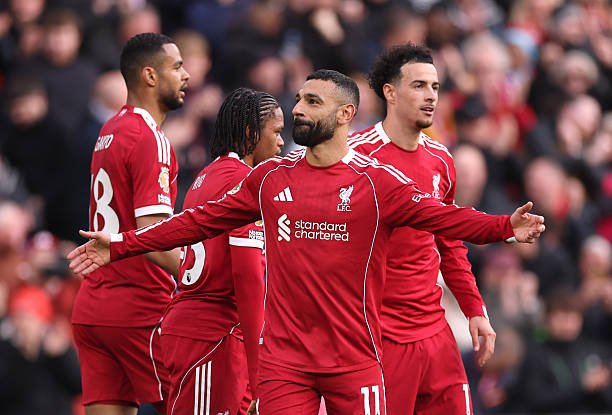
Attack PSG where they are the most vulnerable : transition
The first takeaway is almost counterintuitive: PSG, despite their dominance, remain vulnerable… when they attack.
Since the start of the season, the Parisian club has embraced an ambitious positional play model: high possession, very offensive and versatile fullbacks, and numerous players committed in the final third. This system allows them to overwhelm opponents, but it comes with a structural risk—exposure in defensive transitions.
This is nothing new. In positional play systems, losing possession is a critical moment. If the counter-press is ineffective or poorly coordinated, the team becomes immediately unbalanced. And this is precisely where Liverpool should have struck in the first leg… but never did. Unlike Chelsea, who lost by a bigger margin but still showed the ability to exploit transitions—illustrated by their second goal built on pure speed. Marquinhos was dragged out to right-back to cover Hakimi, leaving him unable to cope with Pedro Neto’s pace, whose cross found Enzo Fernandez for the finish.
By choosing a low block and a back five, Arne Slot stripped his team of any ability to transition forward. The result: no transitions, no threat, no depth—and a naivety in being pulled out of shape by PSG’s buildup.
Yet, the few signs visible in the match were revealing. On several occasions, PSG were exposed immediately after losing possession, particularly in wide areas. The forward runs of Achraf Hakimi and overlapping fullbacks left exploitable spaces behind them, while forcing Neves into uncomfortable positions that Liverpool could have targeted. But without quick projection, these situations were never punished.
This is where the second leg can turn. To overturn PSG, Liverpool must rediscover their identity as a transition team. This requires several adjustments. First, reintroduce verticality with an attacking plan and more support for the Wirtz–Ekitike duo, who were far too isolated. They must use depth with constant runs and avoid physical duels with Pacho, who is one of the toughest defenders to beat in direct battles. Movement must be used to outplay him. Then, quickly exploit wide areas after regaining possession, as seen against Galatasaray, to stretch PSG and open central spaces.
To beat PSG, Liverpool must embrace an open, end-to-end game. In a closed match, PSG’s technical superiority will prevail, thanks to their ability to combine in tight spaces. But in a transition-heavy game, structural balances become fragile. And that is exactly the kind of chaos that can make Paris uncomfortable.
Exploit PSG’s recurring inefficiency
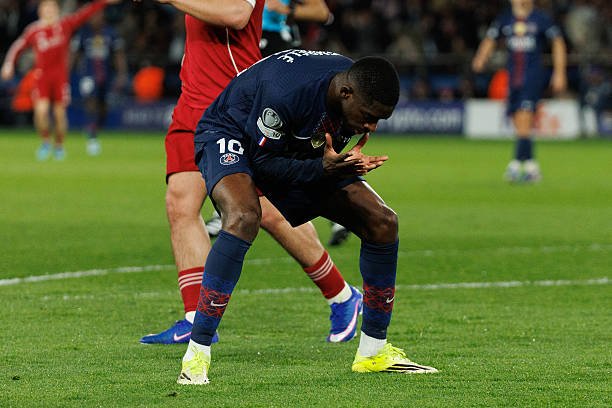
The second lever is both psychological and tactical: PSG dominate, but they don’t always finish the job.
The first leg perfectly illustrates this. Despite total control, PSG only scored twice… and missed several clear chances. Ousmane Dembélé and Désiré Doué both failed to convert major opportunities. And this is not an isolated case. This attacking inefficiency has been a recurring theme in some of PSG’s performances this season.
It creates a dangerous paradox: a team capable of overwhelming opponents… without putting them out of reach. And that is exactly why Liverpool are still alive.
For Liverpool, the objective is twofold: stay in the game as long as possible. The longer the score remains tight, the more pressure can shift. PSG, already frustrated at not extending their lead in the first leg, could begin to doubt.
But Liverpool must also be ruthless. Unlike PSG, they cannot afford to waste chances. Every opportunity must be maximized.
This is where Liverpool’s lack of attacking ideas in the first leg becomes a major issue. They must turn a one-sided game into an unpredictable one. Because PSG are never more vulnerable than when they dominate without converting.
Impose a high tempo
The third lever may be the most decisive: the rhythm of the game.
At the Parc des Princes, PSG played at their own pace. Controlled possession, long sequences, constant territorial dominance. Liverpool suffered without ever disrupting that flow.
But the return leg at Anfield presents a completely different scenario.
Historically, Liverpool are a team built on rhythm, intensity, and controlled chaos. Even under Slot, traces of that identity remain—especially in pressing phases and direct play, as seen against Galatasaray. It shows the team is still capable of producing aggressive and vertical sequences when playing with freedom.
And this is exactly the kind of match that can unsettle PSG.
Because despite their technical quality, Paris are less comfortable in chaotic games. When the tempo rises, distances stretch, and duels multiply, their control begins to fade. This has been evident in losses against teams like Rennes or Monaco, where PSG struggled to cope with high-intensity transitions.
For Liverpool, the strategy must be clear: press high and aggressively. Even if it carries risks, pressing is essential to prevent PSG from settling into their rhythm. With the ball, they must constantly accelerate play through immediate transitions and relentless movement.
Finally, there is the intangible factor: Anfield. The emotional environment matters. At home, Liverpool can transform a tactical contest into a physical and mental battle.