

One victory, eight disappointing results. That is the brutal summary of the latest European week for Premier League clubs. Of the nine English teams competing in UEFA competitions — the UEFA Champions League, UEFA Europa League, and UEFA Europa Conference League — only Aston Villa FC managed to win, defeating LOSC Lille 1–0 thanks to a goal from Ollie Watkins.
The contrast is striking for a league often described as the most powerful in the world. This disappointing European week has revived a recurring question: is the Premier League really dominant on the continental stage? Between quick criticism and more nuanced analysis, several factors help explain the situation.
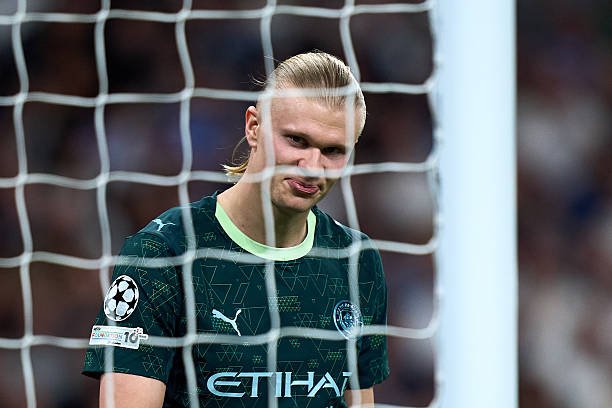
A week to put in perspective

The recent results caught the attention of many observers: no victories for English clubs in the first legs of the Champions League Round of 16, despite the strong presence of Premier League teams in the competition.
These results have fueled the narrative that English soccer may be losing ground to other major European leagues. Yet a broader view of the season’s results softens that conclusion. Across the entire campaign, Premier League clubs have generally performed well, with some dominating the Champions League league phase.
This overall consistency explains why England remains very well positioned in the UEFA coefficient rankings and is still in a strong position to secure an additional Champions League qualification spot.
In other words, the disastrous week is real — but it does not necessarily define the English season in Europe.
The intensity in Premier League : a weakness ?

One of the most common explanations lies in the nature of the Premier League itself.
Unlike some leagues dominated by two or three clubs, the English championship is characterized by strong internal competition. Every weekend features intense matches, with mid-table teams capable of defeating the league’s biggest sides.
However, this constant intensity can become a disadvantage in European competition. Players often arrive at continental matches fatigued, particularly during congested schedules. While clubs in other leagues may sometimes rotate or manage their efforts domestically, English teams must remain competitive every week.
The paradox is clear: what makes the Premier League attractive — its competitiveness — can also reduce the physical freshness of its representatives in Europe.
The illusion of economic power

The debate about the true value of the Premier League also stems from a frequent misunderstanding: financial wealth does not automatically translate into sporting dominance.
The Premier League remains the richest league in the world, with unmatched broadcasting and commercial revenues. However, that wealth is distributed across many clubs, strengthening the competitive balance within the league.
As a result, English teams may be less dominant in Europe than clubs from more hierarchical leagues, where the strongest teams concentrate resources and stability.
A powerful league but no untouchable
Finally, it is important to remember that English dominance in Europe is relatively recent — and cyclical.
In recent years, Premier League clubs have won multiple European trophies and frequently reached finals. The 2024–2025 season even produced an all-English UEFA Europa League Final, where Tottenham Hotspur FC defeated Manchester United FC.
These cycles of dominance often rotate among Europe’s major leagues. Periods of relative decline do not necessarily signal a structural downfall.
The disastrous European week for English clubs has revived an old debate about the real strength of the Premier League.
But the reality is more nuanced. Yes, English clubs are currently experiencing difficulties in certain European matchups. Yes, the intensity of their domestic league and the rising level across Europe make the challenge tougher.
Yet the structural indicators — overall performances, the UEFA coefficient ranking, and the depth of squads — still place the Premier League among the most competitive leagues in Europe.
The conclusion may be the simplest one: the Premier League remains extremely strong, but it is no longer untouchable.