

The World Cup is often described as the pinnacle of global football. Yet for African nations, qualifying on a regular basis is a genuine structural challenge. Despite a vast pool of talent and occasional standout performances, sustained presence at the highest level remains rare. Morocco’s recent history perfectly illustrates this reality. Between its crucial qualification for the 2018 World Cup in Russia and its historic run to the semifinals in 2022, the Atlas Lions showed that success does not come out of nowhere. It is built within a demanding continental context, where simply qualifying is already an achievement.
An uneven equation : 5 spots for 55 nations
The first challenge is structural. The Confederation of African Football (CAF) includes 55 member associations, yet for many years only five World Cup spots were allocated to the continent.
This imbalance creates an extremely selective competition. Statistically, fewer than 10% of African teams can reach the final tournament. By comparison, other confederations enjoy far greater access.
It’s also important to remember that until the 1990 World Cup, Africa had only one or two slots. This underrepresentation slowed the accumulation of international experience. Even though the number of places has increased since then, the gap remains significant. European and South American powerhouses have built their World Cup culture over decades of consistent participation. African teams, by contrast, have often had to deal with intermittent appearances.
The consequences are immediate: maximum pressure from the very first rounds, direct clashes between top nations during qualification, and an inability to build continuity without near-perfect campaigns. In this context, even the best generations are never guaranteed a place.
Ruthless qualifying format
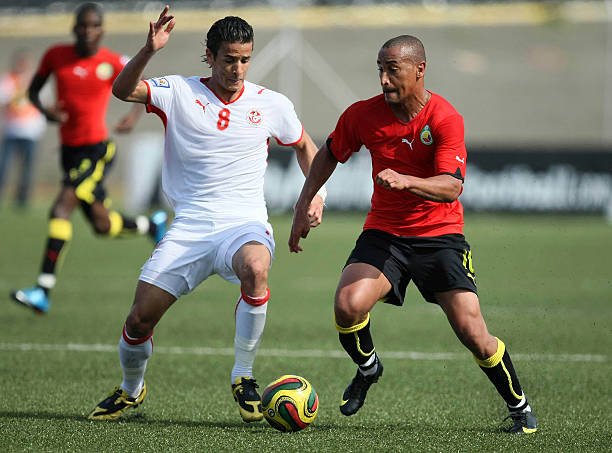
The difficulty lies not only in the number of slots, but also in the qualification format, often described as one of the most demanding in the world.
The system has evolved over time but retains the same core principle: drastic filtering. For the 2010 and 2018 cycles, there were successive group stages where only group winners advanced. For 2014 and 2022, it involved group stages followed by two-legged playoffs between the best teams.
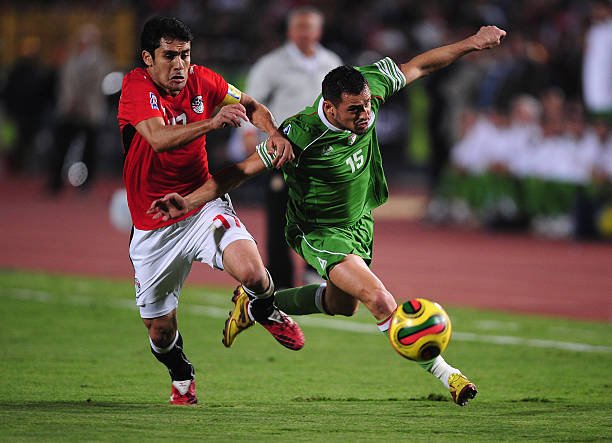
This system creates a true bottleneck. According to analyses of African qualifiers, several major nations are eliminated before the final round simply because they are drawn into highly competitive groups. For example, Egypt’s golden generation of the 2000s and Samuel Eto’o’s Cameroon both missed the 2006 World Cup after being grouped with Didier Drogba’s Ivory Coast.
2018-2022 : Morocco show how consistency is important
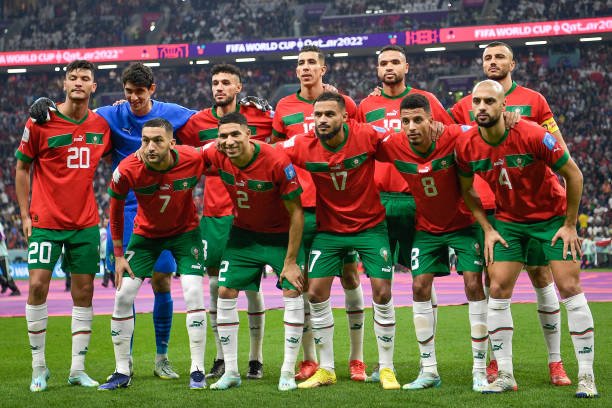
In this context, Morocco’s qualification for the 2018 World Cup was a pivotal moment. After twenty years of absence, the Atlas Lions secured their ticket by winning away in Ivory Coast in a decisive match. This qualification was far from trivial. The campaign was marked by exceptional defensive solidity—zero goals conceded—and strong tactical discipline, signs of a team in development but already competitive. Morocco managed to top a group that included Pierre-Emerick Aubameyang’s Gabon and an Ivory Coast side aiming for a fourth consecutive World Cup. However, at the 2018 World Cup itself, Morocco failed to advance past the group stage. Yet their performances were far from insignificant. The Atlas Lions competed well against teams like Spain and Portugal, showing organization and competitiveness. But as is often the case with African teams, a lack of experience at the highest level proved costly in key moments—especially in finishing and game management. An own goal handed Iran victory in the opening match, a marking error allowed Cristiano Ronaldo to score for Portugal, and poorly timed turnovers exposed the team. Combined with inefficient finishing, Morocco became a team that experienced opponents could punish. Brave enough to play high, but not clinical enough to capitalize on chances. And that is precisely why this participation mattered. Russia 2018 allowed Morocco to gain invaluable high-level international experience outside of AFCON after two decades without a World Cup. It exposed players like Romain Saïss, Achraf Hakimi, Youssef En-Nesyri, Hakim Ziyech, and Sofyan Amrabat to the intensity of the tournament. It also helped build a collective and mental foundation that would withstand coaching changes. In a context where African participation is irregular, every World Cup becomes precious capital.
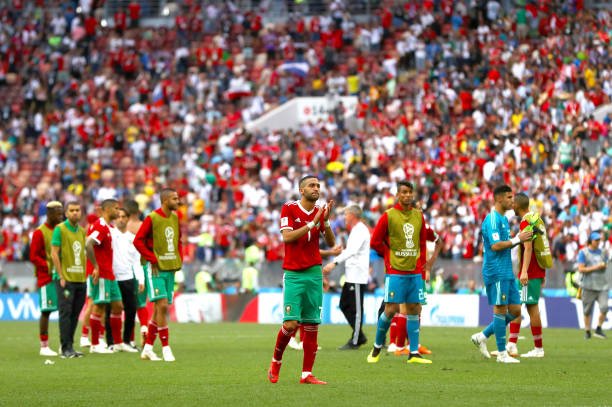
Four years later, Morocco achieved the unthinkable by reaching the semifinals of the World Cup in Qatar, the first African nation to do so. This historic performance is largely rooted in the groundwork laid in 2018. The 2022 generation did not start from scratch. Core players had already experienced World Cup pressure, several were established at the highest club level, and the team relied on a relatively stable structure despite coaching changes. The Saïss–Aguerd defensive partnership was well-established, Ounahi and Amrabat had built strong chemistry, and the freedom given to Ziyech and Boufal perfectly complemented En-Nesyri’s work rate. Morocco’s run is often described as a miracle because of its unprecedented nature, but it is also the product of rare continuity—made possible by prior qualification. In a system where African teams struggle to qualify consistently, such continuity becomes a decisive advantage.
Morocco’s journey from 2018 to 2022 shows that a different trajectory is possible. By successfully stringing together two coherent cycles, the Atlas Lions transformed a simple qualification into a springboard for a historic achievement. However, this kind of continuity remains rare in Africa—aside from examples like Senegal—precisely because of the structural constraints discussed earlier. It is no coincidence that the 2025 AFCON final featured two of the continent’s most consistent teams.
There is still reason for optimism. Emerging Algerian youth, a constantly evolving Ivory Coast with fresh talent, and a competitive South Africa backed by a strong domestic league all suggest that African football continues to grow.
But until structural barriers are eased, one reality will remain: for African nations, qualifying for the World Cup is already a battle—and staying there is an even greater challenge.