

For six years, France had Raymond Domenech as its manager. Six long years in which his greatest achievement may have been uniting the entire country against him. Even today, his tenure still leaves a lasting sense of trauma around the French national team.
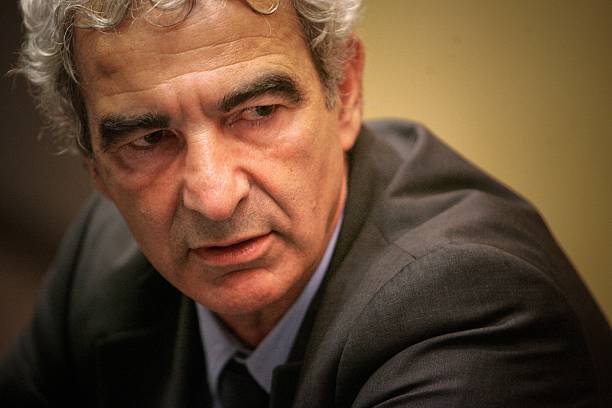
A toxic management who led Knysna’s disaster
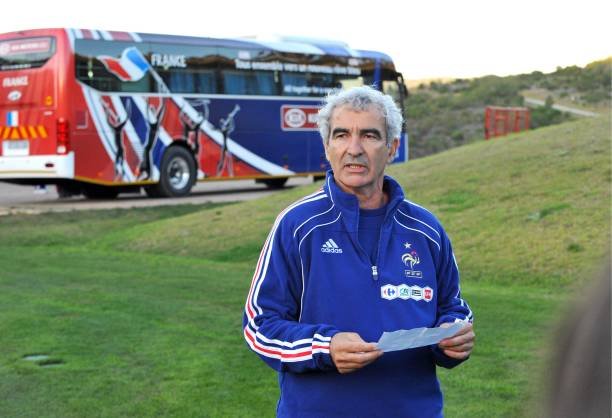
Beyond Spain’s World Cup triumph, the lasting image of the 2010 FIFA World Cup will probably remain the greatest humiliation in the history of French soccer. And at the center of that disaster stood one man: Raymond Domenech. Long before the infamous bus strike, the French team was already collapsing under the manager’s paranoid and authoritarian leadership.
After the disastrous Euro 2008 campaign, Domenech somehow kept his job despite leading a team with no identity, no results, and almost no connection with the French public. In South Africa, he created a constant climate of tension: closed training sessions, terrible communication, incomprehensible tactical decisions, and a complete lack of authority over his squad.
The Nicolas Anelka incident perfectly symbolized this downfall. When the story exploded after France’s loss to Mexico, Domenech failed to protect his locker room and allowed the situation to spiral publicly. Eight years later, William Gallas openly accused him on French media outlet RMC of having “created chaos” inside the squad, of being the leak behind the Anelka controversy, and of letting the players carry all the media blame for the fiasco.
But perhaps the most damaging part of his tenure was his complete inability to manage people. Between internal cliques, public humiliations, and unresolved tensions, Domenech allowed the national team to drift toward the surreal Knysna bus strike — a moment that became a worldwide symbol of French embarrassment.
A manager not able to find a soccer identity
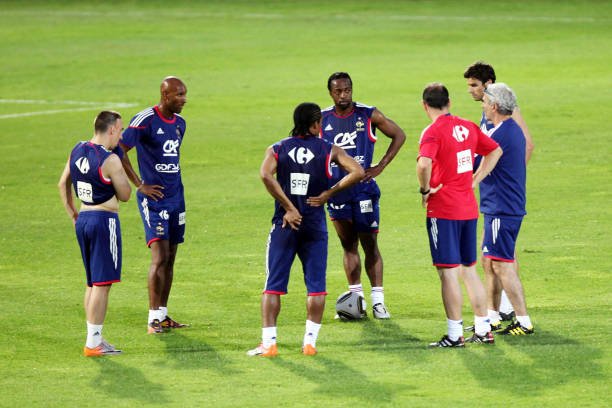
The Domenech paradox is cruel: he technically reached a World Cup final in 2006, but that run owed an enormous amount to the veteran core of the 1998-2000 generation. During qualification, France only truly recovered after the returns of Zidane, Makelele, and Thuram, as Les Bleus had previously been stuck in endless draws. Once that core declined after Zidane’s retirement in 2006, the manager’s limitations became impossible to hide.
During his six years in charge, France never appeared to have a real soccer identity. Lineups constantly changed, tactical choices felt improvised, and several players were repeatedly used out of position. In 2010, after spending the entire preparation period working on one system, Domenech changed everything again right before the opening game against Uruguay.
Many of his decisions made him look completely lost in his own ideas. Yoann Gourcuff, considered one of France’s brightest hopes at the time, became isolated within the squad. Florent Malouda, a veteran leader from 2006 who was coming off an outstanding season with Chelsea, was tactically sacrificed despite being one of France’s best players. Meanwhile, the balance of the team constantly shifted from game to game.
At the same time, the veteran players often appeared to hold more power than the manager himself.
Even qualification for the 2010 World Cup remains associated with the infamous playoff against Ireland and Thierry Henry’s handball. From a sporting perspective, the Domenech era is mostly remembered for a French team incapable of controlling matches and repeatedly rescued by individual talent rather than any collective structure.
A narcissitic communication style that became a symbol of shame
Raymond Domenech did not only damage France on the field — he also deeply harmed the image of the national team. His constant communication style, often provocative or bizarre, eventually turned Les Bleus into a national soap opera.
The most famous moment remains his marriage proposal to his partner live on French television immediately after France’s elimination from Euro 2008. While the country was experiencing a sporting disaster, the manager instantly shifted the attention back onto himself. The scene immediately became the perfect symbol of a reign in which the coach’s ego often seemed more important than the institution itself.
But that moment was far from isolated. Between arrogant press conferences, endless conflicts with journalists, ambiguous statements, and his constant refusal to accept responsibility, Domenech gradually disconnected the French national team from the entire country. Even after Knysna, he spent years refusing to fully acknowledge his mistakes, famously claiming he was “responsible, but not guilty.”
The problem with Domenech is therefore not simply that he lost. Other French managers failed before him. But none damaged the image of Les Bleus so deeply, fractured a locker room so completely, and turned the French national team into an object of international ridicule.
It is this combination of sporting chaos, disastrous man-management, and catastrophic communication that makes Raymond Domenech, for many people, the worst manager in the history of the French national team.
https://twitter.com/NetflixFR/status/2049428480656310432/video/1?s=46
A netflix serie’s will be build about Knysna’s disaster