

The contrast is striking. While Paris Saint-Germain has established itself at the top of European soccer and its recent Champions League successes have provided French soccer with an exceptional showcase, the reality behind the scenes tells a very different story. Behind Paris’ trophies, a large portion of Ligue 1 clubs continue to struggle to maintain a financial balance that has become increasingly precarious. Declining TV rights, massive deficits and dependence on player sales: French soccer is increasingly resembling a two-speed system, with PSG now operating on an entirely different planet.
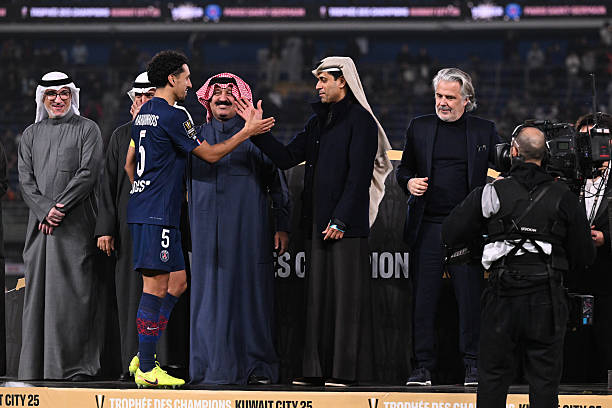
Ligue 1 can’t generate revenue
The first problem facing French soccer remains structural: Ligue 1 is no longer able to generate revenues comparable to those of its main European competitors. The report published by UEFA in 2026 particularly highlights this weakness. While European clubs surpassed €30 billion in total revenue for the first time in 2025, France continues to lag behind, particularly when it comes to broadcasting rights.


The situation is even more problematic because commercial revenue is extremely concentrated. According to UEFA, the ratio between the commercial and sponsorship revenues of the best-performing French club and those of a median club stands at 29, compared with 9 in England and 7 in Germany. The difference perfectly illustrates French soccer’s dependence on a handful of economic powerhouses, led, of course, by PSG.
On top of this structural weakness comes the never-ending saga surrounding TV rights. Following the successive failures of Mediapro and DAZN, Ligue 1 eventually launched its own channel, Ligue 1+, but the amounts redistributed to clubs remain particularly low. For the 2025-26 season, the revenue actually available to Ligue 1 clubs was heavily reduced by various charges, solidarity mechanisms and the CVC agreement. According to figures reported by So Foot, top-flight clubs were expected to share only around €80.5 million from the main broadcasting revenues, a situation that raised fears of another deterioration the following season.
The paradox is therefore particularly cruel: while PSG provides the French league with exceptional international exposure thanks to its European performances, the other clubs still lack an economic environment capable of turning that exposure into sustainable revenue.
Deficits becoming increasingly alarming
DNCG figures provide a concrete measure of the scale of the problem. Of the 18 Ligue 1 clubs that completed the 2024-25 season, only seven recorded a positive net result. Eleven therefore ended the financial year in the red. And some deficits have now reached particularly worrying levels.
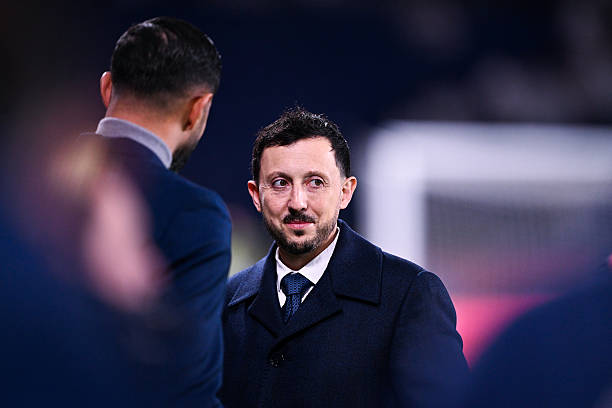
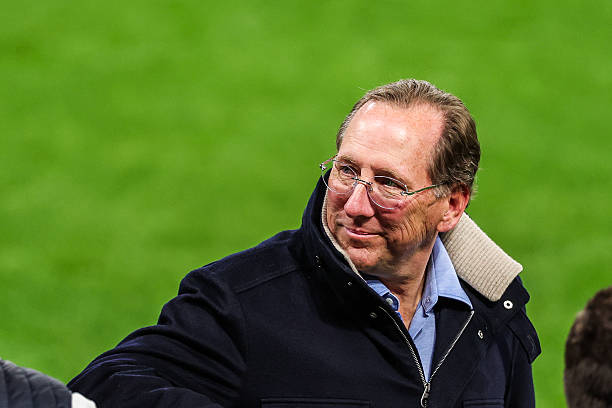
Olympique Lyonnais is the most spectacular example of this decline. The Rhône-based club recorded a net loss of €208.6 million in 2024-25, compared with €25.8 million the previous year. Olympique de Marseille was not much more reassuring, with a deficit of €104.8 million, while Strasbourg also posted a loss of €78.3 million.
Even historically better-structured clubs have not been spared. Rennes recorded a €27 million loss, while Nice and PSG posted deficits of €40.5 million and €40.2 million respectively. The difference, however, lies in these clubs’ ability to absorb their losses and in the strength of their financial resources.
PSG’s case is particularly revealing of the gap separating Paris from the rest of the league. The Parisian club can post an accounting deficit of €40.2 million while benefiting from commercial revenue, sponsorship and European competition income that is on an entirely different scale from that of its French rivals. UEFA specifically highlights this imbalance and places PSG in an economic category that is significantly different from that of the majority of Ligue 1 clubs.
Lille, on the other hand, illustrates what a successful European campaign can provide: LOSC ended the 2024-25 season with a profit of €81.7 million, notably thanks to its run in the Champions League. European competition therefore appears to be an extraordinary financial lifeline for French clubs… but it remains available to only a handful of teams.
PSG thrives in Europe while ligue 1 searches for its model
This is ultimately the great paradox of French soccer today. On one side, PSG has become a European powerhouse capable of generating considerable revenue through its sporting success. On the other, its domestic competitors operate in a league whose economic model has become considerably weaker.
PSG’s success may even reinforce this sense of imbalance. The Parisian club now directly benefits from the enormous revenues generated by its European campaigns, while other clubs depend more heavily on domestic TV rights, player sales and European qualification, which can transform an entire season. So Foot reported that after its Champions League runs and its participation in the Club World Cup, Paris had generated around €230 million in competition-related revenue, highlighting the gap that can now exist between the French champion and its closest challengers.
The problem is that PSG’s success is not enough to economically save the league as a whole. It provides exposure, attracts international attention and contributes to Ligue 1’s prestige, but it does not solve the weakness of TV rights or the deficits accumulated by clubs. UEFA itself has recommended considering solidarity mechanisms capable of reducing financial disparities between teams.
French soccer therefore finds itself in a paradoxical situation: its flagship club has never appeared more powerful, while the rest of the ecosystem has never seemed more fragile. The difficulties faced by Lyon and Marseille, the uncertainty surrounding TV rights and the dependence on player sales show that the problem goes far beyond a few poor management decisions. It is the entire economic model of Ligue 1 that needs to be reconsidered.
Because behind the images of PSG lifting Europe’s most prestigious trophies lies a much less glamorous reality: a league in which eleven out of eighteen clubs finished the last season with a negative net result, where broadcasting revenues are no longer sufficient to compete with the major European leagues, and where the gap between Paris and the rest of France continues to grow.
PSG may now reign over Europe. But for that reign to truly benefit French soccer, the clubs playing behind it must first be given the ability to simply continue existing under financially sustainable conditions.