

In early January 2026, Manchester United made another dramatic managerial decision — one that once again raised questions about the club’s direction, stability, and identity. After a turbulent 14-month tenure, Rúben Amorim was sacked as Manchester United’s head coach, leaving behind a mixed legacy and opening the door for a familiar face in the dugout: Michael Carrick.
This moment — sacking a head coach mid-season — is rare for elite clubs but has become increasingly familiar for the Red Devils. United have long struggled to find a clear identity, oscillating between tactical philosophies and managerial personalities, rather than building a coherent long-term vision. The decision to remove Amorim marks another chapter in that ongoing struggle.
A rough ride: Amorim’s time at Old Trafford
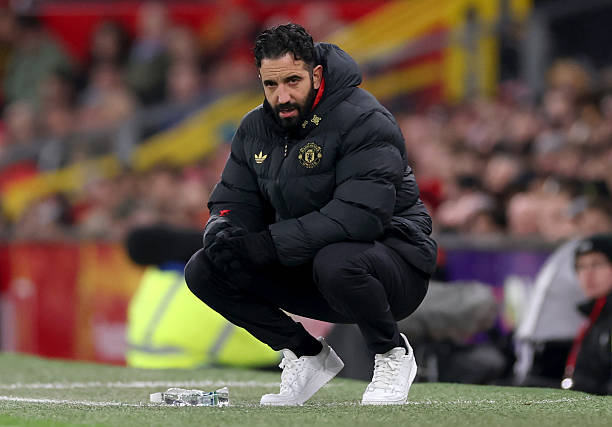
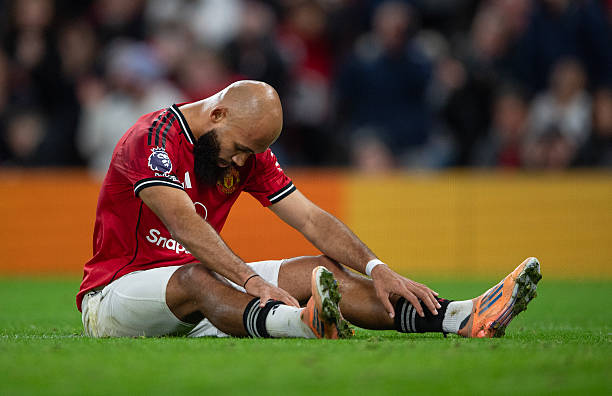
Rúben Amorim arrived at Manchester United in November 2024 with significant promise. The Portuguese coach had built a strong reputation at Sporting CP and was seen as an exciting, modern strategist who could inject direction into a club that, at the time, lacked tactical identity. His mandate was clear: rebuild United’s playing style while delivering competitive results in the Premier League and Europe.
However, the results were inconsistent. Under Amorim:
- United endured one of their worst Premier League seasons, finishing 15th in the 2024-25 campaign — their lowest since the early 1990s.
- The club suffered a humiliating exit from the Carabao Cup to League Two opposition, Grimsby Town — a result emblematic of the broader struggles.
- Despite reaching the Europa League final, the team failed to secure European qualification for the following season, compounding frustration among fans.
These results, coupled with perceived tactical rigidity and occasional tension between the coaching staff and club hierarchy, ultimately eroded confidence in Amorim’s project. While he defended his approach, insisting on the importance of systemic consistency and belief in his methods, the lack of tangible progress was too much for United’s leadership to tolerate mid-campaign.
Amorim’s downfall was, in many ways, an identity clash: a tactician committed to a specific philosophy versus a club that historically prioritizes immediate results over long-term process.
Enter Michael Carrick: more than a stopgap
Almost instantly after Amorim’s departure, whispers began about who would take the reins. Out of the early contenders — including Ole Gunnar Solskjær and other former players — United ultimately chose Michael Carrick to serve as interim head coach for the remainder of the 2025-26 season.
This was not just another caretaker appointment. Carrick is someone deeply woven into the fabric of Manchester United’s modern history.
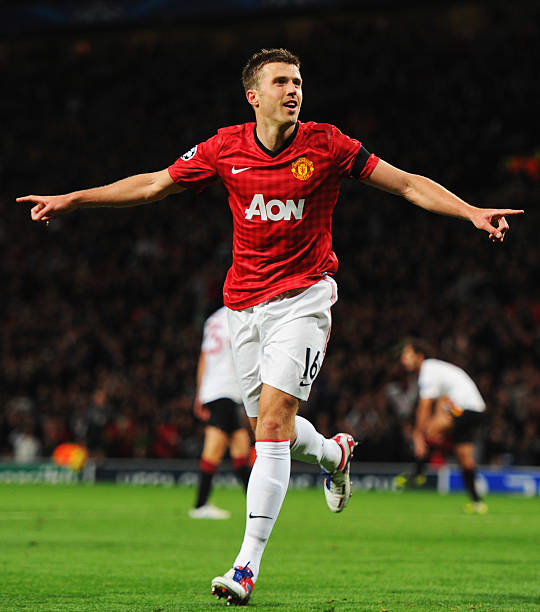
Carrick’s legacy as a player
- 12 years at Old Trafford (2006–2018) with 464 appearances.
- Five Premier League titles, one UEFA Champions League, and a host of other major trophies.
- A midfielder renowned for his intelligence, calm control, and ability to dictate tempo — not flashy, but essential.
His career bridged eras of United football: from Sir Alex Ferguson’s dominance to the uncertain years that followed. His understanding of the club’s DNA — both tactically and culturally — made him an appealing choice to steady the ship.
From coach to interim manager
After retiring in 2018, Carrick stayed at the club as a coach, working under various managers including José Mourinho and Solskjær. He even had a brief interim spell in 2021, winning two of three matches before stepping down for Ralf Rangnick.
His managerial journey continued outside United with Middlesbrough, where he showed an ability to lift a struggling team, guiding them to the Championship play-offs and a League Cup semifinal before his departure in 2025.
So when United — a club known for its tradition and tactical heritage — needed a steady hand, Carrick’s appointment felt like a logical bridge between the club’s past and its uncertain present.
A new identity on the pitch
Since taking charge, Carrick has not merely acted as a caretaker; he has begun implementing a distinct identity — one that resonates with fans and players alike. Under his stewardship, United have recorded important victories that seemed unlikely just weeks earlier:
- A statement 2-0 win over Manchester City in the derby — a result that was as much psychological as it was tactical.
- A stunning 3-2 victory over Premier League leaders Arsenal, making a bold statement in the title race and showing United are not just playing out the string.
These results have pushed United into fourth place in the league, igniting hopes of a Champions League push and restoring belief that had been absent under Amorim.
Tactically, Carrick has favored a more balanced and intense approach, marrying attacking intent with defensive organization. His sessions have reportedly emphasized sharper movement, clearer roles, and more intensity — contrasting with the rigidity that marked parts of Amorim’s tenure.
Restoring confidence and cultivating youth
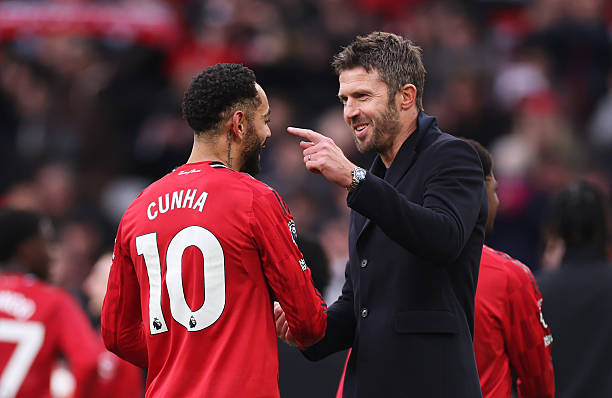
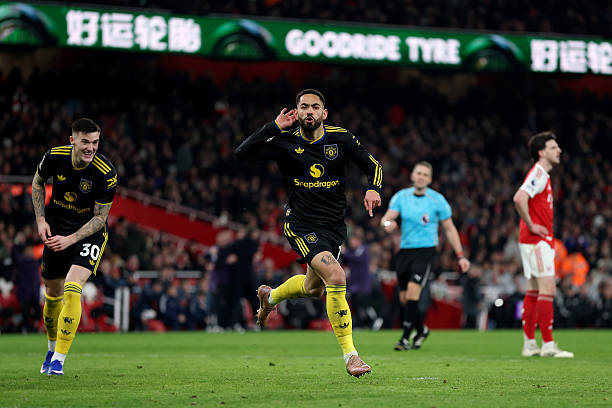
One of Carrick’s most significant early contributions has been rekindling player confidence and restoring trust in young talents that had been sidelined.
Kobbie Mainoo, once frozen out under Amorim, is playing a meaningful role again after receiving renewed trust from Carrick — a dramatic turnaround that speaks volumes about the interim coach’s ability to rebuild player confidence and integrate youth with experience.
Furthermore, Carrick’s training sessions are shorter but more intense, focusing on tactical clarity and individual empowerment — something players have reportedly responded to well.
Balancing momentum and realism
Despite the early upswing, Carrick’s appointment is not without controversy or skepticism. Critics — such as club legend Roy Keane — have questioned whether Carrick should be considered as a long-term solution, arguing that United needs a more seasoned figure to truly compete for titles.
Yet supporters of Carrick argue that his calm, confident leadership and deep understanding of United’s culture make him an ideal transitional figure — someone who could help stabilize the club while stronger structural decisions are made behind the scenes.
Indeed, Carrick himself has urged caution, emphasizing the importance of staying grounded and building confidence one game at a time.
What this means for Manchester United’s future
Manchester United find themselves in a period of flux — but one that could, paradoxically, offer the groundwork for a new identity.
Rúben Amorim’s departure reflects the club’s ongoing impatience for results but also highlights the broader challenge of modern football: balancing tactical philosophy with performance expectations. His stint, while flawed, underscored United’s deeper identity crisis — one that goes beyond formations or personnel.
Michael Carrick’s emergence offers a different kind of answer: a blend of heritage, stability, tactical evolution, and player development. At a club long criticized for reactionary decision-making, his appointment symbolizes a return to core values — belief, resilience, and unity — while still pursuing competitive excellence.
Conclusion: a new chapter at Old Trafford
Manchester United’s landscape in early 2026 is not perfect — far from it. But amidst the swirl of managerial changes and persistent scrutiny, there is something tangible taking shape.
Under Michael Carrick, the Red Devils have rediscovered competitive fight, tactical clarity, and renewed belief. These are not small achievements for a club that has faced more questions than answers in recent years.
Carrick’s tenure will ultimately be judged by where United finish this season and whether he can sustain this momentum. But for the first time in a long while, Manchester United look less like a club in crisis and more like a team rediscovering its identity — led by someone who knows what it means to wear the red jersey with pride.