

For a club with a proud history and passionate global fanbase, the 2025-26 season at Tottenham Hotspur has been deeply paradoxical — frustrating at home, yet at times thrilling on the European stage. Under Danish manager Thomas Frank, Spurs have struggled to replicate consistency in the Premier League while simultaneously navigating a competitive UEFA Champions League campaign with surprising resilience.
This duality — underwhelming results domestically and relative success in Europe — raises important questions about identity, squad balance, tactical direction, and long-term strategy. After all, it’s rare to see a club competing in the Champions League yet struggling closer to the bottom half of England’s top flight, especially given Tottenham’s resources and recent history.
From historic European glory to domestic instability
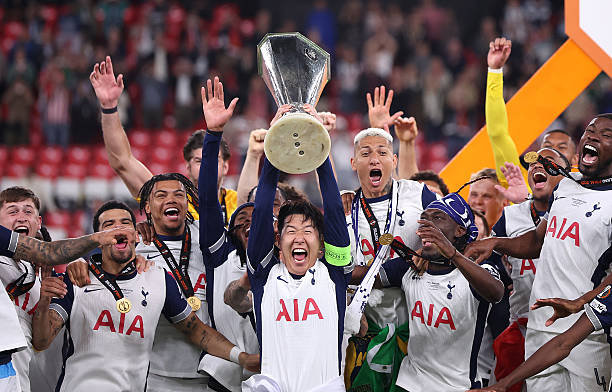
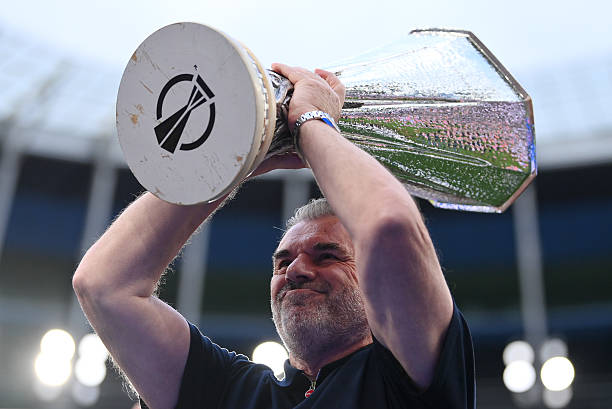
To understand the present, we must recall the dramatic contrast of the 2024-25 season, where Tottenham achieved one of the most extraordinary dual results in recent club history. In that campaign, Spurs won the UEFA Europa League, securing their first major trophy in 17 years and booking a place in the UEFA Champions League for the 2025-26 season. That triumph came despite a torrid league performance, as Tottenham finished 17th in the Premier League, narrowly avoiding relegation and setting a record low league points tally for a European trophy winner.
The flip-side of European glory and domestic peril triggered tough choices at the club. Long-serving manager Ange Postecoglou, who had led the side to fifth place the previous season and then to Europa League glory, was sacked shortly after that historic European success — a controversial decision reflecting how deeply the Premier League performance weighed on Spurs’ leadership.
In the summer of 2025, Tottenham appointed Thomas Frank as head coach, offering him a contract through 2028 in what many supporters hoped would be a fresh start built on stability and pragmatism.
A season of two faces: domestic woes in 2025-26
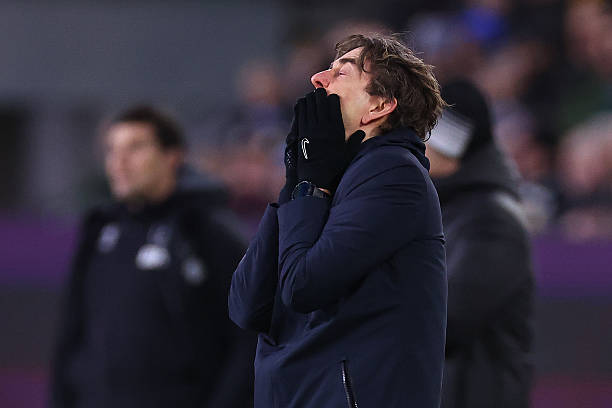
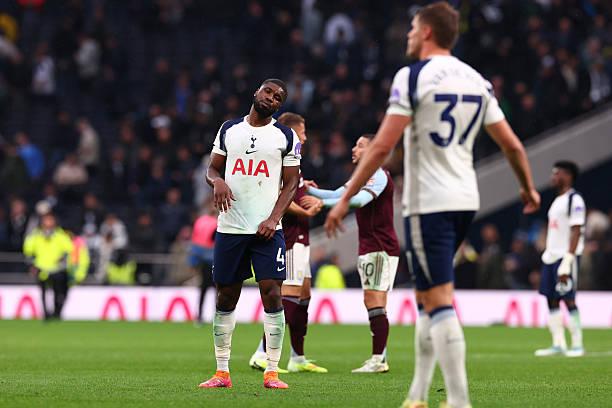
Under Frank, Tottenham’s season in the Premier League has continued to disappoint. As of January 2026, Spurs sat around 14th place in the Premier League standings, with a record showing far more inconsistency than their ambitions would suggest. In roughly 23 matches, Tottenham had won 7, drawn 7, and lost 9, leaving them with only 28 points and a goal difference that reflected struggle more than dominance.
This middling domestic form has seen Spurs often unable to string together positive results. Recent matches featured several losses and draws, including heavy defeats, which have compounded supporter frustration and skepticism about Frank’s leadership. Fans have expressed dissatisfaction, and chants calling for change — such as “Thomas Frank OUT” — have occasionally echoed through the stands after frustrating league performances.
Tactically, Tottenham under Frank have been criticized for lacking attacking fluidity and creative identity. They frequently rely on set pieces and moments of individual brilliance rather than sustained control or domination through open play. Analytical data suggests that a significant portion of their expected goals (xG) come from dead-ball situations, showing a dependence on less dynamic scoring methods.
Additionally, Spurs have struggled notably at home. In their own stadium — typically a fortress meant to intimidate visitors — they secured just one Premier League win at home at certain points in the season, a stark contrast to expectations for a club with Champions League aspirations.
These streaks of poor form have fed fan skepticism and media pressure. After a humbling 3-0 defeat to Nottingham Forest, some supporters urged the club to consider managerial change — a stark example of how polarizing Frank’s tenure has become.
A European resurgence: Champions League campaign
It would be easy to write off Tottenham’s season entirely as a disappointment — were it not for their European form. In the Champions League, Spurs have offered a contrasting narrative.
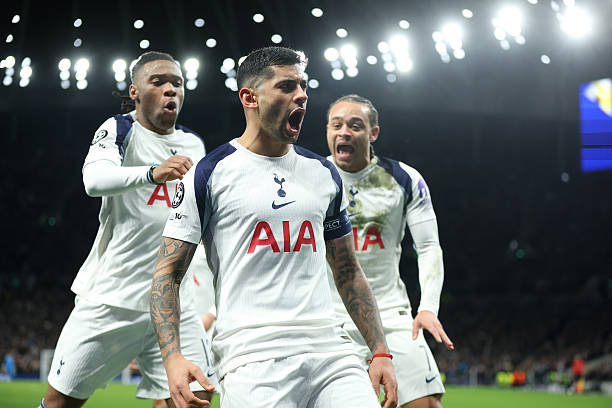
Competing in what is widely regarded as the toughest club competition in the world, Tottenham have performed with surprising strength. They have responded to high-pressure games with impressive home results, including a key 2-0 victory over Borussia Dortmund that moved them into contention for knockout stages or at least a strong position within their group.
In that match against Dortmund, Tottenham displayed tactical discipline and opportunism: Cristian Romero opened the scoring, and Dominic Solanke — making his first start of the campaign — added a decisive second. Dortmund were reduced to ten men early, yet Spurs controlled the match intelligently and professionally.
This European form hasn’t been a fluke. Tottenham maintained a perfect home record in the Champions League up to that point, with clean sheets that showed compact defensive resolve combined with strategic attacking efficiency when opportunities arose.
For fans and analysts alike, this creates a confusing contrast: the same team that struggles to win games at home in the Premier League can suddenly look disciplined and effective on the biggest continental stage.
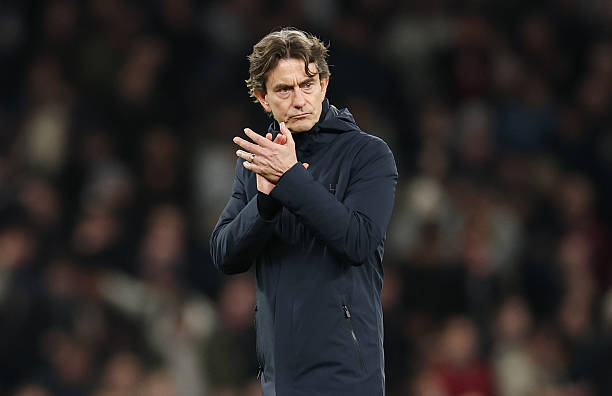
Thomas Frank: the man in the middle of the storm
Thomas Frank’s tenure as Tottenham manager is one of the most scrutinized periods in recent club memory. Arriving from Brentford, where he built a reputation for over-achieving with a limited budget and turning the Bees into an established Premier League outfit, Frank was seen as a pragmatic coach who could instill stability after Postecoglou’s departure.
However, translating that approach to Tottenham has been far from smooth.
Frank frequently highlights the context of Spurs’ situation honestly — acknowledging that the club’s Champions League status is technically earned through Europa League victory, not by finishing among the top four of the Premier League. This admission reflects a realistic, almost self-aware narrative about where the squad truly stands in comparative strength.
He has also emphasized the need for evolution and cleaner defensive performances, attempting to instill a mentality that prioritizes organization over flair — a shift from the attacking identity many fans loved under Postecoglou.
Yet Frank’s tactical choices and style have divided opinion. Critics argue that Spurs’ performances lack creativity and rhythm, especially in league play, where they are often outplayed in midfield transitions and open play — defensive resilience or set-piece goal sources notwithstanding.
Supporters’ frustration has been compounded by injuries and inconsistent selection, leading to debates over whether Frank’s pragmatic approach suits a squad expected to compete for top-four finishes at a minimum.
Still, there is a faction that defends Frank’s methods, arguing that Tottenham’s challenges are rooted deeper than any single coach — entwined with squad composition, injuries, and broader structural issues at the club.
Why the split between Europe and domestic form?
The stark divergence between Tottenham’s European form and Premier League results has been a recurring talking point among pundits, analysts, and supporters.
At its core, this split is about consistency, intensity, and squad depth:
- Champions League focus: European nights bring tactical focus, adrenaline, and clearer game plans for each opponent. Spurs have often looked more organized and emotionally engaged in these matches, translating to effective results.
- Premier League grind: The domestic league requires relentless consistency over long stretches. Spurs have struggled to maintain intensity across a full 38-game campaign due to injuries, tactical missteps, or lapses in concentration.
- Style differences: In Europe, defensive solidity and opportunism can be enough, especially against teams managing multiple fronts. In the Premier League, where pace, creativity, and sustained attack are paramount, Tottenham’s more cautious approach has often looked insufficient.
- Psychological pressure: Fans and media attention intensify morale and pressure in the league. European nights, by contrast, allow Spurs to entertain on a different stage with potentially less scrutiny of each mistake.
All of this reflects the tricky balance modern clubs face when juggling continental competition with domestic achievement — a balance Tottenham have not yet found.
Looking ahead: a season at a crossroads
As Tottenham approach the second half of the 2025-26 season, the narratives remain unsettled:
- In the Premier League, Spurs need to find consistent performances to climb toward the upper half of the table and reduce pressure on Frank and the squad.
- In the Champions League, their position offers a tangible opportunity for progression and renewed confidence, a platform to build momentum.
- For Thomas Frank, the coming months may define his legacy. Continued European success with negligible domestic improvement could deepen division over his tenure. Conversely, increased league stability would solidify his position as a coach capable of steering Spurs back toward long-term credibility.
Ultimately, Tottenham’s 2025-26 season is emblematic of a club caught between past glory, present reality, and future ambition. Balancing continental promise with domestic identity remains the central challenge — and where Tottenham heads next could define an era rather than just one campaign.