

After spending three seasons at Bournemouth, Andoni Iraola is preparing for a completely different challenge. Appointed as Liverpool’s new manager to succeed Arne Slot, the Spaniard must now turn his dynamic style of football into a method capable of meeting the demands of Anfield. With less than two weeks to go before the Premier League season begins, the first trends are already visible: Liverpool wants to play faster, press higher and attack more vertically. But the preseason games have also shown that this transformation carries risks, particularly at the back.
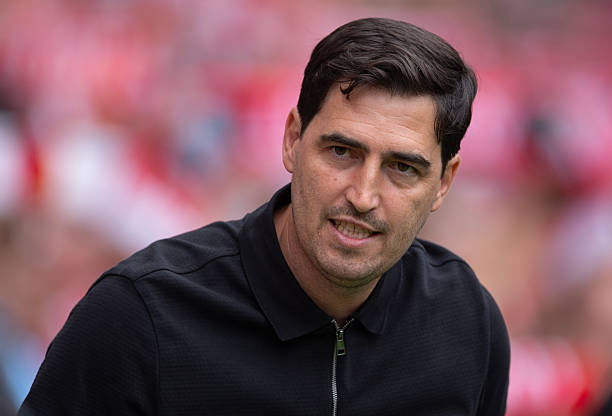
Triying to restore dynamic football
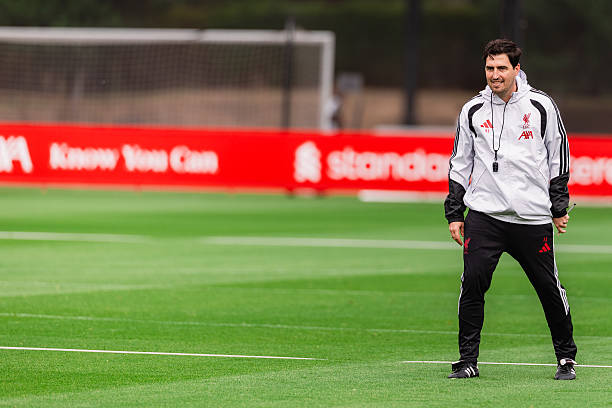
Iraola’s appointment may seem surprising at first. After a difficult season for Liverpool, the club could have opted for a manager with more experience at the very highest level. Instead, it chose a coach whose football had already impressed in the Premier League with Bournemouth.
With the Cherries, Iraola gradually built a team recognizable for its intensity, verticality and desire to win the ball back quickly. His frequently used 4-2-3-1, in particular, provides a structure that fits the squad he now has at Liverpool. Florian Wirtz’s role behind the striker looks especially interesting within this setup.
The idea, therefore, is not to start from scratch. Iraola is instead looking to bring more movement and verticality to a team that could sometimes lack dynamism under Arne Slot.
His first games at Liverpool have confirmed that intention. The new manager places enormous emphasis on speed of execution and off-ball movement. During preseason, he was notably seen repeating “faster, faster” to his players, a clear sign of the intensity he wants to impose.
This philosophy could particularly benefit some of the new signings. Wirtz is expected to operate in a more central position behind the striker, while Alexander Isak provides an additional threat in behind. The objective is clear: win the ball high up the pitch and attack quickly before the opponent can reorganize its defensive shape.
But this intensity is also one of the project’s biggest questions. Iraola demands a great deal from his players physically, and his style requires constant repetition of high-intensity efforts. At Liverpool, with a potentially very demanding season ahead, managing the players’ physical workload could become a major issue.
Pressing and vertical attacks
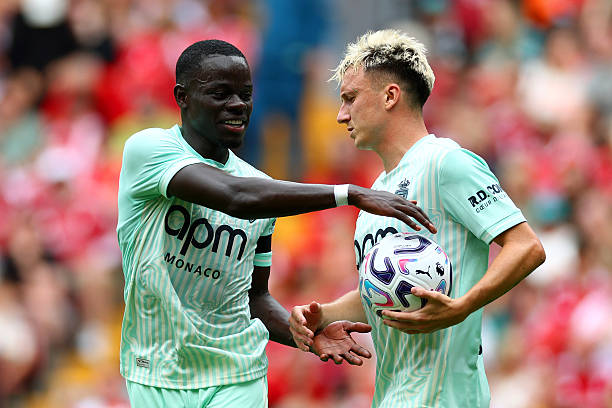
The first preseason games have already made Iraola’s influence visible.
Liverpool is looking to move forward more quickly after winning possession. Rather than systematically circulating the ball horizontally, the players are trying to find the spaces behind the opponent’s first line as quickly as possible. This verticality should allow Wirtz, Isak, the dynamic Rio Ngumoha and the midfielders capable of making forward runs to find themselves in favorable situations more regularly.
Pressing is the other major component of the project.
Iraola wants his team to defend on the front foot, with a high enough defensive line to keep the opponent under pressure. This approach can be extremely effective when it works: turnovers happen closer to the opponent’s goal and Liverpool can immediately launch another attack.
But it comes with an obvious downside: the space behind the defense.
The preseason game against Monaco illustrated this perfectly. Liverpool led 2-0 after goals from Alexander Isak and Florian Wirtz before eventually losing 3-2. The second half in particular exposed the vulnerabilities of a defense playing high and the difficulties some substitutes had in maintaining the intensity of the starting lineup. Iraola acknowledged after the game that his team still had a lot of work to do.
This defeat should obviously not be interpreted as a definitive diagnosis. Preseason exists precisely to identify problems before the competitive season begins. But it serves as a reminder that Iraola’s football requires perfect coordination between the press and the defensive line.
When Liverpool wins the ball high up the pitch, the system looks particularly appealing. When the first line of pressure is beaten, however, the defense can suddenly become exposed.
The arrival of Ronald Araújo on loan from Barcelona also addresses part of this issue. With several absences in the defensive department, Liverpool needed experience and physical strength behind Virgil van Dijk.
Iraola therefore has to preserve the aggression that represents the DNA of his football while making sure that this aggression does not turn every turnover into a dangerous situation.
Set pieces and squad management, two priority areas
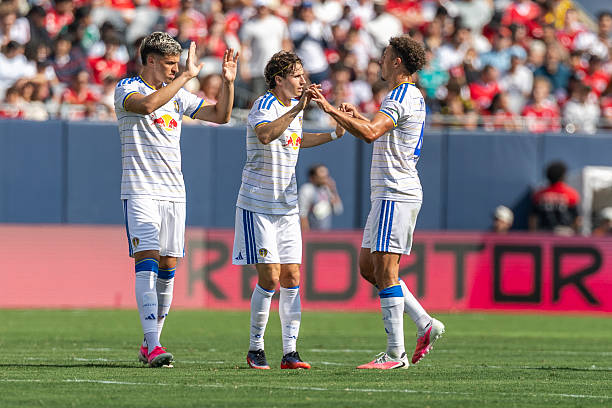
One of the areas in which Iraola also wants Liverpool to improve is set pieces.
The new manager has notably surrounded himself with specialists and is relying on his staff to correct Liverpool’s defensive issues in this area. The objective is not to treat set pieces as a minor detail, but as a full component of the project.
This approach also recalls the work Iraola did at Bournemouth. His team became particularly dangerous from set pieces while developing a highly aggressive identity in open play.
At Liverpool, this weapon could take on even greater importance. With players such as Van Dijk, Araújo and other physically imposing aerial threats, the Reds have the characteristics needed to become a regular danger from corners and free kicks.
But Iraola’s biggest challenge may lie elsewhere: quickly building a collective while his squad is still changing.
Preseason has been disrupted by late returns following the World Cup and by several injuries. During the U.S. tour, Liverpool had numerous players unavailable, particularly in defense.
The signing of Araújo illustrates this situation. The departure of Ibrahima Konaté to Real Madrid and injuries to several defenders forced the club to quickly look for an experienced solution rather than rushing the development of young players such as Jérémie Jacquet and Leoni.
Iraola therefore has to install his principles, integrate his new signings and manage a squad whose final composition has not yet been completely settled.
And that is probably what makes the next two weeks so important.
The game against Monaco showed both the promise and the limitations of this new team. Liverpool can produce sequences of tremendous intensity, attack extremely quickly and put its opponent under enormous pressure. But the defensive problems of the past have not yet been completely resolved.
With less than two weeks before the Premier League opener, Iraola’s work is therefore far from finished. His objective is not simply to make Liverpool play differently: he has to build a team capable of maintaining this intensity for 90 minutes and throughout an entire season.
The Spaniard arrives at Anfield with a clear idea: accelerate Liverpool. He must now prove that this acceleration can take the Reds back to the top without leaving them exposed along the way.
 Liverpool