

For a long time, the player operating out wide was relatively easy to identify. The fullback’s primary job was to defend his flank and support attacks when the opportunity arose, while the winger was responsible for making things happen in the final third. But the tactical evolution of soccer gradually blurred that distinction. With the growing use of three-defender systems, a new profile emerged: the wing-back. Somewhere between a fullback and a winger, it has become one of the most demanding positions in modern soccer. Achraf Hakimi, Jonathan Clauss, Denzel Dumfries and Nuno Tavares have all embodied this evolution. In a back three, the wing-back is generally positioned very high and very wide, sometimes almost level with the forwards when his team has the ball. When possession is lost, however, he must be able to drop back quickly to form a back five. L’Équipe defines the role as that of a hybrid player, capable of attacking like a winger while defending like a fullback.

A player able to bring a flank to life

The particularity of the wing-back therefore lies less in his starting position than in the enormous amount of space he has to cover. His role is to provide width when his team attacks, offer an option during buildup, get around defenders, cross, make runs into the box and attack the spaces left by opposing defenders. He can also contribute directly to creating chances and find himself in goalscoring positions. But that attacking freedom comes with a trade-off: when an attack breaks down, the wing-back must immediately think about the defensive transition. He has to close down his flank, track his direct opponent, cut off passing lanes and prevent counterattacks from developing. Formations Football therefore emphasizes the importance of knowing exactly when to push forward and when to drop back, because misreading those moments can expose the entire team on the wings.
This dual responsibility explains why the position requires such a complete profile. A wing-back must have enough technical quality to beat an opponent, deliver a cross or contribute to buildup, while also possessing enough defensive ability to win duels and protect his team. Above all, he must be capable of repeating high-intensity efforts throughout the entire game. His position constantly requires him to make runs of several dozen yards in both directions. He is therefore not simply a fullback who has been given permission to attack more: the wing-back must understand the movements of the entire team and constantly adjust his positioning according to that of his teammates.
The development of the position is closely linked to the rise of three-defender systems. In a 3-4-3, wing-backs can take up very advanced positions and look to stretch the opposing defense. In a 3-5-2, they provide more balance between attacking and defensive phases. When a team has the ball, they can find themselves very high up the field; when possession is lost, they must quickly drop back to transform a back three into a back five. This ability to change the team’s structure without making a substitution is precisely one of the tactical advantages of the position.
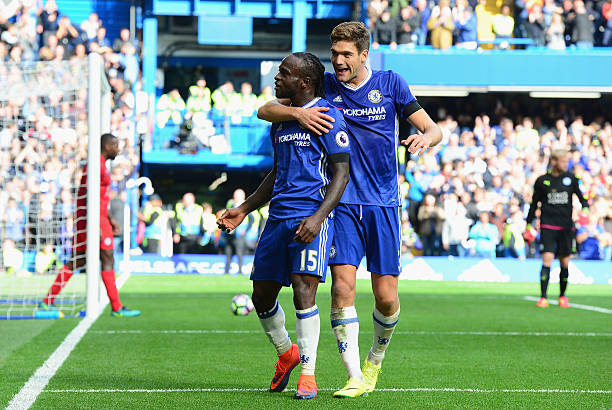
Antonio Conte perfectly illustrated this approach with Chelsea starting in 2016. When the Italian switched to a 3-4-3, Marcos Alonso and Victor Moses became two essential pieces of his system. Moses, who had previously been used as a winger, was converted into a right wing-back, while Alonso occupied the left side. Their new positions allowed them to contribute much more regularly to attacks while benefiting from the presence of three center backs behind them and midfielders capable of covering their forward runs. The change was revealing: a player who had not necessarily found his place in a traditional system could become a central piece when his profile was used in a formation that suited his qualities.
A few years later, Thomas Tuchel would also fully exploit this principle at Chelsea. In his 3-4-2-1, Reece James and Ben Chilwell were tasked with occupying the flanks and becoming genuine attacking threats. In October 2021, both Englishmen scored in the 7-0 victory over Norwich. Tuchel then explained that their role was not simply to keep the ball out wide: they had to arrive in the box and pose a threat to the opposing goal. James could also be used as a defender in a back three, once again illustrating the versatility demanded of these players.
The position can even become one of a team’s primary attacking engines. Xabi Alonso’s Bayer Leverkusen provided a particularly spectacular example during the 2023-24 season. In a 3-4-2-1 structure, Jeremie Frimpong and Alejandro Grimaldo occupied the two flanks of the back three. But their role went far beyond that of simple wide defenders. The Dutchman and the Spaniard directly contributed to attacks, made repeated runs into the final third and could find themselves finishing moves. According to L’Équipe, the duo was responsible for 26 goals and 31 assists in all competitions that season.
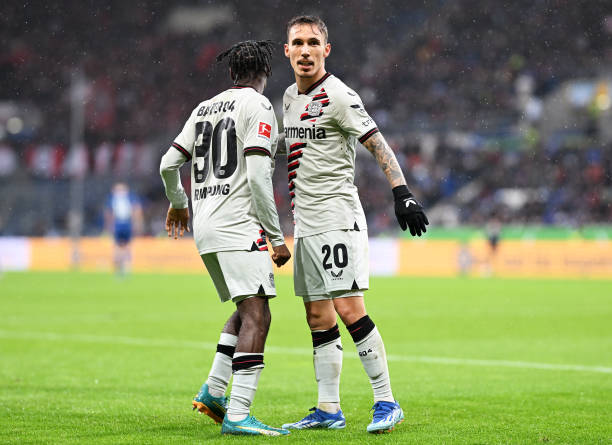
The numbers help illustrate just how much the role has evolved. Frimpong finished the season with 14 goals and 12 assists, while Grimaldo scored 12 goals and provided 19 assists, according to data cited by Eurosport. Such numbers are unusual for players who initially operate within a defensive line, but they perfectly matched the way Xabi Alonso used his wing-backs: high enough to put pressure on opposing defenses, free enough to attack spaces and sufficiently protected by the three center backs to take risks.
The wing-back has therefore become much more than a simple “attacking fullback.” It represents a tactical answer to one of the major problems in modern soccer: how do you occupy the entire width of the field without sacrificing defensive balance? By using three center backs behind him, a team can give its wide player greater freedom. He can then behave like a winger when his team has the ball, before becoming a defender again when possession is lost. But that freedom comes with considerable demands: the wing-back must constantly understand which phase of the game he is in.
Ultimately, it is this ability to switch from one role to another that best defines the position. A good wing-back does not simply run up and down the sideline: he must know when to stay wide, when to attack the inside channel, when to make a run in behind, when to enter the box and, just seconds later, when to abandon the attack and cover several dozen yards toward his own penalty area. His versatility, stamina and tactical intelligence make him a true transition player. The wing-back is therefore a symbol of a game in which positions are becoming increasingly fluid: he is neither entirely a defender, nor entirely a midfielder, nor entirely a winger. He is capable of being all three during the same game.