

Cole Palmer was supposed to be the face of Chelsea’s new era. Calm under pressure, technically gifted and blessed with an extraordinary ability to decide games, the England international had quickly established himself as one of the Premier League’s most influential attacking players. Yet, as the 2026-27 season unfolds, the picture has changed dramatically. The 23-year-old is enduring one of the most difficult periods of his professional career, with recurring physical problems, inconsistent performances and growing frustration among supporters raising serious questions about his current form.
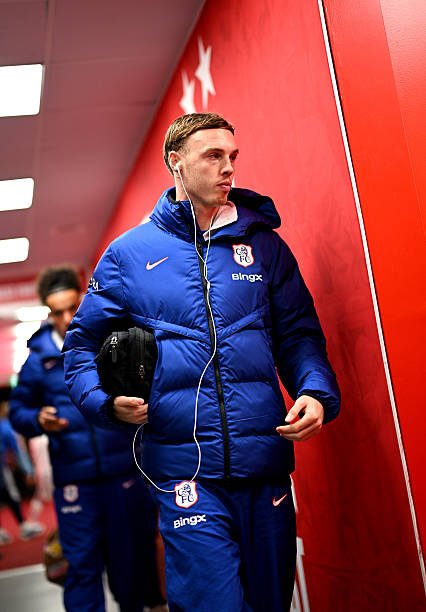
The warning signs have been there for some time. Palmer’s relationship with the England national team has become increasingly complicated, largely because of his repeated absences from international camps. Thomas Tuchel, who has never questioned the attacking midfielder’s talent, has nevertheless grown increasingly frustrated with his inability to make himself consistently available. The German manager has made it clear that selection is based not only on reputation but also on presence, commitment and performances during international breaks. Palmer’s latest omission from the November squad therefore came as little surprise. Tuchel insisted that the decision was not personal, explaining that players who remain available and demonstrate their quality during camp deserve their opportunities. The message was unmistakable: Palmer cannot expect his place to be protected indefinitely, regardless of his status at Chelsea.
There is, however, a more complicated issue behind this situation. Physical discomfort has repeatedly disrupted Palmer’s rhythm, preventing him from building the consistency required at the highest level. Tuchel previously acknowledged that the midfielder had missed too many opportunities to impress because of injuries. He also highlighted the difficulty of evaluating a player who is rarely present with the national team. For Chelsea, the situation is particularly concerning. Palmer has sometimes been available to feature for his club despite being unable to join England, creating an uncomfortable contrast between his involvement at Stamford Bridge and his repeated international withdrawals. It would be unfair to question the legitimacy of his physical problems without knowing the full medical picture, but the consequences are becoming increasingly visible.
The problems have also followed him onto the pitch. Chelsea’s 4-1 defeat against Leeds United at Stamford Bridge provided another painful illustration of Palmer’s current difficulties. Operating in the No. 10 role, the Englishman struggled to influence proceedings, registering just one shot off target and creating only one chance, according to the statistics reported after the match. For a player who built his reputation on finding solutions in congested areas, manipulating defensive structures and delivering decisive contributions in the final third, such a limited performance was particularly revealing. Chelsea were overwhelmed after taking the lead, conceding four goals and allowing Leeds to expose the weaknesses that have increasingly defined their season. Palmer was unable to change the momentum or provide the creative spark his team desperately needed.
An overperforming season in 23/24 ?
The defeat against Leeds also exposed a growing emotional tension within the Chelsea dressing room. Reports of a heated exchange between Palmer and João Pedro after the final whistle quickly circulated in the English media. The England international was also seen heading toward the tunnel without joining his teammates in acknowledging the supporters. These moments should not automatically be interpreted as evidence of a dressing-room crisis, but they illustrate the frustration surrounding a team that has struggled to respond when things go wrong. Chelsea’s problems are no longer limited to tactical execution. Confidence, communication and collective responsibility are becoming increasingly important concerns.
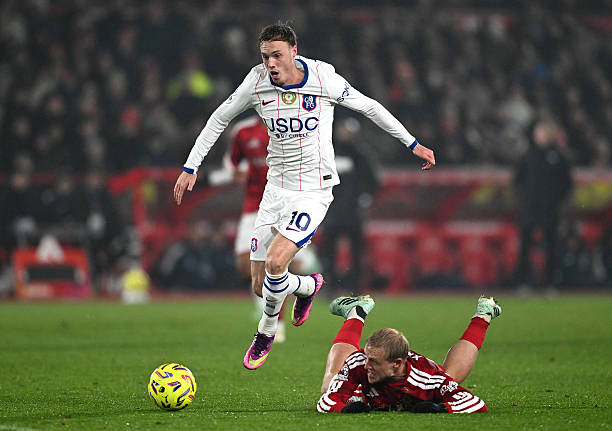
The situation deteriorated further against Nottingham Forest, where Chelsea suffered another damaging defeat, this time losing 3-2. Palmer again struggled to impose himself, while the Blues were repeatedly outworked and outmaneuvered by their opponents. His difficulties were particularly noticeable alongside Morgan Rogers, with former Liverpool midfielder Jamie Redknapp arguing that both attacking players needed to take greater responsibility. According to the pundit, Chelsea’s creative talents were operating too deep and too close to each other, making them easier to mark and preventing them from influencing the game. His criticism raised an important tactical question: is Palmer simply going through a poor individual spell, or is Chelsea failing to create the conditions in which its most gifted player can flourish?
There is a strong argument for both explanations. Palmer has undoubtedly lost some of the sharpness that made him so dangerous. His decision-making has appeared less decisive, his ability to create separation has diminished and his influence in the final third has become increasingly inconsistent. But individual form cannot be separated from the collective environment. Chelsea have struggled to maintain possession, control transitions and consistently deliver the ball into dangerous areas. When the team loses its structure, players such as Palmer are often left attempting to manufacture opportunities without the necessary support.
His current situation also reflects the pressure attached to his status. Palmer is no longer an emerging talent who can quietly develop in the background. He is expected to lead Chelsea’s attack, deliver decisive performances and represent the club’s ambitions. That responsibility inevitably comes with scrutiny, particularly when results deteriorate. However, the criticism should not erase what he has already accomplished at Stamford Bridge. His exceptional performances since arriving from Manchester City established him as one of the most productive attacking players in English soccer. A difficult period does not suddenly make those achievements irrelevant.
Chelsea now face an important challenge: helping their star player rediscover his confidence without making him the scapegoat for broader institutional and tactical problems. Palmer must take responsibility for his performances, improve his physical availability and rediscover the freedom that once made him so difficult to defend. At the same time, Xabi Alonso needs to find a system that allows him to receive the ball in dangerous positions rather than leaving him isolated between the opposition’s midfield and defensive lines.
The situation is serious, but it is not irreversible. Cole Palmer has the technical quality, intelligence and personality to overcome this difficult spell. What he needs now is continuity, a healthier physical condition and a Chelsea team capable of providing him with the platform to succeed. The real question is no longer whether Palmer has the talent to become one of England’s leading players. It is whether Chelsea can help him rediscover it before this disappointing period becomes a defining chapter of his career.