

Long regarded as one of the most complete models in European football, Liverpool is now going through a period of turbulence rarely seen in the club’s modern era. After years of stability under Jurgen Klopp, the arrival of Arne Slot was supposed to represent a smooth, almost natural transition. Following an idyllic first season crowned with a league title and a blockbuster transfer window, reality has quickly caught up with ambitions of dominance.
Between a flashy but unbalanced recruitment strategy, structural flaws in the team’s play, the decline of key figures like Salah and Van Dijk, and uncertain European prospects against Paris Saint-Germain, the Reds’ season increasingly resembles a slow disintegration.
A flashy but unbalanced transfer window
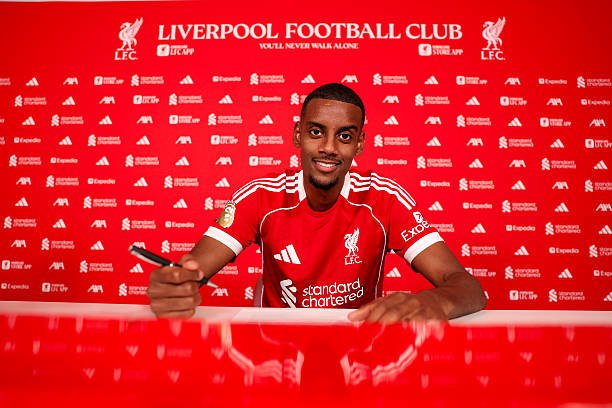
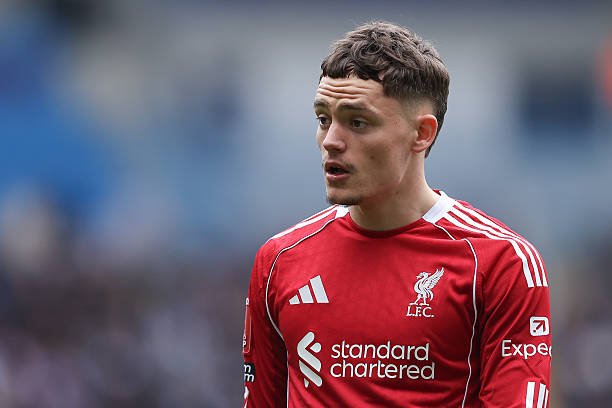
On paper, Liverpool’s summer transfer window had everything to excite. With nearly €500 million spent, the club sent a strong message: it was ready to reinvent itself. The arrival of Alexander Isak, a long-awaited signing secured late in the window, symbolized the desire to refresh the attack, while the signing of Florian Wirtz embodied a bet on creativity.
However, behind these high-profile names, a more concerning reality quickly emerged. First, the overall balance of the squad raises questions. Liverpool heavily invested in attacking profiles without truly addressing structural weaknesses in midfield and defense—issues that were already visible during their title-winning season. The status quo, combined with the decline of key players essential to the system’s balance, has not been compensated for. The result: a disjointed team where the lines struggle to function cohesively.
The case of Florian Wirtz is particularly telling. Considered one of the brightest talents of his generation, the German has gradually become lost in a system that doesn’t seem built for him. Deployed at times as a winger, at others as a deeper playmaker, he has never found a clearly defined role. His output reflects this: less decisive, less influential, he embodies the failure of a recruitment strategy driven more by potential than by tactical coherence.
The same applies to Alexander Isak. While his talent is undeniable, his integration has been difficult, and injuries have capped off a disappointing season. Often isolated and poorly supplied, he has suffered in comparison to Hugo Ekitike, whose fluidity in play has stood out. The expensive signing of the Swedish striker raises questions, especially given the prior investment in Ekitike. How does Isak truly fit into this team?
At its core, this transfer window reveals a contradiction: Liverpool tried to accelerate its transformation without truly redefining its identity. The result is a hybrid team, unable to rediscover the automatisms that once defined its strength.
A team that has lost his balance
Beyond individual performances, it is the collective that raises the most concern. Liverpool is no longer that perfectly tuned machine capable of suffocating opponents through coordinated pressing and relentless intensity.
Under Arne Slot, the project aimed to be more controlled, more structured. But on the pitch, it often translates into a loss of intensity and increased vulnerability in transitions. One of the most striking symptoms is the management of late-game situations. Liverpool has dropped numerous points in the final minutes, a sign of both a lack of control and worrying mental fragility. Where Klopp’s teams imposed their rhythm until the very end, Slot’s side seems to fade.
Midfield lies at the heart of these struggles. Neither defensively solid nor creative enough to consistently supply the attack, it has become the weak link of the team. Gravenberch is a shadow of his former self, Mac Allister is going through a crisis of confidence, and Szoboszlai’s performances have not helped stabilize the midfield. The spaces left between the lines are regularly exploited by opponents, exposing an already fragile defense.
This loss of balance is also reflected in results. Defeats against direct rivals, as well as underwhelming performances against supposedly weaker teams like Wolverhampton on March 3 or Nottingham Forest on November 22, highlight a team incapable of maintaining a consistent level.
Even more concerning: Liverpool no longer gives off a sense of control. Every match feels unpredictable, every lead fragile. The collective appears to have lost its bearings, as if the tactical transition has never truly been absorbed.
Key players losing momentum
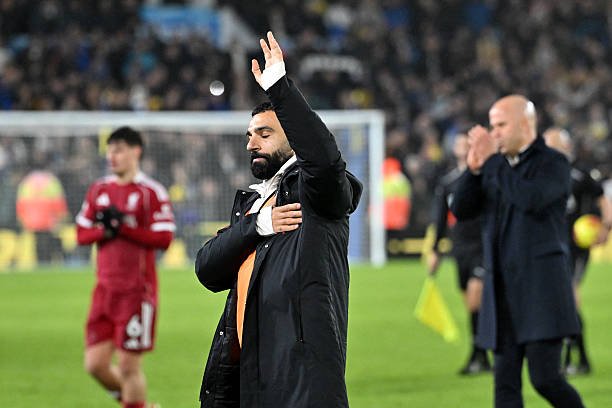
While the collective issues are clear, they are amplified by the declining performances of several long-standing leaders.
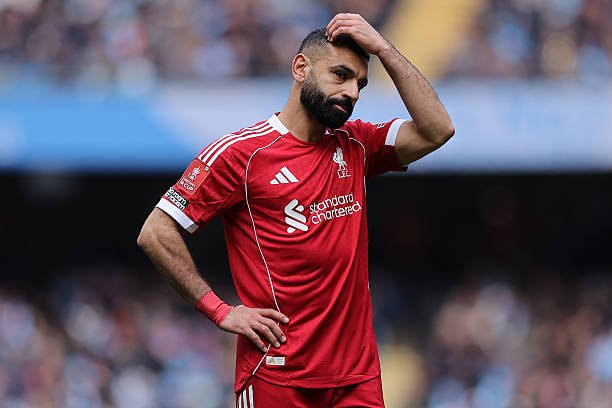
The case of Mohamed Salah is perhaps the most emblematic. Long the driving force of Liverpool’s attack, the Egyptian is enduring a difficult season. Less decisive, less sharp, he seems to be feeling the weight of time and responsibility. His European campaign, in particular, suggests a player nearing the end of a cycle.
This drop-off has direct consequences on Liverpool’s attack. Without Salah at his peak, the team loses a significant part of its ability to turn matches in its favor.
Defensively, the situation is no more reassuring. The center-back pairing of Virgil van Dijk and Ibrahima Konaté, once considered among the best in Europe, has shown unusual signs of fragility. Poor positioning, lapses in concentration, struggles in duels—errors have multiplied.
Arne Slot’s public criticism of Konaté after certain matches highlights the tension within the squad. This kind of public statement, rare in the club’s recent culture, points to a deeper underlying issue.
Beyond individual performances, leadership itself seems to be wavering. The experienced figures who once guaranteed dressing-room stability are struggling to maintain direction. And in a transitional context, that fragility directly impacts results.
PSG : already a crash test ?
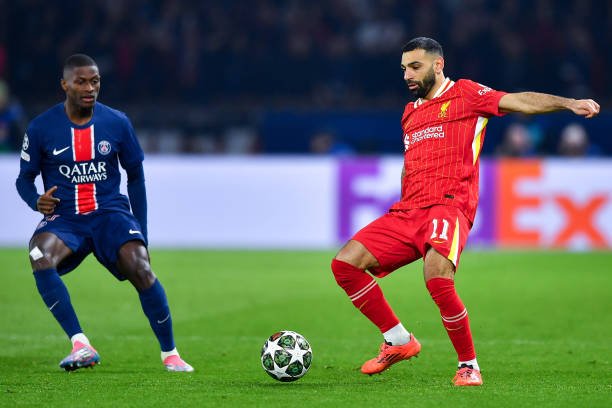
In this already tense context, the upcoming clash against Paris Saint-Germain looks like a potential breaking point.
PSG, with its attacking firepower and ability to exploit spaces, represents exactly the kind of opponent that has troubled Liverpool this season. Quick transitions driven by the pace of Kvaratskhelia or Mendes, the gaps between midfield and defense allowing Dembélé to drop deep and link play, technical quality, and the ability to punish even the smallest mistake—as seen against Chelsea—are all elements that could expose Liverpool’s weaknesses.
For Liverpool, this match is far more than just another European fixture. It is a turning point that could define the rest of the season. A defeat would confirm the regression observed over the past months. A victory, on the other hand, could act as a spark and restore some confidence in a competition where Liverpool has historically thrived—even during difficult seasons, as in 2005.
But based on current performances, pessimism prevails. Liverpool now appears to be lagging behind—both collectively and individually—compared to the standards required at the highest level of European football.
 Liverpool
 PSG
PSG Mohamed Salah
 Ousmane Dembélé
 Virgil van Dijk