

When Major League Soccer welcomed the Seattle Sounders as its 15th franchise in 2009, few could have predicted what was about to unfold in the Pacific Northwest. Almost two decades later, the club has redefined what consistency means in American soccer, transforming a sport often considered secondary in the United States into a cultural phenomenon in one of the country’s most passionate sporting cities. From sold out crowds at Lumen Field to lifted trophies on continental nights, the Sounders have written one of the most remarkable chapters in MLS history.
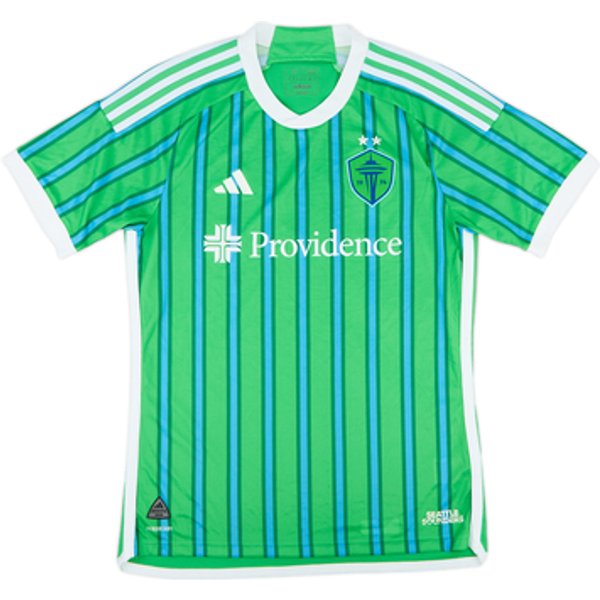
The numbers alone tell a fascinating story. Seattle qualified for the MLS Cup Playoffs in every single one of their first thirteen seasons, an unmatched record in the league’s modern era. While other franchises endured rebuilds, ownership crises, or identity shifts, the Sounders kept showing up, year after year, treating mediocrity as something foreign to their DNA.
- Seasons in MLS since 2009: 17
- Consecutive playoff appearances from 2009 to 2021: 13
A founding vision rooted in fan ownership
The Sounders did not arrive in MLS by accident. The franchise was built on a foundation that few American clubs have ever truly embraced, the idea that supporters should have a voice. Co owner Adrian Hanauer, alongside film producer Joe Roth and comedian Drew Carey, structured the club so that members of the Sounders FC Alliance could vote every four years on whether to retain the general manager. This European inspired model immediately set the tone, supporters were partners, not just customers.
That cultural decision shaped everything. The march to the match, the scarves raised in unison, the deafening roar at Lumen Field, none of it happened by chance. Seattle averaged over 40,000 fans per game in multiple seasons, dwarfing many top division European clubs. The Emerald City Supporters and Gorilla FC became some of the most recognized fan groups in CONCACAF, building a stadium atmosphere that rivals anything in the Americas.
- Highest single season average attendance in MLS history: 44,247 in 2015
- Lumen Field capacity for soccer matches: up to 69,000
The 2016 miracle and the birth of a winning identity
For all the regular season success, the Sounders entered 2016 still searching for their first MLS Cup. That season nearly ended in disaster. By late July, Seattle sat in last place in the Western Conference, head coach Sigi Schmid had been dismissed, and the club’s playoff streak appeared over. Then came the turnaround.
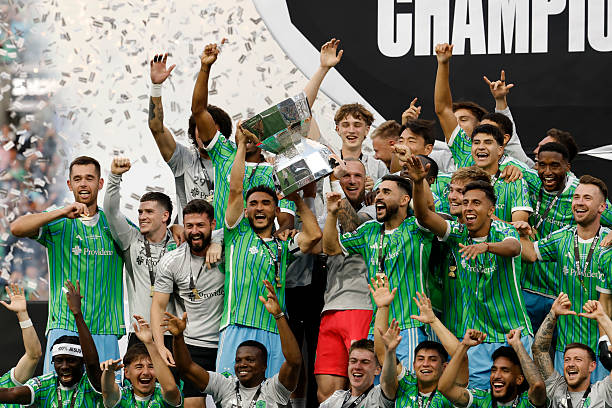
Brian Schmetzer, a longtime assistant and former NASL Sounder, took over as interim head coach. The acquisition of Nicolás Lodeiro from Boca Juniors injected creative genius into the attack. Seattle stormed up the table, sneaked into the playoffs, and embarked on a remarkable postseason run. The final against Toronto FC ended scoreless after 120 minutes, but Stefan Frei produced one of the greatest saves in MLS Cup history, denying Jozy Altidore with a reflex stop that has become iconic. Seattle won the penalty shootout, lifting their first ever MLS Cup.
That triumph began a new era. The Sounders reached the MLS Cup Final in 2017, again facing Toronto, this time falling short. They returned in 2019 and claimed their second title, beating Toronto 3 1 in front of more than 69,000 fans at home, the largest attendance for any MLS Cup since 2002.
- MLS Cup titles: 2016, 2019
- MLS Cup Final appearances: 4 in 2016, 2017, 2019, 2020
Conquering CONCACAF and writing American soccer history
If MLS Cup glory established Seattle as a domestic powerhouse, 2022 turned them into trailblazers. The CONCACAF Champions League had long been a graveyard for MLS clubs, with Liga MX sides dominating the competition for over a decade. Thirteen consecutive finals had ended in Mexican triumph. Then came Seattle.
Led by Raúl Ruidíaz, Nicolás Lodeiro, João Paulo, and the ever reliable Stefan Frei, the Sounders defeated Club León, New York City FC, and the New York Red Bulls before facing Liga MX heavyweight Pumas UNAM in the final. The first leg in Mexico City ended 2 2, setting up a historic night at Lumen Field. Seattle dominated the second leg, winning 3 0 with goals from Ruidíaz, twice, and Nouhou Tolo. The aggregate 5 2 victory made the Sounders the first MLS club to ever win the CONCACAF Champions League under its modern format.
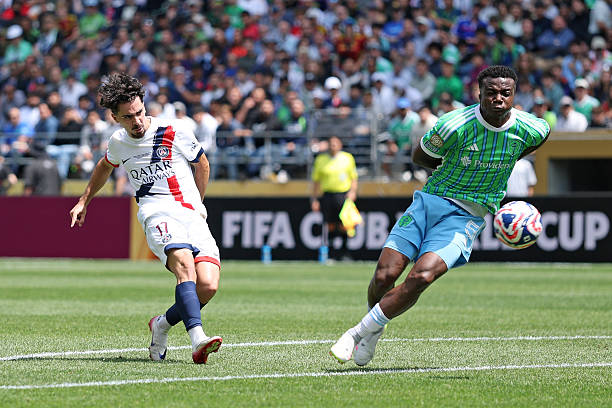
That triumph earned Seattle a spot in the 2025 FIFA Club World Cup in the United States, where they faced global giants Atlético Madrid, Paris Saint Germain, and Botafogo. It was a moment that underscored just how far American club soccer had come, and how central Seattle had been to that growth.
- CONCACAF Champions League titles: 1 in 2022
- US Open Cup titles: 4 in 2009, 2010, 2011, 2014
The architects of an empire
No franchise reaches this level of consistency by luck. The Sounders built smart, scouted globally, and trusted continuity. Brian Schmetzer became one of the longest tenured head coaches in MLS, a rarity in a league known for quick firings. The front office identified game changing South American talents long before others, with Lodeiro and Ruidíaz both delivering MVP caliber seasons.
Stefan Frei, signed from Toronto in 2014, became the face of reliability between the posts, eventually being inducted into the Sounders Ring of Honor. Homegrown talents like DeAndre Yedlin and Jordan Morris also represented the club’s commitment to developing American players, with Morris growing into a national team regular and Sounders icon.
- Brian Schmetzer’s seasons as head coach: since July 2016
- Stefan Frei’s seasons with Seattle: since 2014
A model for American soccer
The Seattle Sounders are more than a successful team. They are a blueprint. Their fan first ownership, their patient coaching philosophy, their continental ambitions, and their ability to balance star imports with homegrown identity have set a standard that other MLS clubs continue to chase. As the league grows and new markets emerge, Seattle’s legacy stands as proof that American soccer can produce dynasties, atmospheres, and stories worthy of any league in the world.
The Sounders did not just join MLS. They helped define what MLS could become.