

Major League Soccer has come a long way since its humble beginnings in 1996. What started as a struggling experiment to bring professional soccer to American shores has transformed into one of the fastest growing leagues in world soccer. With Lionel Messi now playing for Inter Miami, record breaking expansion fees, and a new generation of American talent emerging, the question on everyone’s lips is legitimate: can MLS realistically break into the top 5 leagues globally by 2030 ?
The current top 5 is well established. The Premier League sits comfortably at the summit, followed by La Liga, the Bundesliga, Serie A, and Ligue 1. These competitions benefit from decades of history, world class infrastructure, massive television deals, and an unmatched concentration of elite talent. To crack this exclusive club, MLS would need to leapfrog at least one of these European giants, and the closest target appears to be Ligue 1.
- Current global ranking of MLS: around 12th to 15th depending on the metric used

The financial reality of competing with Europe
Money talks in modern soccer, and the gap between MLS and the European elite remains substantial. The Premier League generates over 7 billion dollars annually in revenue, while MLS sits closer to 1.5 billion. Even Ligue 1, the weakest of the top 5, brings in roughly 2.5 billion dollars per season.
However, MLS has structural advantages that European leagues lack. The single entity ownership model means no club can spend itself into oblivion. Franchise values have skyrocketed, with expansion fees reaching 500 million dollars for San Diego FC. Apple’s 2.5 billion dollar streaming deal, signed in 2022, provides long term financial stability that many European clubs would envy.
- MLS average team valuation in 2024: 690 million dollars, up from 240 million in 2019

The Messi effect and its limits
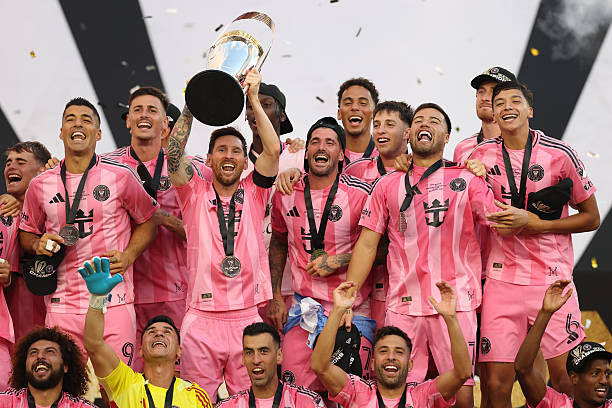
The arrival of Lionel Messi at Inter Miami in July 2023 was a watershed moment. Television ratings exploded, Apple TV subscriptions surged, and Miami home games became impossible tickets to find. Suddenly, MLS was relevant to a global audience in ways it had never been before.
But the Messi effect comes with an expiration date. The Argentine legend turns 39 in 2026 and will likely retire before the decade ends. The question is whether MLS can use this window to build something sustainable. Beckham‘s arrival in 2007 created a similar buzz, but the league failed to capitalize fully on his star power. The challenge now is to ensure that post Messi MLS does not regress to its pre Messi visibility.
- Inter Miami average home attendance jumped from 17,000 to 21,000 after Messi’s arrival
Young American talent staying home, or going abroad
One of the biggest obstacles to MLS becoming a top 5 league is talent retention. When Christian Pulisic, Tyler Adams, Weston McKennie, or Gio Reyna develop into elite players, they leave for Europe. The league exports its best assets rather than building teams around them.
Recent moves suggest this may be changing slowly. The number of homegrown players in MLS has tripled since 2015, and academies are producing more professional ready talent than ever. Players like Caden Clark, Kevin Paredes, and Cade Cowell represent a new generation that grew up watching Premier League soccer and aspires to play at the highest level.
For MLS to truly compete, it needs to convince at least some of these players to stay, or to attract their European equivalents in their primes rather than at the tail end of their careers.
- Number of US born players in Europe’s top 5 leagues in 2024: over 30, an all time high

Infrastructure and stadium revolution
One area where MLS genuinely competes with European leagues is infrastructure. Soccer specific stadiums have replaced massive NFL venues, with modern facilities like BMO Stadium in Los Angeles, Q2 Stadium in Austin, and the new Etihad Park in New York setting new standards.
Training facilities have followed suit. Atlanta United, Philadelphia Union, and FC Dallas operate academies that compare favorably with anything in Europe. The 2026 World Cup, hosted partly in the United States, will further accelerate infrastructure investment and global exposure.
- Number of soccer specific stadiums in MLS in 2024: 27 out of 29 clubs
The salary cap problem
Here is where reality bites. The MLS salary cap remains a major obstacle to attracting elite talent. While designated player slots allow teams to sign three players outside the cap, the overall budget for building a competitive squad pales in comparison to even mid table European clubs.
Atletico Madrid‘s payroll is roughly 200 million dollars per year. Inter Miami’s, despite Messi, sits around 50 million. For MLS to genuinely compete, owners would need to accept higher spending limits, which goes against the financial discipline that has made the league sustainable in the first place.
This tension between competitive ambition and financial responsibility will define the next decade of MLS.
- MLS salary cap in 2024: 5.47 million dollars per team, excluding designated players

The 2026 World Cup catalyst
The 2026 World Cup, co hosted by the United States, Canada, and Mexico, represents the single biggest opportunity in MLS history. The 1994 World Cup created the conditions for MLS to exist. The 2026 edition could create the conditions for MLS to thrive at a completely new level.
Increased visibility, infrastructure investment, sponsorship deals, and youth engagement should all benefit the league. If the United States Men’s National Team performs well, the ripple effects could last for years.
- Estimated economic impact of the 2026 World Cup on US soccer: over 5 billion dollars
The realistic verdict
Can MLS become a top 5 league by 2030? Honestly, no. The financial, historical, and competitive gap with Europe remains too wide to close in just six years. Ligue 1, despite its struggles, still produces Champions League contenders and develops world class talent at a rate MLS cannot yet match.
However, MLS becoming the sixth best league in the world by 2030 is entirely realistic. Surpassing the Eredivisie, the Portuguese Primeira Liga, and possibly even challenging the bottom of the top 5 in the years after 2030 is achievable. The trajectory is undeniably positive, even if the timeline needs adjustment.
The dream is alive. The reality just requires a bit more patience.
 Inter Miami
 Heung-Min Son
 Lionel Messi