

Some rivalries are built over generations. Others emerge in just a few years. Since the summer of 2024, every meeting between Luis de la Fuente’s Spain and Didier Deschamps’ France has followed the exact same script: La Roja imposes its ideas, Les Bleus spend the match chasing the ball, and Spain’s head coach consistently wins the tactical battle. UEFA Euro 2024, the 2025 UEFA Nations League, and the 2026 FIFA World Cup all produced remarkably similar stories. Three semifinals.
Three Spanish victories. Three demonstrations of collective soccer that have gradually established La Roja as France’s new nemesis.
More than the results themselves, it is the manner in which Spain has won that stands out. At times, these matches have felt as though two completely different sports were being played on the same field.
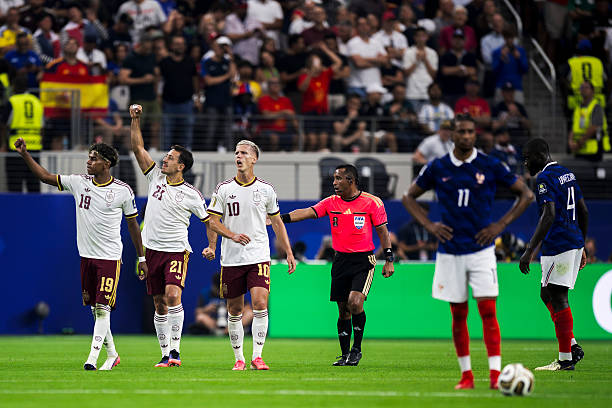
One Philosophy Against individualities

Since taking charge of La Roja, Luis de la Fuente has never attempted to recreate Vicente del Bosque’s iconic tiki-taka. His Spain is far more vertical, significantly more aggressive without the ball, yet still built upon the same fundamental principles: constant movement, intelligent occupation of space, endless positional rotations, and collective responsibility from every player on the field. The ball rarely remains at one player’s feet for more than two or three seconds.
Midfielders drop deep to draw defenders out of position. That movement creates space for the wingers. The fullbacks attack relentlessly. Even the forwards play an active role in the team’s pressing structure. Against such a well-oiled machine, France offers a radically different philosophy. Les Bleus rely primarily on physical superiority, rapid transitions, and moments of brilliance from individual stars.
That formula works against the vast majority of opponents. But it begins to unravel against teams capable of monopolizing possession while dictating the rhythm of the game.
Across three consecutive meetings, that contrast has become impossible to ignore.
Three lessons in three years
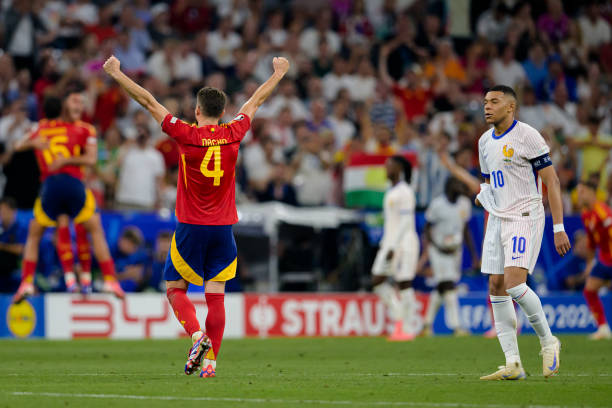
In Munich in 2024, France initially appeared to have done the hardest part by scoring an early opening goal.
Yet the lead concealed the true balance of the match. Spain already controlled the game. La Roja dominated possession, constantly created passing triangles, and gradually stretched France’s defensive block. Deschamps’ team retreated deeper and deeper, unable to build attacks cleanly from the back. Lamine Yamal’s equalizer—and Dani Olmo’s eventual winner—felt less like isolated moments of brilliance than the inevitable consequence of Spain’s sustained territorial dominance. That evening, France’s greatest weapon—set pieces—was almost completely neutralized. Spanish defenders dealt comfortably with every cross.
French counterattacks were suffocated before they could even begin. Spain had already demonstrated that it fully understood how to dismantle France’s greatest strengths.
One year later, the two nations met again. This time, the story became even more emphatic. Spain scored five goals against a French defense overwhelmed in every area of the game. For the first time in more than half a century, Les Bleus conceded five goals in an official match. The final score actually understated Spain’s superiority.
Although France narrowed the margin late in the game, La Roja had spent most of the night looking several levels above its opponent.
Every French pressing sequence was bypassed through quick combinations. Every Spanish ball recovery became the beginning of another dangerous attack. Every defensive imbalance was immediately punished. For ninety minutes, Didier Deschamps seemed to spend the evening reacting to adjustments already anticipated by his Spanish counterpart.
The World Cup semifinal was supposed to offer France an opportunity for revenge. Instead, it merely confirmed the hierarchy that had developed over the previous two years. Spain won once again while imposing exactly the same principles: possession, constant movement, immediate counter-pressing after losing the ball and complete emotional control.
France produced occasional moments of resistance but constantly appeared to be one step behind. Behind in its movement. Behind in its buildup. Behind in its defensive rotations. Even when Les Bleus briefly found their way back into the match, they seemed to benefit more from a temporary drop in Spain’s intensity than from any genuine shift in control.
How this system work well against France
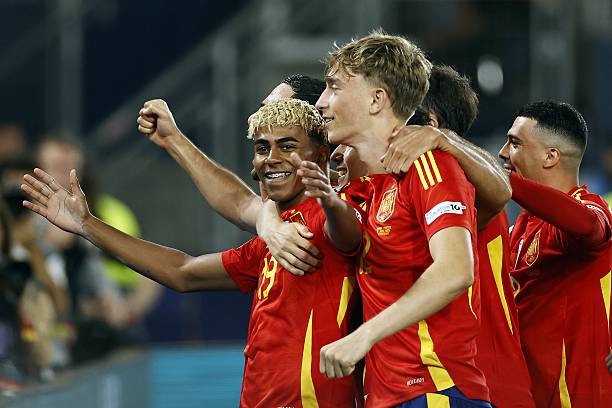
The common thread running through all three encounters was Spain’s relentless pressing. The instant possession was lost, three or four Spanish players immediately surrounded the ball carrier. That collective pressure consistently prevented France from launching its trademark fast transitions. Deprived of space, France’s forwards were forced to drop increasingly deep simply to receive the ball. Eventually, the defenders had little choice but to play long.
Spain recovered possession. Then repeated the entire process. The cycle became relentless. One of Luis de la Fuente’s greatest achievements has been constructing a team in which every player fulfills multiple tactical responsibilities. The wingers press aggressively. The midfielders attack space behind the defense.
The defenders actively participate in possession. The collective always comes before the individual. France, by contrast, has at times appeared to wait for an individual moment of brilliance to change the course of a game. When Kylian Mbappé is successfully contained…
when space disappears…, when transitions are cut off… Much of France’s attacking spontaneity disappears with it. Spain rarely faces that problem. If Lamine Yamal is neutralized, Dani Olmo takes over. If Pedri is closely marked, Fabián Ruiz drives the attack.
When one player disappears from the game, another immediately steps forward.
One sided duel between De la Fuente and Deschamps
Beyond the players themselves, these three matches ultimately tell the story of two coaches. Didier Deschamps remains one of the most accomplished international managers of his generation. His pragmatic philosophy has taken France to a European Championship Final, two World Cup Finals, and one World Cup title. Yet against Luis de la Fuente, many of those methods have reached their limits. Every meeting has followed the same pattern. When France presses, Spain patiently draws the pressure before breaking through the lines.
When Les Bleus defend deep, La Roja continuously rotates positions until an opening appears. When Deschamps changes his tactical setup, De la Fuente immediately finds the appropriate response.
Watching these three matches has often resembled watching a chess match in which the Spanish coach always remains one move ahead.
Three consecutive victories could simply be dismissed as a fortunate streak. But when all three matches unfold according to nearly identical tactical scripts, expose the same weaknesses, and produce the same conclusions, coincidence is no longer a convincing explanation.
It becomes evidence of superiority.
Spain has not merely defeated France three times. It has systematically taken away France’s greatest strengths. It has controlled the matches through possession.
It has suffocated Les Bleus without the ball. And it has forced France into playing a style of soccer that simply does not suit its identity.
While Luis de la Fuente continues refining a collective machine in which every player understands exactly what is expected, Didier Deschamps has repeatedly watched his team react rather than dictate, unable to reverse the balance of power. These three encounters may ultimately be remembered as the moment Spain completed its transformation.
No longer simply a talented national team. But a tactical benchmark for the modern game. And against that benchmark, Les Bleus have often looked less like participants than spectators—unable to keep pace with a Spain that, across three consecutive semifinals, consistently played soccer on an entirely different level.
 France
 Spain
Spain Lamine Yamal