

Some teams win trophies and are forgotten. Others lose in the semifinals and are remembered forever. Monaco in 2017 belong firmly to the second group. Leonardo Jardim’s side did not lift the Champions League, yet they left a deeper mark on a generation of soccer fans than most champions ever do. They played with a fearlessness that felt almost reckless, attacking every opponent like a team that had nothing to lose and everything to prove. By the end of that spring, neutrals across Europe had quietly adopted the red and white of the Principality as their second favorite club.
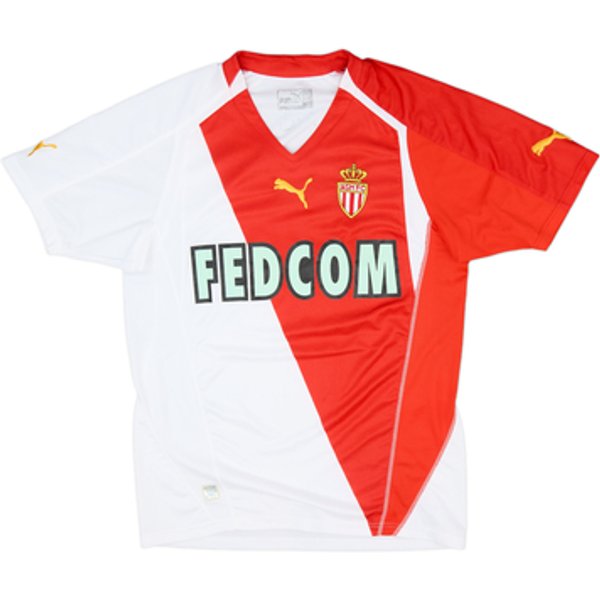
- 107 goals scored in Ligue 1, the club’s best top flight tally in over five decades
A title built on pure attack
For four straight seasons, Paris Saint-Germain had treated the French title as their personal property. Monaco ended that with a campaign of relentless, joyful scoring. Jardim built a team that did not defend a lead so much as bury opponents under more goals, and the results were staggering. They averaged nearly three goals a game in the league and turned the Stade Louis II into a place where visiting teams arrived already half beaten.
The numbers tell the story of dominance, but the eye test told it better. Monaco swept past Metz seven to nothing, dismantled Nancy six to nothing, and routinely turned tight games into routs after halftime. They finished comfortably clear of a PSG side that still had Edinson Cavani at his peak. For a club operating on a fraction of the budget of the Parisian giants, it was a triumph of coaching, recruitment and sheer nerve.
- 95 points collected, finishing 8 clear of Paris Saint-Germain
The kids who lit up a continent
What made this Monaco team unforgettable was not just how they won, but who did the winning. This was a roster of teenagers and rising stars who would soon be worth a combined fortune. Bernardo Silva pulled the strings, Thomas Lemar floated between the lines, Fabinho and Tiémoué Bakayoko controlled midfield, and Benjamin Mendy and Djibril Sidibé bombed forward from fullback. Kamil Glik organized the back line while Danijel Subašić guarded the net.
Then there was the kid. Kylian Mbappé arrived as a promising name and left the season as the most exciting young player on the planet. At just 18, he combined frightening pace with the calm of a veteran finisher, scoring in matches that mattered most and announcing himself to a global audience. Radamel Falcao, written off by many after injury troubles in England, rediscovered his old killer instinct alongside him. Youth and experience fed off each other perfectly.
- 26 goals in all competitions for Mbappé, aged just 18
The night they stunned Manchester City
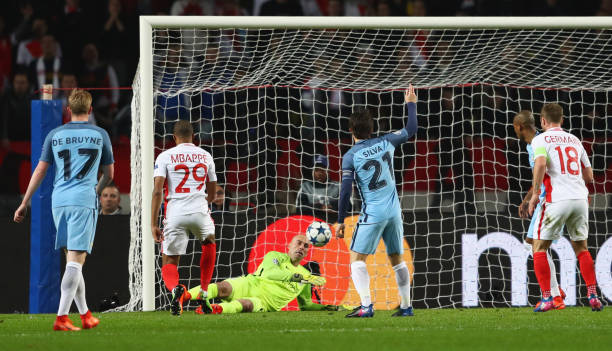
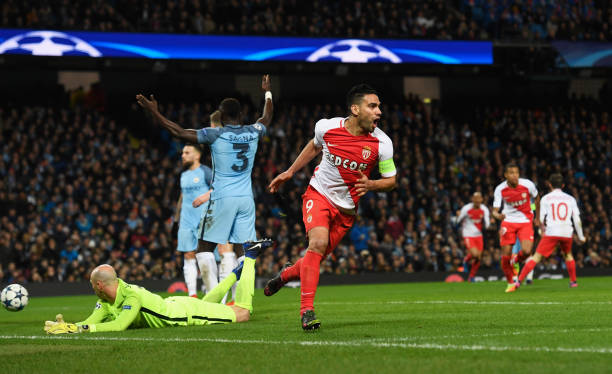
The round of 16 draw looked cruel. Monaco were paired with Pep Guardiola’s Manchester City, a side overflowing with talent and ambition. The first leg at the Etihad became an instant classic, a wild twelve goal saga in which Monaco actually led before City’s depth told. The hosts ran out winners by five goals to three, and most observers assumed the tie was over.
It was not. Back home in the Principality, Monaco produced the night that defined their season. Mbappé struck early, Fabinho doubled the lead, and after Leroy Sané pulled one back, Bakayoko rose to head in the goal that sent the stadium into delirium. The aggregate finished level at six apiece, and Monaco went through on away goals. A young French side had knocked out one of the richest clubs in world soccer, and Europe took notice.
- 6 to 6 on aggregate, Monaco advancing on away goals against Manchester City
Dortmund and the run to the last four
The quarterfinal against Borussia Dortmund will always be remembered for reasons far beyond soccer. The first leg was postponed after an explosive attack targeted the Dortmund team bus, an incident that shook everyone involved and put the sport into proper perspective. When the tie did resume, Monaco showed remarkable composure against a Dortmund attack that included Pierre-Emerick Aubameyang, Marco Reus and Ousmane Dembélé.
Mbappé was again the difference, scoring in both legs as Monaco won three to two in Germany and three to one at home. Glik marshaled a defense that simply refused to be overrun, and the Principality club marched into the semifinals for the first time since 2004. The dream of a place in the final, against all financial logic, was suddenly very real.
- 6 to 3 on aggregate against Borussia Dortmund in the quarterfinals
Juventus and the end of the dream
Every fairytale meets its limit, and Monaco met theirs in the shape of Juventus. The Italian side were everything Monaco were not: ruthless, experienced and built on one of the meanest defenses the competition has ever seen. Gianluigi Buffon, Giorgio Chiellini and Leonardo Bonucci formed a wall that Monaco’s young attackers could not break down.
Juventus won two to nothing in the Principality and added a two to one victory in Turin to seal the tie. Monaco’s frantic, free flowing style finally ran into a team that knew exactly how to suffocate it. The adventure was over, but the manner of the defeat carried no shame. They had simply lost to the best defensive team in Europe at the worst possible time.
- 4 to 1 on aggregate, Juventus ending the run in the semifinals
The great dispersal and a lasting legacy
What followed was almost as remarkable as the season itself. Within two years, the team was scattered across the richest clubs in Europe. Mbappé joined PSG, Mendy and Bernardo Silva went to Manchester City, Bakayoko moved to Chelsea, Fabinho later signed for Liverpool, and Lemar headed to Atlético Madrid. Monaco had become the most productive talent factory in the sport, and the world’s biggest clubs lined up to buy their work.
That is why this team matters. They proved that money is not the only route to glory: a smart coach and a brave plan can topple giants, and a single magical run can outlive a dozen quiet titles. Monaco in 2017 did not win the Champions League. They did something rarer. They won the affection of an entire continent.
 AS Monaco