

For nearly three decades, an entire generation of Scottish supporters knew the World Cup only through the memories of their parents.
Since France 1998, Scotland had vanished from football’s biggest stage. Failed qualification campaigns followed one another, often in heartbreaking fashion, reinforcing the image of a passionate football nation unable to clear the final hurdle.
That long wait is finally over.
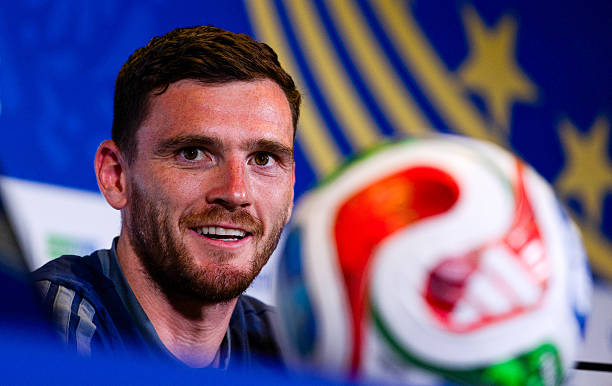
Led by a talented generation featuring Andrew Robertson, Scott McTominay, John McGinn, and Lewis Ferguson, the Tartan Army is back at the World Cup at last. Across the country, the excitement recalls the glory days of Scottish football. The Guardian has even described a genuine World Cup fever sweeping through Scotland ahead of the tournament.
But Scotland is not coming simply to celebrate its return.
As several British media outlets have pointed out, this squad believes it has the tools to be more than a nostalgic participant. After appearing at two consecutive European Championships and gaining valuable experience against top-level opposition, Steve Clarke’s men want to prove that their return is not a one-off achievement, but the beginning of a new era.
The group
Scotland will compete in Group C alongside:
- Brazil
- Morocco
- Haiti
The draw has handed Scotland a major challenge.
Brazil, five-time world champions, enter as the clear favorites despite the lingering uncertainty surrounding their rebuilding process. Morocco, historic semifinalists at the 2022 World Cup and now firmly established among the world’s top football nations, also represent a formidable obstacle.
Behind those two heavyweights, Scotland and Haiti are expected to battle for third place while hoping to capitalize on any slip-up that could reopen the race for qualification.
The Scots, however, refuse to view themselves as underdogs without a chance. Their recent experience in international tournaments and the maturity of their current generation allow them to approach this group with genuine ambition. While Morocco appears extremely difficult to overcome on paper, the questions surrounding Brazil provide a challenge that Steve Clarke’s side believes it can rise to on a single matchday.
The objective will be to reach the final group game with a realistic chance of advancing. In an expanded World Cup where several third-place teams can progress, every point will matter.
Key players
Scott McTominay
The face of this generation.
After playing a pivotal role in Scotland’s qualification campaign, McTominay arrives at the World Cup enjoying the best period of his career. His physical presence, knack for scoring crucial goals, and leadership qualities make him the most influential player in the Scottish squad.
The Independent notes that the former Manchester United midfielder is now widely regarded as the leading figure in Scottish football.
Andrew Robertson
The captain and soul of the team.
Having endured both the difficult years and Scotland’s return to prominence, Robertson embodies the resilience of Scottish football. His experience at the highest level and his ability to inspire those around him will be invaluable throughout the tournament.
For many supporters, seeing him finally compete in a World Cup is one of the most rewarding moments of his international career.
Lewis Ferguson
The technical leader in midfield.
After several impressive seasons in Italy, Ferguson has established himself as one of the most complete players in the national team setup. Capable of winning possession, dictating play, and making forward runs into dangerous areas, he provides crucial balance to Steve Clarke’s system.
His tactical intelligence and passing ability should prove essential in matches where Scotland will often be required to defend compactly before breaking forward quickly.
John McGinn
Relentless energy.
The heartbeat of Scotland’s pressing game, McGinn brings tireless work rate, late runs into the penalty area, and invaluable experience from major competitions. For years, he has been one of the national team’s most consistent performers.
In tight contests, his influence can often be the difference between victory and defeat.
The face of Scotland in 2026
Scotland arrives at the World Cup riding an exceptional wave of momentum.
Qualification for the tournament sparked a nationwide surge of enthusiasm. As reported by The Guardian, Scottish streets have rediscovered an atmosphere not seen since France 1998. For a nation so deeply connected to its football identity, this return means far more than a sporting achievement.
Behind the emotion, however, stands a genuinely competitive team.
Under Steve Clarke, Scotland has gradually developed a clear identity. Defensively organized, tactically disciplined, and capable of maintaining intense physical pressure, it has become one of the most difficult national teams to break down.
The qualification campaign confirmed that progress. Scotland displayed remarkable consistency throughout the process and secured its place at the tournament thanks to a well-drilled collective structure. Flashscore highlighted the maturity gained by this generation through its recent European Championship experiences.
The team’s greatest strength is its stability.
Unlike some national teams arriving at the World Cup in the middle of a transition, Scotland relies on a core group of players who have been together for years. Robertson, McTominay, McGinn, and Ferguson embody that continuity, allowing the squad to maintain a strong identity even when facing football’s traditional powers.
The draw in Group C undoubtedly complicates Scotland’s ambitions. Brazil and Morocco possess deeper squads and considerably more recent experience competing at the highest levels of international football.
Yet that underdog status may ultimately work in Scotland’s favor.
Few people genuinely expect the Tartan Army to reach the knockout rounds. However, the squad possesses enough experience, organization, and character to trouble more prestigious opponents.
The objective is now historic: to finally advance beyond the group stage of a World Cup, something no Scottish generation has ever accomplished since the nation’s first appearance in the tournament in 1954.
Twenty-eight years after its last World Cup appearance, Scotland is not merely celebrating its return.
It is attempting to write the greatest chapter of its modern football history.