

The World Cup came home this summer, and it left American soccer changed for good. Fans packed stadiums from New Jersey to Los Angeles, watched Spain outlast Lionel Messi and Argentina in a tense final in East Rutherford, and discovered that the sport hits differently when the entire planet is watching the same game. Now comes the hard part for the newcomers: the club season. This is where the real drama lives, ten months of it, week after week, and the 2026-27 campaign might be the most wide open in years. Here is what to follow.
The Premier League finally opens up
For nearly a decade, one man owned England. Pep Guardiola turned Manchester City into a machine, and then, at the end of last season, he walked away after ten years and roughly twenty trophies. In his place steps Enzo Maresca, poached from Chelsea, handed the near impossible job of following a legend without inheriting his aura. City are no longer the automatic favorite, and everyone in England can smell it. Arsenal are the defending champions after ending a title wait that stretched back more than two decades, and they want to prove it was not a fluke. Liverpool, a reshaped Chelsea, and a suddenly ambitious Tottenham all believe this is their opening too.
- Ten years, roughly twenty trophies: the Guardiola era at City is over.
For the American audience, this race matters more than any other in world soccer. The Premier League is the competition most US fans already watch, the one with the friendliest kickoff times and the deepest broadcast footprint in the States. A genuine title fight, with no obvious king and five or six clubs that believe, is exactly the kind of season that turns a casual World Cup viewer into a fan for life.
Spain rules the world, and Barcelona wants Spain back
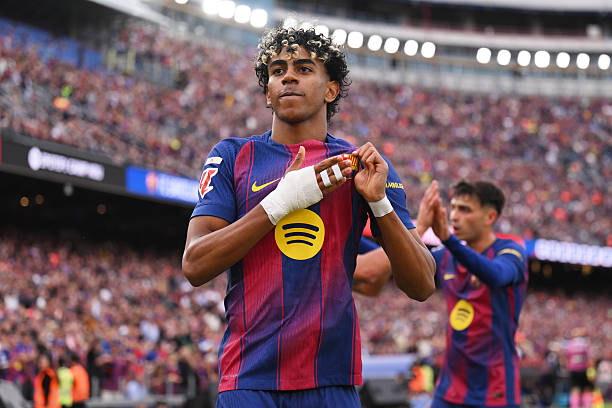
Spain arrived at the World Cup as European champions and left as world champions, beating Argentina 1 to 0 in extra time to claim a second global title and closing the book on what looked like Messi’s final tournament. That same Spanish core now pours straight back into La Liga. Barcelona, built around a teenager who already plays like a ten year veteran, chase a third straight league title, something the club has not pulled off since the Guardiola era. Real Madrid, rebuilt again over the summer with fresh faces and old ambitions, will not accept second place quietly.
- 38 matches unbeaten: Spain carried a historic run all the way into the World Cup final and never lost it.
Lamine Yamal is the name to learn if you do not know it yet. Still only 19, he is already one of the best players alive, and this is the season he tries to drag Barcelona back to the summit of Europe. If you need one reason to set an early alarm on a Sunday, he is it.
The transfer market lost its mind again
Every summer the numbers climb, and this one blew the roof off. Chelsea, a club with no European soccer to play this season, still outspent nearly every rival on the continent, headlined by a move for England forward Morgan Rogers that reportedly set a new British transfer record. Xabi Alonso now runs that project, one of the brightest young managers in the game trying to build something that lasts at Stamford Bridge rather than another expensive mess. Tottenham made their own statement, smashing their club record for Italy midfielder Sandro Tonali as Roberto De Zerbi tries to turn a chaotic side into a genuine contender.
- A reported 117 million pounds for Morgan Rogers: the most ever paid for a British player.
These fees are not just trivia for the group chat. They tell you which clubs are all in this year, which owners are done waiting, and exactly where the pressure will land hardest when the results do not follow the spending.
Paris Saint Germain are the new kings of Europe
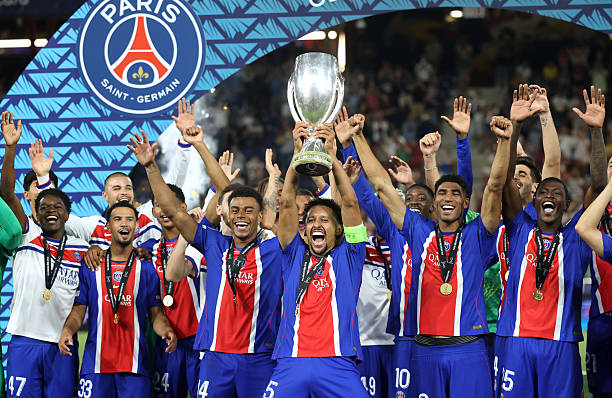
For years the Champions League felt like the private property of Spain and England. Then Paris Saint Germain finally broke through, lifting the trophy and beating Arsenal in the final to do it. Now they defend that crown as winners of two Champions Leagues and two European SuperCups, no longer the nearly men, no longer the punchline. The rest of the continent is chasing them, and the road this season runs to Madrid, where the final will be played next June at the Metropolitano. Every giant on the map wants to be in that building, and PSG have a target on their back for the first time in the club’s history.
Do not sleep on the rest of the continent
Europe is bigger than two leagues. In Germany, Bayern Munich reload every summer and remain the team everyone else is measured against, while the Bundesliga keeps producing the young talent that the giants come shopping for. In Italy, Serie A is deep and mean again, a league where any given weekend can wreck a title race. Even the clubs outside the traditional elite matter now, because the expanded Champions League means more sides than ever get a shot at the big nights. For a new fan, that spread is a gift. There is always another storyline one time zone over.
Why Americans should be watching now
Here is the part that matters most for readers on this side of the Atlantic. A whole generation of American players is embedded in these leagues now, led by Christian Pulisic and a growing group of US internationals who start every single week in Europe rather than watching from the bench. The home World Cup gave American fans a taste of the sport at full volume, in their own cities, in their own time zones. The European club season is how you keep that feeling alive between now and the next big summer of international soccer. And with Messi still lighting up MLS at Inter Miami, the pipeline between the American game and the European one has never been busier, never been closer, and never been more worth your attention.
So pick a club, pick a storyline, and settle in. The season that follows the biggest World Cup in history has an awful lot to live up to. Something tells me it just might deliver.
 FC Barcelona
 Manchester City
 Paris Saint Germain
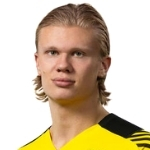 Erling Haaland
 Lamine Yamal