

Absent from the World Cup since France 1998, Austria finally returns to football’s biggest stage with the ambition of confirming the promise it showed at Euro 2024. Under the guidance of Ralf Rangnick, the Austrian national team has transformed into an intense, aggressive side built around relentless pressing and capable of competing with Europe’s elite.
The group
Austria will compete in Group J alongside Argentina, Algeria, and Jordan.
On paper, Argentina enters as the clear favorite. The reigning world champions represent the biggest obstacle in the race for first place. Behind them, however, the battle for qualification is expected to be extremely competitive between Austria, Algeria, and a Jordanian side appearing at its first-ever World Cup.
The schedule could work in Austria’s favor. An opening match against Jordan offers Rangnick’s men an opportunity to collect valuable points before facing Argentina in what promises to be the group’s marquee clash. The final game against Algeria could then prove decisive in determining the qualifying positions.
Key players
Konrad Laimer
The heartbeat of Austria’s pressing game, Laimer perfectly embodies Rangnick’s footballing philosophy. His relentless work rate, aggression in ball recovery, and ability to drive forward through midfield make him one of the most important players in the squad. In major matches, he is often the first spark that ignites Austria’s intensity.
Michael Gregoritsch
The SC Freiburg striker remains one of Austria’s primary attacking threats. Dominant in the air, effective with his back to goal, and often decisive in big moments, Gregoritsch provides a profile that complements Austria’s other forwards. His efficiency could prove crucial in a group stage where every chance may be decisive.
Marcel Sabitzer
The creative brain of the team. Sabitzer provides the vision, technical quality, and shooting ability that allow Austria to turn defensive pressure into genuine scoring opportunities. His experience at the highest level of European football also makes him one of the dressing room’s natural leaders.
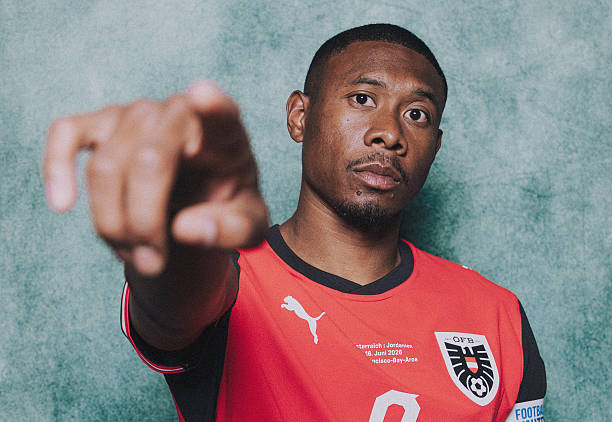
David Alaba
Captain, icon, and the defining figure of modern Austrian football. Hampered by injuries in recent seasons, Alaba finally returns to compete in the World Cup that he was unable to fully prepare for ahead of Euro 2024. While questions remain regarding his physical condition, his leadership, versatility, and experience remain irreplaceable assets for this Austrian side.
The face of Austria
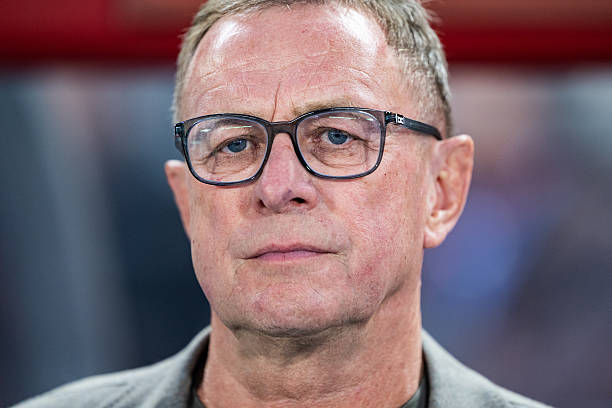
When Ralf Rangnick took charge of the national team in 2022, Austria was still struggling to fully unlock the potential of its talented generation. Within a few years, the former RB Leipzig architect imposed a clear identity built on gegenpressing, relentless intensity, and rapid transitions.
The results followed quickly.
Austria enjoyed a remarkable Euro 2024 campaign, finishing top of a group that included both France and the Netherlands before narrowly falling to Turkey in the Round of 16. That tournament marked a turning point in how the international football community viewed the Austrian national team.
Qualification for the 2026 World Cup further confirmed that progress. After twenty-eight years away from the competition, Austria returns with an experienced core featuring Alaba, Sabitzer, Laimer, and Marko Arnautović, complemented by a number of emerging young talents.
More than just a dark horse, Austria arrives in North America with the clear ambition of reaching a new level in a major international tournament. In a Group J that appears wide open behind Argentina, Rangnick’s side possesses the quality, organization, and belief required to reach the knockout stage and further establish itself as one of the rising forces of European football.