

For more than forty years, Didier Deschamps has stood at the center of almost every major turning point in French soccer history. From the brightest triumphs to the darkest controversies, his career resembles that of a man constantly caught in the middle of storms. World Cup-winning captain, victorious coach, respected leader — Deschamps also carries behind him a long trail of scandals, suspicions, and brutal fallouts.
The captain of French soccer’s first golden era
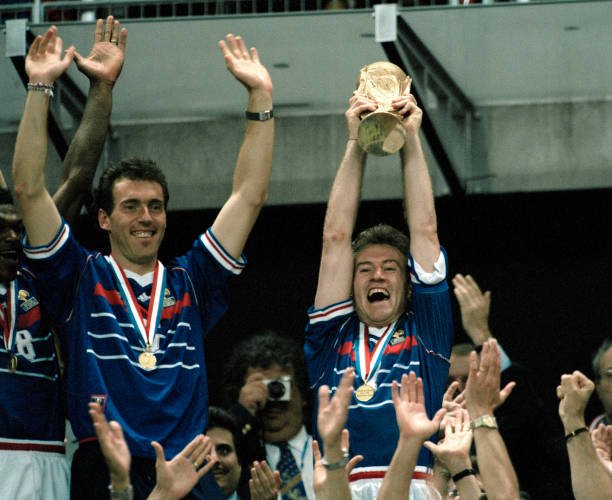
The story of Didier Deschamps is first and foremost tied to the greatest successes in French soccer history. In 1993, he lifted the first UEFA Champions League trophy ever won by a French club with Olympique de Marseille. In midfield, he was not the most spectacular player, but he was already the most indispensable — the one who balanced the team, organized it, and above all, won.
A few years later, he became the captain of France’s golden generation. The 1998 FIFA World Cup and Euro 2000 turned him into one of the defining symbols of triumphant French soccer. In the franceinfo podcast dedicated to his journey, it is emphasized how Deschamps built his career around one obsession: victory, sometimes at the expense of style or image.
That results-driven mentality would later become his trademark as a coach. At Juventus, Olympique de Marseille, and later with the France national team, Deschamps imposed the same philosophy everywhere: win first, regardless of criticism about the style of play.
In 2018, he joined the extremely exclusive club of men who have won the World Cup as both a player and a manager. A consecration that further strengthened his status in French soccer history. Yet behind the image of the cold and methodical leader lies another, more complicated reality.
The survivor of scandals
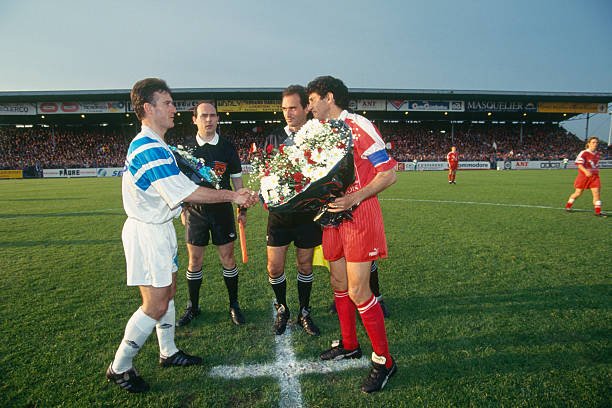
Deschamps has always had a strange ability to move through scandals without ever being completely consumed by them. In 1993, Marseille’s European triumph was immediately overshadowed by the VA-OM scandal. The club became the symbol of a French soccer system tainted by corruption and manipulation. Deschamps himself remained legally distant from the case, but his name has always remained attached to that dark period.
A few years later, suspicion resurfaced in Turin. The Juventus side of the 1990s, where Deschamps became an icon, would long remain associated with doping allegations. Once again, he was never convicted or directly implicated, but his years in that team continue to fuel debate.
Even his departures often leave bitterness behind. In 2007, after guiding Juventus back to Serie A following the Calciopoli scandal, his adventure ended abruptly amid internal disagreements. Many already saw the portrait of a man who was extremely demanding and sometimes difficult to deal with on a human level.
The same pattern repeated at Marseille in 2012. After bringing trophies and restoring stability to the club, Deschamps left OM in a toxic atmosphere marked by tensions with the board and internal conflicts. Every time, the same paradox appeared: Deschamps wins, but he often ends up exhausting his environment.
A permanant ambiguity
Deschamps’ name also hangs over one of the greatest traumas in French soccer history: Knysna. Officially, he was not the manager during the South African disaster. Yet his shadow was never far away.
At the time, many players already knew he could replace Raymond Domenech after the tournament. Several members of the squad were reportedly in regular contact with him, and numerous accounts described a certain closeness between Deschamps and some of the team’s veteran leaders. Years later, his own comments about Knysna would reignite debates about how much he truly knew regarding the fractures inside the French locker room.
That ambiguity perfectly summarizes the man himself. Didier Deschamps always seems to exist between two opposing images: the savior of French soccer and a figure who somehow thrives within its tensions and crises.
Ultimately, his entire career rests on that duality. He is the captain of France’s greatest victories, but also a recurring witness to its deepest crises. A man who, almost by himself, embodies both the light and the shadow of modern French soccer.
 France
 Thierry Henry
 Zinédine Zidane