

For a long time, Arsenal was a paradox. A massive club, a team capable of playing beautiful soccer, but also one that had become accustomed to falling short when it mattered most. After the Invincibles of 2003-04, the Gunners gradually went from being a team of conquerors to becoming perennial runners-up, unable to turn their promising performances into trophies. In 2015, following another Champions League elimination against Monaco, the French newspaper L’Équipe even went as far as calling Arsenal “perennial losers.”
Twenty-two years after their last league title, Arsenal has nevertheless changed its identity. Under Mikel Arteta, the club has built a much colder, more structured and more obsessive team in its pursuit of the smallest details. A team capable of winning without entertaining, hurting opponents with every set piece and, above all, turning its accumulated frustration into genuine collective strength.
But this transformation has had an unexpected consequence: the stronger Arsenal has become, the easier it has become to hate them.
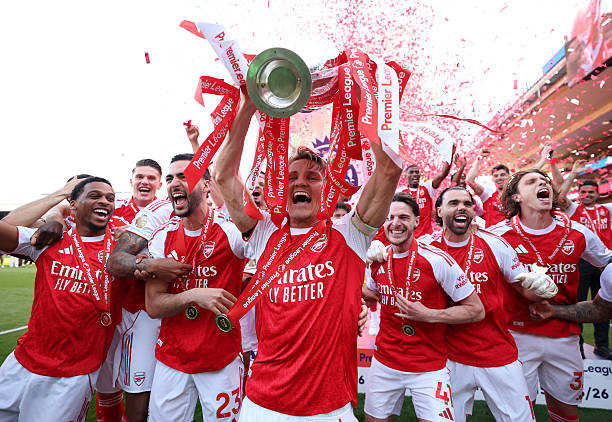
From an admired giant to perennial losers

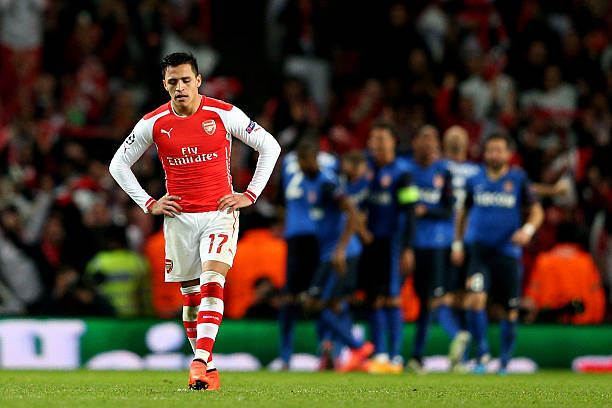
To understand the hatred surrounding Arsenal today, you first have to look at what came before it. In the late 1990s and early 2000s, Arsenal was already one of England’s biggest clubs. Under Arsène Wenger, the Gunners revolutionized parts of English soccer before reaching their peak with the Invincibles.
But that exceptional generation would also become a burden for the teams that followed.
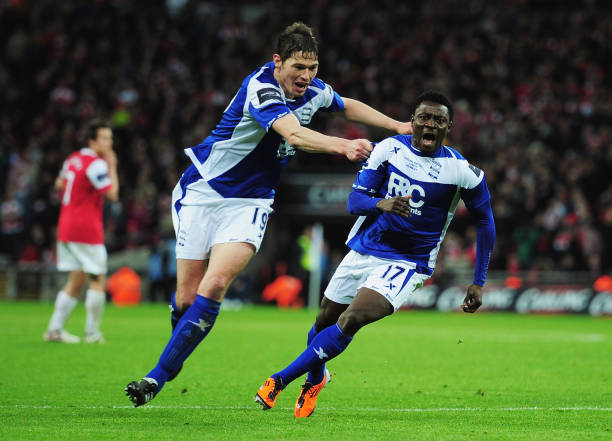
After Thierry Henry, Patrick Vieira and the other key players from that team left, Arsenal entered a long period of transition. The club continued to play, often very well, but could no longer clear the final hurdle. In 2011, the defeat to Birmingham in the League Cup final already symbolized this new identity: a talented team, but one unable to handle decisive moments. So Foot highlighted Arsenal’s lack of experience in knockout games and their difficulty responding when the pressure increased.
The situation gradually became part of the collective perception of the club. Arsenal had become the team people enjoyed watching lose at the last moment.
The years went by, rivals won titles and the Gunners continued to accumulate missed opportunities. Even when the team was good enough to challenge for the title, something always seemed to happen in the end. The clearest example remains the 2022-23 season. Arsenal spent much of the campaign at the top of the table before allowing Manchester City to come back and eventually run away with the title.
And the same scenario seemed destined to repeat itself.
In April 2024, while Arsenal were still involved in the title race, Aston Villa won 2-0 at the Emirates. The Gunners had dominated much of the match, but their inability to convert their chances ultimately condemned them. Two late goals from Leon Bailey and Ollie Watkins turned almost total dominance into disaster.
It was precisely this reputation for “choking” that had long followed Arsenal. A club too talented to be considered mediocre, but too fragile to be considered a true champion.
In 2015, L’Équipe’s description of Arsenal as “perennial losers” perfectly summed up that image.
Then Mikel Arteta arrived.
Arteta, or how to turn Arsenal into a machine
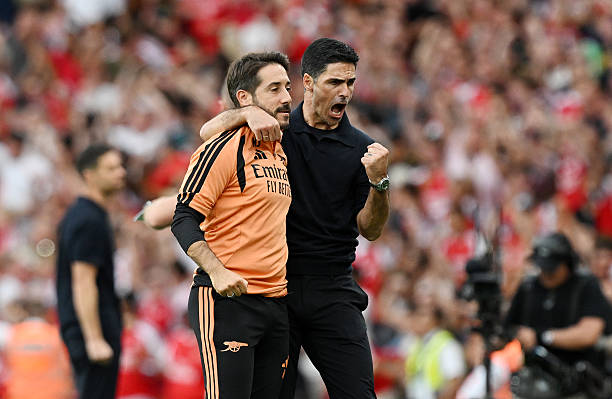
When Arteta took charge of Arsenal in December 2019, the rebuild was enormous. The Spaniard was not simply inheriting a team lacking quality. He was taking over a club that had gradually lost its winning culture.
His mission would therefore go beyond tactics alone.
Arteta wanted to rebuild an identity. He wanted a team capable of controlling its games, defending collectively, handling pressure and, above all, no longer giving opponents the same psychological weaknesses they had exploited in the past.
That transformation would take several years.
Arsenal gradually became more athletic, more aggressive and much more defensively solid. The signings of players such as William Saliba, Declan Rice, Martin Ødegaard and Gabriel strengthened a team that no longer looked much like the one from Wenger’s final years or Unai Emery’s tenure.
But Arteta would take his obsession with detail even further.
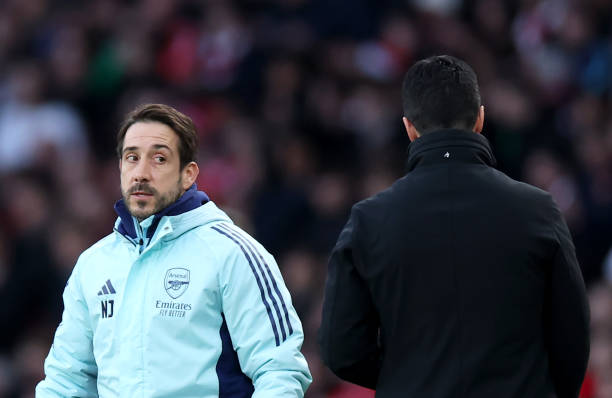
This is where Nicolas Jover comes in.
The French set-piece coach transformed Arsenal’s corners into a genuine tactical weapon. Since his arrival in 2021, the Gunners have integrated set pieces into the very heart of their performance model. The idea is no longer simply to work on corners for a few minutes before a game: they are analyzed, broken down and rehearsed like any other sequence of play.
And the result is spectacular.
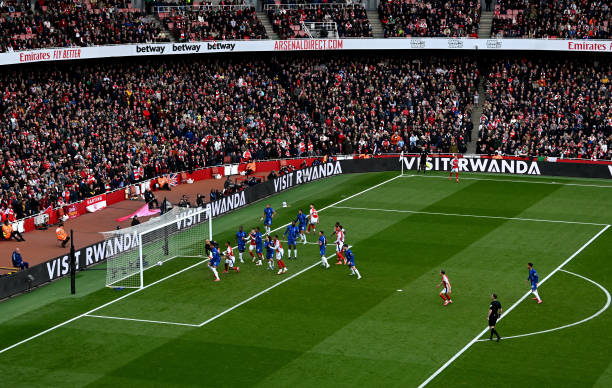
Arsenal uses numerous screens, decoy runs, movements toward the back post and changes in trajectory. Several players are capable of taking corners, while numerous targets can be used inside the box. The objective is precisely to make the system unreadable for the opposition.
The most important thing, therefore, is not simply that Arsenal scores from corners. It is that Arsenal appears to have transformed a phase of the game that was long considered secondary into an exact science.
On top of that, Arteta has built a defense that is extremely difficult to break down.
His team can now win 1-0, control a game without creating a huge number of chances and patiently wait for the opposition to crack.
Arsenal is no longer the team constantly looking to impress.
It wants to win.
And that is precisely what makes it much harder to love.
The new Arsenal : too good to be loved
There is a fairly simple rule in soccer: as long as a team does not win, it can easily become likable.
Arsenal experienced this for nearly two decades.
The Gunners could be mocked, their inability to win had become a source of jokes, and their supporters were often portrayed as eternal optimists waiting for a title that never came. Even when Arsenal was competitive, opponents could always hope to witness another collapse.
Today, that dynamic is gone.
Arsenal has become one of the hardest teams to face in England. And above all, the Gunners have developed a personality that irritates their opponents.
They are physical. They are organized. They are extremely well prepared. They know how to win duels, force set pieces and slow games down when necessary. They have also developed a level of confidence that contrasts sharply with the club’s image in previous years.
This is perfectly reflected in the way they are perceived in England. A study cited by So Foot even ranked Arsenal supporters among the most unpopular fan bases in the Premier League. But the phenomenon is not entirely new: Manchester United, Chelsea and then Liverpool had all occupied that status when they dominated the league. English soccer follows a strange logic: people often love to hate whoever is winning.
The problem for Arsenal is that its image is not based solely on its results.
Its style of play itself has become a source of frustration.
For some observers, this team is not entertaining enough. The “Infamous” or “One-Zero” labels mentioned by So Foot sum up the criticism: Arsenal can appear to prioritize efficiency over spectacle, winning through repetition and gradually suffocating their opponents rather than dazzling them.
But ultimately, isn’t that precisely what was missing from the teams that came before?
For years, Arsenal was accused of being too naive, too romantic and too fragile. Today, they are almost criticized for the opposite: being too cold, too calculated and too efficient.
The change is therefore enormous.
Arsenal is no longer the team everyone waits to see crack under pressure. It is now the team other clubs hope will stumble because they know it has become strong enough to win the championship.
And that is probably the best definition of its transformation.
The Invincibles were admired because they were beautiful and unbeatable. The new Arsenal, meanwhile, does not need to be loved.
It wants to be feared.
After spending nearly 20 years being mocked for their failures, Arsenal has built a team capable of winning through adversity, defending as a unit, turning every corner into a scoring opportunity and making games miserable for anyone who faces them.
In other words, Arsenal has become what its supporters have been waiting for all these years: a team of champions.
And as is often the case in soccer, there is a consequence to that.
The harder you are to beat, the more everyone else wants to see you lose.