

For most of the 1990s and 2000s, the back four ruled the sport. Flat lines of two center backs and two full backs became the default across Europe, drilled into academies as the safest and most balanced way to defend. The sweeper and the three man defense felt like museum pieces, charming reminders of an older era. Then, almost quietly, the back three came roaring back. Today some of the sharpest teams on the planet build their entire identity around three central defenders, and the system has reshaped how coaches think about width, pressing, and playing out from the back.
- The basics: a back three uses three center backs supported by two wing backs who patrol the full length of each flank

To understand the comeback, it helps to remember where the idea started. The three man defense traces back to Italian catenaccio, where a libero, or sweeper, sat behind the marking defenders to mop up danger. The greatest version of that role was reinvented in Germany by Franz Beckenbauer, who turned the sweeper into an attacking weapon, stepping out of defense to start moves. For a while, three at the back was the height of tactical sophistication. By the late 1990s, though, zonal back fours and the offside trap pushed the sweeper into near extinction. Width and overlapping full backs became the obsession, and the three man defense was left for dead.
Antonio Conte lights the fuse
If one coach is responsible for the modern revival, it is Antonio Conte. When he took over a wounded Juventus in 2011, he rebuilt the club around a disciplined 3-5-2 and won the Serie A title in his first season without losing a league game. The shape gave Juventus solidity at the back and overloads in midfield, and it dragged the back three back into elite conversation.
- 3 straight Serie A titles for Conte at Juventus, all built on a three man defense
Conte then carried the blueprint everywhere he went. He used a back three with Italy at Euro 2016, squeezing an overachieving squad past Spain and into the quarterfinals on organization alone. His most famous experiment came at Chelsea. After a heavy defeat early in the 2016/17 campaign, Conte switched to a 3-4-3 mid season, and Chelsea promptly ripped off one of the longest winning runs in Premier League history on their way to the title. Coaches across England took notice, and within a couple of years three at the back was no longer exotic. It was everywhere.
Why three at the back actually works
The revival is not nostalgia. It is a response to how the modern game is played, and especially to the rise of aggressive high pressing. When opponents press with two forwards, a back three creates an instant numerical advantage in the first phase of build up. Three defenders against two pressers means there is almost always a free man to receive the ball and carry it forward, which is exactly what teams need to beat the press and start attacks cleanly.
- 3 versus 2 in the build up is the single biggest reason coaches reach for this system
The shape also solves the width problem in an elegant way. With three center backs holding the middle, the wing backs are freed to push high and wide, acting as attackers going forward and defenders when the ball is lost. That gives a team five players across the back when defending and serious attacking thrust on both flanks when in possession. Crucially, it lets a side load the central areas with creative players without sacrificing protection, because the back three covers ground that a back four cannot.
Defensively, the extra body in central areas is a gift against teams that play with two strikers or that thrive on crosses. One center back can step out to challenge while two stay home to guard the goal, a balance that a back four often struggles to find.
From club tactics to the global stage
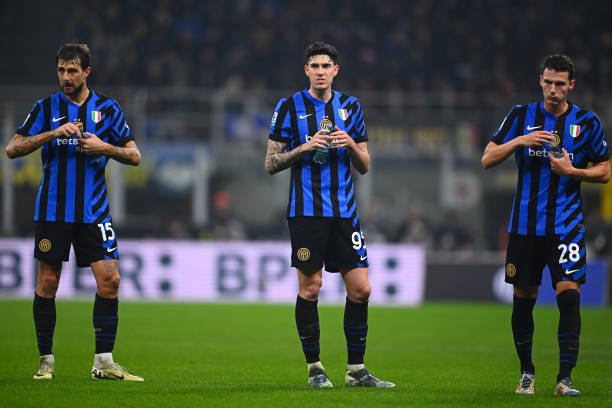
What started as a club trend quickly conquered the biggest competitions. Thomas Tuchel arrived at Chelsea in early 2021, switched to a back three almost immediately, and won the Champions League months later, smothering elite attacks with a compact and flexible defensive block. Inter Milan, again under Conte, won Serie A in 2020/21 using a 3-5-2 that overpowered opponents on both ends.
- 1 Champions League title in 2021 for Tuchel’s Chelsea, built on a back three
The system has shown up at World Cups and continental tournaments too, where national team coaches have limited training time and value the structure and clarity a back three provides. It is a shape you can teach quickly, which makes it ideal for international soccer.
The hybrid future
The most fascinating part of the revival is that the back three is rarely fixed anymore. The modern trend is fluidity. Pep Guardiola helped popularize the idea of building a temporary back three in possession by inverting a full back into midfield, then reverting to a back four when defending. Many top teams now shift between three and four at the back several times within a single game, depending on whether they have the ball.
- Chris Wilder turned the system into theater at Sheffield United, sending his center backs galloping forward on overlapping runs to stun the Premier League in 2019/20
That flexibility is the whole point. Today a back three is less a rigid formation than a tool a coach can pick up and put down as the situation demands. Players are increasingly asked to understand multiple shapes, and the best defenders are now expected to be comfortable as part of a two, a three, or even a temporary four that morphs in real time.
The three man defense was once written off as a relic of a slower, more cautious game. Instead it has become one of the defining features of modern soccer, prized precisely because it answers the questions today’s coaches care about most. Width without exposure, control without passivity, and a free man to beat the press. The sweeper may never return in its old form, but the back three is here to stay.
 Chelsea
 Juventus Turin
 Inter Milan