

Every few years, the rest of the soccer world quietly convinces itself that Spain has finally run out of geniuses in the middle of the park. And every few years, another one walks out of the same academies, plays the same unhurried passes, and makes everyone look foolish for doubting. The production line does not sputter. It reloads.
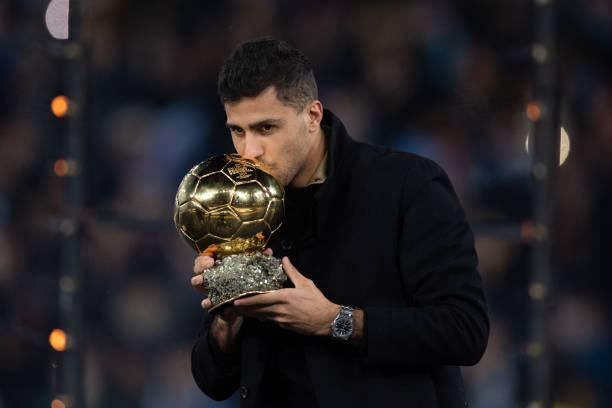
The evidence tends to pile up fast. Rodri won the 2024 Ballon d’Or, the first Spaniard to claim the award since Luis Suárez all the way back in 1960. Spain took Euro 2024 with Rodri pulling the strings, then lifted the 2026 World Cup at MetLife Stadium, where he collected the Golden Ball as the best player of the tournament. On the women’s side, Aitana Bonmatí, a midfielder cut from the exact same cloth, has won three straight Ballon d’Or trophies. No country on earth owns the center of the field like this one.
- Ballon d’Or won by a Spanish player in 2024: Rodri, the first since Luis Suárez in 1960
It starts in the classroom, not on the field
The honest answer is that Spain does not really discover midfielders. It builds them, on purpose, from the age of six or seven. Barcelona’s La Masia is the most famous version, but the same philosophy runs through youth setups all over the country. Kids are taught to receive the ball under pressure, to open their body before it even arrives, to spot the free teammate before an opponent can close the angle. The rondo, that little keep away circle you see in every warmup, is not a drill in Spain. It is a language, repeated thousands of times until control and vision become reflexes instead of decisions.
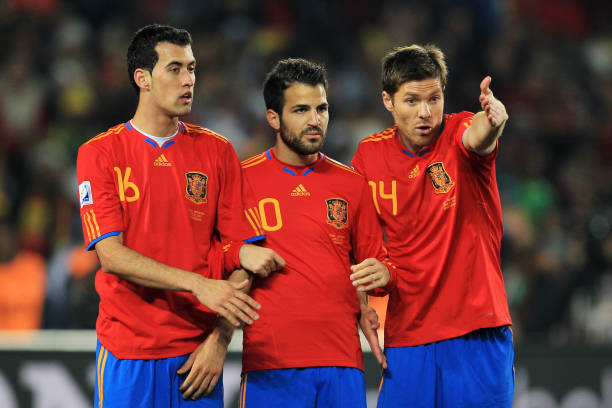
That education rewards a very specific kind of player. Not the biggest or the fastest, but the smartest and the calmest. Xavi Hernández, Andrés Iniesta, and Sergio Busquets, the trio that carried Spain across an entire era, were all La Masia products who won games with their brains and their first touch. They set the template, and Spain has been printing copies ever since.
The trophies are not a coincidence
You can argue about taste in soccer, but you cannot argue with a trophy cabinet. Spain’s original golden generation delivered Euro 2008, the 2010 World Cup, and Euro 2012, a run built almost entirely on midfield control and endless possession. The current generation has picked up the torch without missing a beat, adding Euro 2024 and the 2026 World Cup to the pile.
- Major titles built on midfield control: Euro 2008, World Cup 2010, Euro 2012, Euro 2024, World Cup 2026
What connects both eras is the same stubborn idea. Spain wins by keeping the ball, tiring opponents into mistakes, and trusting the men in the center to make the right call even when their legs are gone. In the 2026 final, La Roja outshot Argentina by an almost comical margin and simply refused to give possession back, grinding down a proud opponent until Ferran Torres finally broke through in extra time. That is not a tactic you can copy in an afternoon. It is a national identity.
The conveyor belt keeps running
Here is the part that should worry everyone else. Even as the legends age out, the replacements arrive already better than advertised. Pedri has become the heartbeat of Barcelona, a passer with the composure of a veteran at an age when most players are still figuring the position out. Mikel Merino and Martín Zubimendi give the national team a spine that would start for almost any country in the world. Fabián Ruiz runs the show in Paris for one of the strongest clubs in Europe.
None of these players showed up by accident. They showed up because Spain has spent decades perfecting the recipe for a modern midfielder and then repeating it, batch after batch. When one leaves, the next one steps forward already fluent in the system, already comfortable with the ball glued to his feet.
Why the midfield in particular
Plenty of countries produce great strikers or elite defenders. What makes Spain different is that its entire soccer culture is organized around the middle of the field. The most prized quality in a young Spanish player is not power or top speed. It is the ability to receive, turn, and pass in tight spaces, which happens to be the exact job description of a world class midfielder.
There is also a tactical inheritance at play. Pep Guardiola, himself a former Barcelona midfielder, carried the Spanish blueprint across Europe and proved it could win everywhere he took it. That success sent a message straight back down to every academy in the country. Keep coaching the ball. Keep valuing intelligence over athleticism. The results will take care of themselves.
- Women’s Ballon d’Or won by Aitana Bonmatí, a Spanish midfielder: three years in a row
The honest debate
None of this means Spain owns the position forever. France keeps producing astonishing all around athletes, England has poured serious money into coaching and is closing the gap, and Brazil still turns out artists who do things no manual can teach. A skeptic would fairly note that Spain leans heavily on Barcelona’s academy, and that one club stumbling could thin the whole pipeline.
But the counterargument sits right there on the scoreboard and in the individual awards. When the biggest games arrive and the pressure is highest, the calmest player on the field is very often Spanish, wearing a number in the center of the shirt. Until another country decides to treat passing as a birthright the way Spain does, the best midfielders in the world will keep speaking Spanish.
 FC Barcelona
 Spain
Spain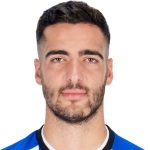 Mikel Merino
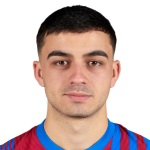 Pedri
Pedri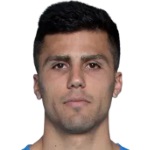 Rodri
Rodri