

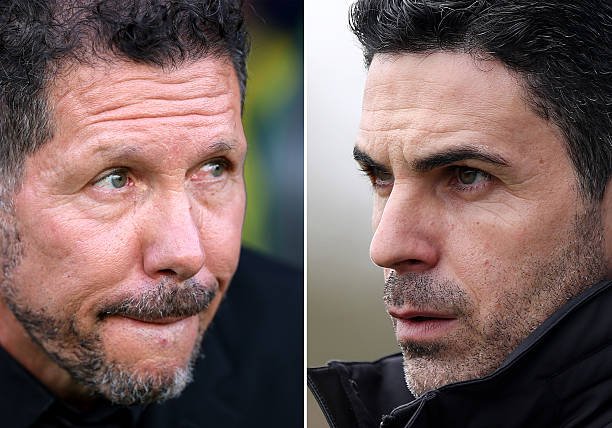
At first glance, the semifinal between Atlético and Arsenal in the Champions League looks like a clash of styles. On one side, the rugged, defense-first DNA shaped by Diego Simeone; on the other, the rigid positional play advocated by Mikel Arteta. But Arsenal have changed. Beneath the appearance of control, Arteta’s obsession with structure has gradually stiffened the London side’s play, to the point where—if not in intent, then in effect—it now resembles what has long been criticized about Atlético: a locked-down, methodical, sometimes suffocating brand of football.
Arsenal or illusion of total control
Since 2022, Arsenal have established themselves as one of Europe’s most structured teams. Passing patterns are meticulously designed, positions are fixed within a precise framework, movements repeated until they become automatic.
But that control comes at a cost. Under Arteta, individual freedom is limited. Every movement is coded, every risk carefully measured. Where spontaneity in attack was once praised, we now see a form of systemic caution.
The ball moves, Arsenal dominate… but without always destabilizing their opponent.
This evolution has fueled growing criticism: Arsenal have become a team of control rather than creation. A team that prefers not to lose rather than doing everything to win.
And in that sense, the comparison with Atlético no longer feels far-fetched. Beyond the tactical considerations, Arsenal enter this semifinal carrying a significant psychological burden. Since February, the machine has stalled. Warning signs have multiplied. A comfortable lead in the league squandered against a resurgent Manchester City, a clear defeat in the Carabao Cup final, and a humiliating FA Cup exit against Championship side Southampton.
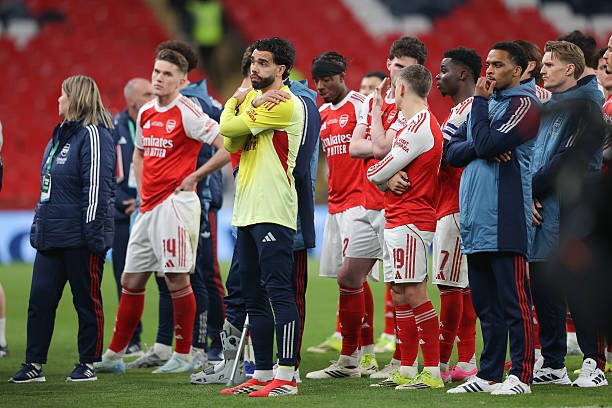
This run has revived an old demon: “bottling it.”Year after year, Arsenal seem to falter at the decisive moment—not for lack of quality, but due to an inability to maintain their level under pressure. A mental fragility that contrasts sharply with the sense of control their play is supposed to convey.
Atletico : thirving in chaos
By contrast, Atlético Madrid thrive in this kind of context.
Where Arsenal hesitate, Simeone’s team hardens.
Even in adversity, the Colchoneros retain a crucial quality: the ability to suffer without breaking. It is not always spectacular, nor fully controlled. But it is brutally effective, as shown in their recent knockout ties against Barcelona in both the Copa del Rey and the Champions League.
In a tight, tense game where every mistake is costly, that experience can make the difference. This is where a profile like Ademola Lookman could become crucial.In a highly structured Atlético side, Lookman is an anomaly: unpredictable, explosive in his runs, capable of breaking lines without following the script.
Against a block as disciplined as Arsenal’s, that ability to create disorder is invaluable. Because it is often in the unexpected that the most organized defenses crack.
And that is the key question.
The battle within the battle : who sets the tempo
The key to this matchup may lie in which team is willing to let go of control.
If Arsenal dominate possession without taking risks, they risk falling into a sterile game where passivity takes over—and a deadly counterattack becomes inevitable. If Atlético sit too deep, they could eventually crack, as they did in the 4–0 loss earlier this season.
The danger is the same for both sides: falling into a false rhythm. A slow, closed game where neither team wants to take risks. In that scenario, an unpredictable player—like Lookman—or a single detail (a set piece, an individual error) could be decisive.
More than tactics, this semifinal will be a mental test. Arsenal must prove they have grown. That they can withstand pressure. That they are no longer the team that collapses at the crucial moment. Atlético, for their part, must show they can still compete with Europe’s elite despite an inconsistent season.