

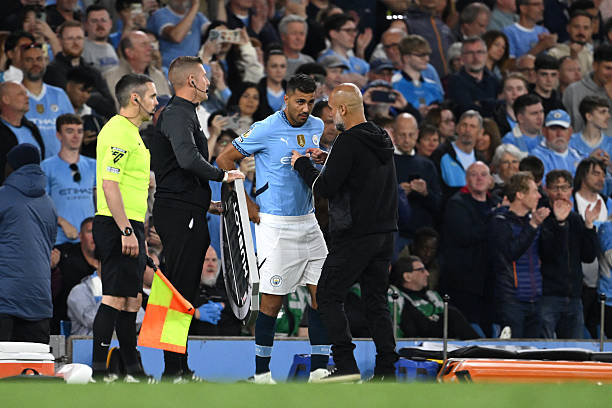
Squad depth has become the single biggest predictor of who lifts a modern league trophy. Arsenal proved it in 2025/26, grinding out 85 points and reaching a Champions League final on the back of a full rotation rather than eleven stars. In a calendar stacked with more than 50 games, the deepest bench usually wins.
Why depth beats a strong first eleven
Every title contender now plays two or three competitions at once. A club chasing the Premier League, the FA Cup, the League Cup and the Champions League can face 55 or more matches before May arrives. No group of eleven players survives that load fresh.


Depth turns the grind into an advantage. The team that can rest a key starter on Wednesday and still win on Saturday banks points its rivals drop through fatigue.
- Games in a title and Champions League season: 55 plus
The fixture calendar keeps growing
The modern schedule is heavier than it has ever been. The Champions League moved to a 36 team league phase in 2024/25, adding two extra fixtures for every club that qualifies, and the Club World Cup stretches the summer even further.
That congestion punishes thin squads. Injuries pile up in December and January, and a club without cover in two or three positions can watch its title bid unravel in a single month.
What real depth actually looks like
Depth is not simply owning 25 players. It is owning two credible options in every position who can start a big game without a drop in quality.
Manchester City built a dynasty on exactly that. Across a run of dominant seasons the club rotated fullbacks, midfielders and forwards without losing rhythm, and the trophies kept coming.

g>Man City Premier League titles, 2017/18 to 2023/24: 6
Arsenal reached the same level in 2025/26. When first choice players tired or picked up knocks, Mikel Arteta could send on signings good enough to change a match, which helped the Gunners lead the table for more than 200 days.
Rotation as a tactical weapon
Smart managers treat rotation as strategy, not damage control. They map the calendar weeks in advance, choosing which matches to load their strongest side into and which to trust the bench with.
This keeps key players sharp for the games that actually decide a season. It also protects morale, because squad players stay match fit and feel part of the project instead of forgotten reserves.
The injury factor that decides seasons
Injuries are where depth pays its biggest dividend. A single hamstring problem to a star striker can sink a shallow squad, while a deep one simply reloads and moves on.
The clubs that win leagues almost always survive an injury crisis at some point in the year. Their titles are often secured not in the spectacular performances but in the ordinary wins ground out while three starters watched from the treatment room.
How salary caps make depth harder in MLS
Major League Soccer shows the other side of this rule. American clubs build under a salary budget, so stacking two elite players in every position is close to impossible.
That is why MLS depth is a puzzle of Designated Players, U22 signings and allocation money. A roster carries up to 30 players, yet only a handful earn big salaries, so clubs hunt for value in the middle of the squad and lean on their academy for cover.
- MLS active roster limit: 30 players, up to 3 Designated Players
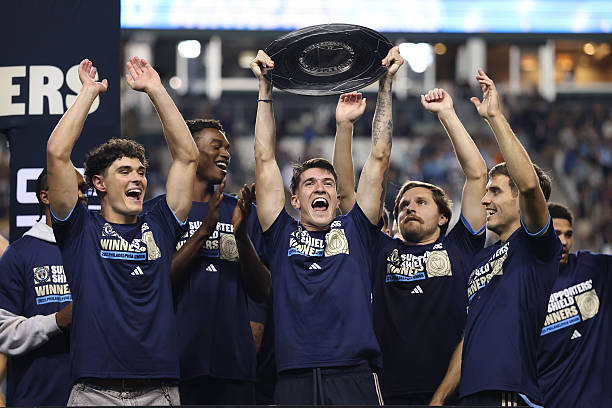
Philadelphia Union won the 2025 Supporters’ Shield with a balanced, well coached group rather than a top heavy one. In a capped league, coaching and squad balance carry even more weight than raw spending.
What it means going forward
Depth will only grow more decisive as calendars keep expanding. The 2026 World Cup on home US soil, a larger Club World Cup and extra European games all push in the same direction, toward seasons that reward the biggest and best organized squads.
For fans, the takeaway is simple. When you rank the contenders in August, look past the starting eleven and count how many games the bench could win on its own.
US soccer viewers can follow every one of these title races live. The Premier League streams on Peacock, La Liga runs on ESPN platforms, Serie A and the Champions League sit on Paramount+, and MLS lives on the Apple TV MLS Season Pass.
FAQ
Does squad depth matter more than a star player? Over a full season, yes. A single star can win individual games, but only depth carries a team through 50 plus matches, injuries and rotation to a league title.
How many players does a title winning squad really use? Most champions give meaningful minutes to 18 to 22 players across a campaign. The deeper that group, the better the team handles congestion and injuries.
Why is squad depth so hard to build in MLS? The salary budget limits how much clubs can spend, so they cannot load quality into every position. MLS depth leans on Designated Players, young U22 signings and smart use of allocation money.
Where can I watch these league title races in the US? The Premier League is on Peacock, La Liga on ESPN, Serie A and the Champions League on Paramount+, and MLS on the Apple TV MLS Season Pass.
 Arsenal
 Manchester City
 Philadelphia Union