

Starting next Monday, international soccer will undergo a major change. For the first time, the traditional September and October international breaks will be combined into a single window, running from September 21 to October 6. Instead of two separate interruptions, national teams will therefore have a 16-day international period during which they can play up to four matches. The change to the calendar was decided by FIFA as early as 2023 and is intended in particular to reduce the amount of travel required by international players. But beyond simply changing the calendar, this new format could significantly alter the way national teams work. And there are several reasons to be optimistic.
More time to build
This is probably the biggest benefit of the new international break. National team coaches will finally have a more favorable working environment with their players. Whereas previous international windows often required a succession of very short camps, the new format allows coaches to concentrate their work into a single period. National teams will therefore be able to play up to four matches without having to wait several weeks before bringing their players back together.
That difference may seem minor on paper, but it is considerable for a national team coach. At the club level, a manager works with his squad every day for several months. With a national team, the situation is completely different: players arrive from their clubs with different tactical habits and have only a handful of training sessions to absorb their new coach’s principles. Every training session therefore becomes valuable.
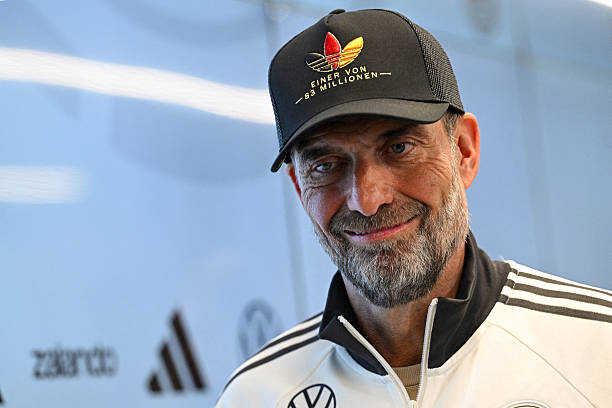
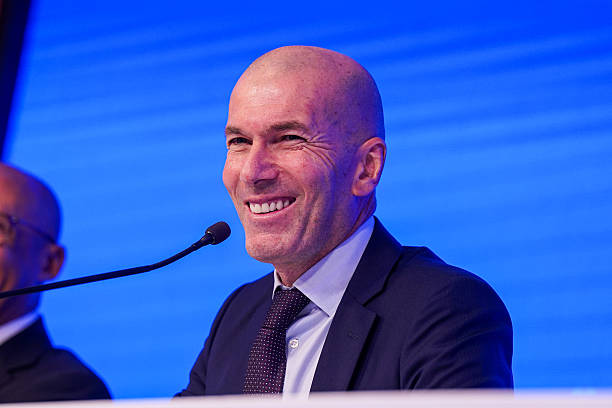
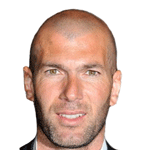
This additional week comes at a particularly interesting moment for several major national teams. France has changed managers with the arrival of Zinédine Zidane, who is beginning his tenure with Les Bleus and must now establish his ideas ahead of the next international fixtures. The same situation applies in Germany, where Jürgen Klopp has recently taken charge of the Nationalmannschaft. For his first matches, Klopp has also called up 44 players split into two groups in order to manage the four games scheduled during this window.
For these new national team coaches, this expanded framework is therefore anything but a luxury. It can allow them to work more extensively on chemistry and automatisms, experiment with several systems, test players and, above all, begin to give their team a genuine identity. For both Zidane and Klopp, this first extended international window represents a rare opportunity to lay the foundations for a new cycle.
One break instead two for players and club
The second benefit directly concerns the club calendar. Until now, international players faced several closely spaced interruptions during the fall. A break in September followed by another in October forced clubs to interrupt their momentum before having to rebuild it just a few weeks later.
The new system eliminates that second interruption. After the September-October window, the next major international gathering will take place in November, followed by another in March. In the Premier League, for example, the season will stop after Matchweek 5 on September 20 before resuming on October 10.
This change could have a significant impact on the continuity of club seasons. Coaches will be able to go through more matches with their full squads without having to immediately deal with another round of players leaving for international duty. Teams will therefore have an opportunity to develop their chemistry, refine their playing principles and prepare for the important fixtures that follow the fall.
The change also addresses the issue of travel. FIFA has specifically justified the new structure by pointing to the desire to reduce the amount of international travel undertaken by players. A South American international playing in Europe, for example, will no longer have to cross the Atlantic twice within a few weeks to join his national team. This obviously does not eliminate the fatigue associated with international duty, but it allows those trips to be concentrated into a single period.
Four games to test
Finally, this new format could give national team coaches something they often lack: the opportunity to test their ideas over several consecutive matches. Four games within the same window make it easier to measure the effects of a tactical change or a new hierarchy within the squad.
A coach can, for example, use the first two matches to establish a system, observe certain players and identify his first certainties before changing his starting lineup or tactical approach for the following two games. The benefit is therefore also being able to quickly learn from an initial experiment and immediately apply those lessons.
The German example is particularly revealing. Jürgen Klopp has chosen to call up 44 players for this first window, with an initial group of 24 players set to play the first two matches against the Netherlands and Greece, before a second group of 20 players joins the national team for the games against Serbia and Greece. This organization highlights the possibilities offered by the new calendar: expanding the squad, observing more profiles and creating more opportunities for experimentation.
For major national teams as well as those undergoing a rebuilding process, this new international break could therefore become a genuine laboratory. France under Zidane, Germany under Klopp, as well as all the teams beginning a new cycle after the 2026 World Cup, will be able to benefit from four matches concentrated within the same period.
The new calendar will obviously not revolutionize international soccer on its own. Players will still be subject to significant physical demands, and clubs will still have to release their international players. But by combining September and October into a single window, FIFA is giving national teams a more coherent framework: more training sessions, fewer interruptions and several matches in which to put their ideas to the test. At a time when several major national teams are beginning a new chapter, this change to the calendar could therefore arrive at exactly the right moment.
 Germany
 Zinédine Zidane