

Two games, two wins, and already several early indications of what the new France team could look like. For his first matches in charge of Les Bleus, Zinedine Zidane began his tenure with a 1-0 victory in Turkey before repeating the same scoreline against Belgium. The results are identical, but the performances already show some changes compared with the final stages of Didier Deschamps’ tenure. From a more visible pressing game to a greater desire to control possession and changes in the team’s attacking structure, Zidane’s first weeks in charge have primarily begun to reveal the outlines of a new project.
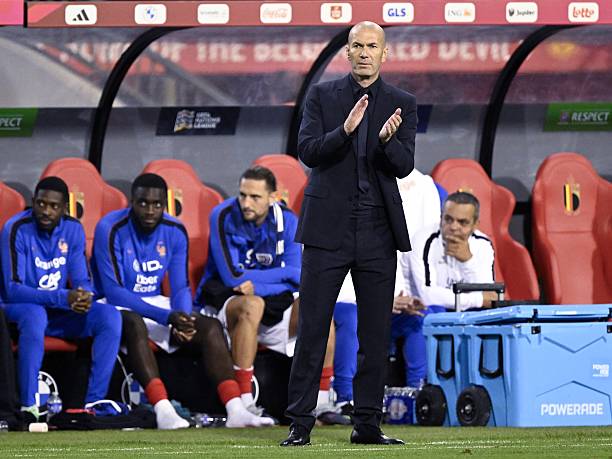
The first thing to take away is the continuity in terms of results. France began this new period with two 1-0 victories. In Turkey, Kylian Mbappé scored the only goal of the game, while the Bleus had to wait until their trip to Belgium to secure their second win of the Zidane era.
But the new head coach does not appear to be looking to immediately revolutionize his team. This is probably one of the most important lessons from these two games. Zidane has arrived after fourteen years under Didier Deschamps and therefore needs to gradually introduce his ideas into a squad that already possesses established patterns and automatisms.
In Turkey, Les Bleus notably showed several good pressing sequences. The objective was to win the ball higher up the pitch and force turnovers in the opponent’s half. This approach fits the image of a team that is more focused on winning possession quickly and immediately exploiting the spaces created by those recoveries.
The game against Belgium then showed a team capable of controlling certain phases of the match more effectively. Zidane himself emphasized after the victory that France had been dominant. The scoreline remained minimal, but the performance displayed several differences in the way the team used the ball.
Is an identity to emerge ?
The second major takeaway concerns this desire for greater control. Zidane appears to want to give his players more technical freedom while maintaining a sufficiently solid collective structure. The objective is not necessarily to monopolize possession for 90 minutes, but rather to be able to use the ball to dictate the tempo when the circumstances allow it.
Against Belgium, this approach was particularly visible. France enjoyed long spells of control and looked to progress through short combinations before accelerating in the final third. This contrasts with periods when Les Bleus could rely more heavily on quick transitions.
However, this evolution does not represent a complete break from the past. The opening game against Turkey had already shown that Zidane was maintaining a degree of caution in the team’s organization. Reuters noted that the victory was more the result of an organized and patient team than of a tactical revolution.
Pressing is precisely one of the areas where the evolution appears most identifiable. In Turkey, certain sequences showed a team capable of triggering its press collectively and closing down several passing options at the same time. This allows Les Bleus to win the ball back more quickly and avoid enduring lengthy defensive phases.
That pressure nevertheless requires a high level of coordination. If the first player steps out without the rest of the team following, spaces can open up behind the first line of pressure. Zidane’s task is therefore also to find the right balance between aggression and defensive protection.
Another important element concerns his management of the squad. In his first two games, Zidane has already begun changing certain combinations and giving playing time to different profiles. This rotation will be essential during a particularly demanding international period.
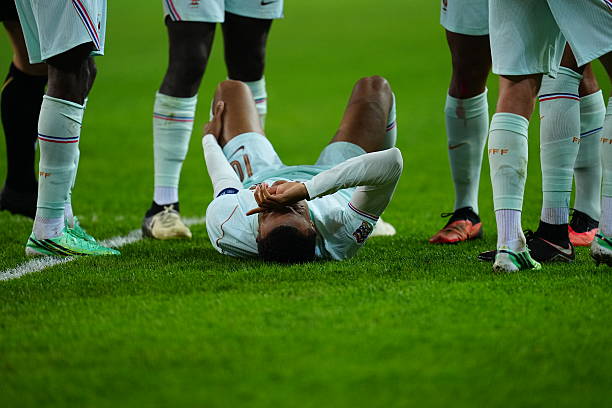
The circumstances surrounding the second game highlighted this point. After the match against Belgium, France had to deal with the absence of Kylian Mbappé, who had come off after scoring the decisive goal in Turkey. The coach’s ability to make his team function with or without its captain will therefore be another important issue during the early stages of his tenure.
Ultimately, these first two games mainly show that Zidane does not appear to want to change everything immediately. He is gradually implementing his methods, working on details rather than attempting to produce a dramatic transformation from his first matches.
The two 1-0 victories therefore provide a relatively clear first snapshot of this new cycle: a team that is still under construction, capable of controlling certain phases more effectively, more aggressive in its pressing, and increasingly influenced by the principles of its new head coach.
It is obviously still too early to draw definitive conclusions. Two games are not enough to measure the full impact of a coaching change, particularly when it comes after fourteen years of stability under Deschamps. But Zidane’s first matches already show a France team looking to preserve its defensive solidity while adding greater control and freedom to its play.
The real challenge in the coming games will therefore be to turn these early sequences into established habits. The victories are already there, but Zidane’s new playing philosophy is only beginning to take shape.