

The term regularly comes up in soccer when an investor takes control of a club: LBO, or Leveraged Buy-Out. Behind this financial acronym is a relatively simple concept: allowing a buyer to acquire a company by financing a significant portion of the transaction through debt, then using the future revenues generated by the acquired company to help repay that debt. The system can allow an investor to acquire a company with less equity than would be required for an acquisition paid entirely in cash, but it also increases the level of debt and therefore the financial risks associated with the transaction. In soccer, several takeovers have illustrated this mechanism, most notably the Glazer family’s acquisition of Manchester United and Gérard Lopez’s takeover of Lille OSC.
Buying a company through a holding company and debt

To understand an LBO, it is first necessary to imagine two companies. On one side is the company the investor wants to acquire, known as the target. On the other is a company created specifically to carry out the acquisition: the holding company. This holding company raises funds from its investors and takes out a loan from banks or other lenders in order to raise enough money to purchase the target. The principle is described by the official Service-Public portal: the holding company takes on debt to acquire the company, while the funds provided by the investors make up the other part of the financing. Once the acquisition has been completed, the financial flows generated by the acquired company can then move up to the holding company, particularly in the form of dividends, in order to contribute to the repayment of the debt.
Let’s take a simplified example. An investor wants to buy a company for €100 million. The investor contributes €30 million in equity and borrows €70 million from creditors. The holding company then acquires the company for €100 million. The newly formed group must subsequently generate enough cash flow to cover its day-to-day expenses, invest and, depending on the legal and financial structure of the transaction, gradually repay the debt. This is precisely the leverage effect: the buyer uses a significant amount of debt to carry out an acquisition that would have been more difficult to finance using only its own equity. According to Service-Public, loans represent an average of around 70% of the initial financing of an LBO, although the proportion varies significantly from one transaction to another.
The economic logic is therefore relatively straightforward: if the acquired company generates enough profits and cash flow to repay the debt, the investor can achieve a significant return on the equity initially contributed. But leverage works both ways. If revenues decline or the company’s performance deteriorates, the burden of the debt becomes much more difficult to support. An LBO therefore does not simply mean “buying with borrowed money”: it is a financial structure in which debt plays a central role both in the acquisition and in the repayment of the transaction.
Leverage can amplify returns and risk
The advantage for the buyer is the ability to take control of a company without having to finance its entire purchase price. Imagine that an investor buys a company for €100 million by contributing €30 million in equity and €70 million in debt. If, several years later, much of the debt has been repaid and the company is now worth €130 million, the value accruing to the shareholders may have increased much faster than it would have if the investor had financed the entire acquisition with their own capital. This is one of the main benefits sought through an LBO: using debt to amplify the return on equity.
But this mechanism depends on a fundamental assumption: the company must be able to generate enough cash to support its debt. This is why companies with relatively predictable revenues can be particularly attractive to investors in this type of transaction. Conversely, a company whose revenues are highly variable or whose business requires significant investment may be more exposed if conditions deteriorate.
In soccer, this question becomes particularly important. A club’s revenues can depend on broadcasting rights, ticket sales, sponsorship, European competitions, player transfers and sporting results. Qualifying for the Champions League can significantly change a club’s revenues from one season to the next; relegation, on the other hand, can cause resources to fall sharply. The debt taken on during a takeover does not disappear when sporting results deteriorate.
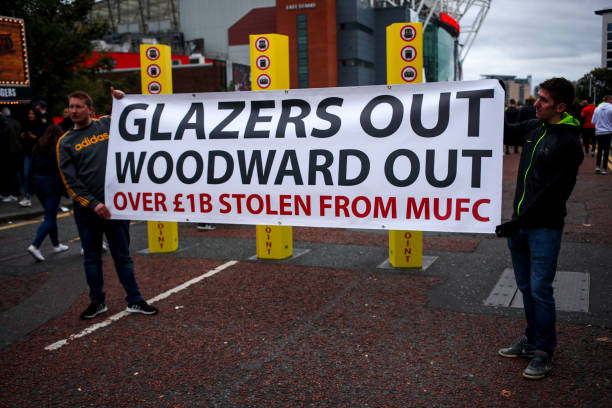
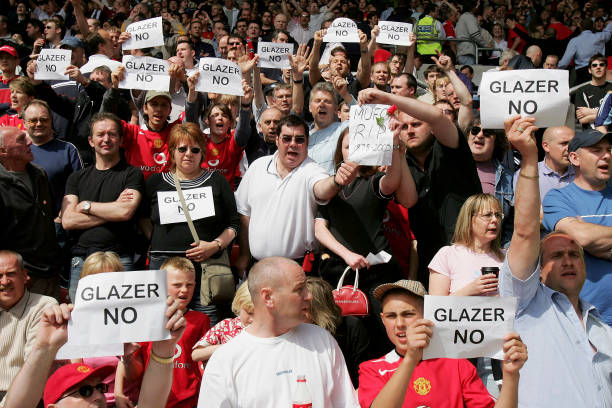
Manchester United has become one of the best-known examples of this issue. When the Glazer family took control of the club in 2005, the acquisition was carried out through a leveraged structure. Part of the transaction’s financing therefore relied on debt, and that debt was placed within the structure linked to the club. Eurosport estimated in 2021 that the various financial charges and transactions associated with the Glazers’ ownership had cost Manchester United approximately €1.25 billion. The debt-financed acquisition structure notably left the new group responsible for repaying the debt and its interest.
This is precisely why LBOs are regularly debated in soccer: an owner can invest relatively little equity compared with the total acquisition price, while the club’s operations then contribute to servicing the debt. The central question therefore becomes how the risk is distributed: who finances the acquisition, who carries the debt and which resources are used to repay it?
Manchester United, Lille and Lyon : Three clubs to show the limit
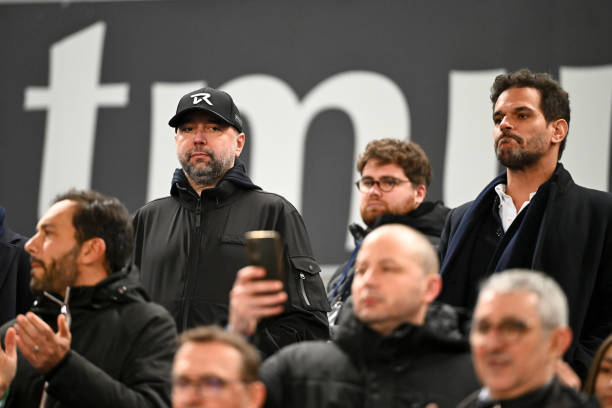
European soccer provides several examples that help illustrate the potential consequences of a leveraged buyout. Manchester United is the most widely publicized case. But in France, Gérard Lopez’s takeover of Lille in 2017 also illustrates the difficulties such a structure can encounter when a club can no longer support its debt. According to Le Point, Lopez used an LBO to acquire Lille, and the club’s debt subsequently increased significantly. In 2020, its main creditor, Elliott Management, ultimately pushed for the sale of the club to Callisto Sporting, a subsidiary of Merlyn Partners, after Lopez was no longer able to repay the debt.
However, an important distinction must be made: an LBO does not automatically mean bankruptcy or poor management. It is first and foremost a financial tool. Its outcome depends on the level of debt, the price paid for the company, the terms of the financing, interest rates, the company’s ability to generate cash and the evolution of its business. An LBO can work if the company generates enough cash flow to gradually repay its debt and if its value increases. Conversely, when revenues fall or financial costs become too heavy, debt can significantly weaken the company.
The case of Olympique Lyonnais provides an additional nuance. John Textor’s acquisition of OL in 2022 was carried out through Eagle Football, his holding company. But the transaction should not be presented as a straightforward LBO comparable to the Glazers’ structure at Manchester United. Eagle Football acquired shares in OL Groupe for approximately €798 million, while Textor also carried out an €86 million capital increase, with €50 million earmarked for repaying debt linked to Groupama Stadium. The transaction therefore combined several sources of financing, including both debt and equity.
This distinction is essential to understanding the current debate surrounding club acquisitions. A debt-financed takeover does not necessarily mean that “the club borrowed money to be bought” in the strict sense. Legally and financially, the debts can be carried by different companies within the structure, particularly the acquisition holding company, and then repaid using the financial flows generated by the assets held within the group. The exact structure therefore needs to be examined on a transaction-by-transaction basis.
The debate surrounding LBOs in soccer ultimately comes from a paradox: the mechanism can allow an investor to quickly raise the capital needed to take control of a club, but in return it creates a financial obligation that can weigh on the entire group for years. A petition filed in 2025 on the French National Assembly’s platform specifically criticized the use of LBOs in professional sports clubs, highlighting the risks associated with debt and dependence on clubs’ future revenues. The petition, which was closed after failing to reach the required signature threshold, nevertheless illustrates the public debate surrounding this type of financing.
Ultimately, understanding an LBO means remembering a three-step process: an investor creates or uses a holding company, the holding company takes on debt to finance part of the acquisition, and the revenues generated by the acquired company then contribute to repaying that debt. As long as the business generates enough cash flow, leverage can make it possible to build a profitable transaction for the investor. But in a sector as unpredictable as soccer, where revenues are directly tied to sporting performance, debt can also become a major constraint. It is this tension between leverage and financial risk that explains why LBOs occupy such an important place in debates over club ownership.