

For nearly a decade, Manchester City has built one of the most dominant periods in recent English soccer history. Since the club was taken over by the Abu Dhabi group in 2008, the Citizens have transformed themselves into a major force in European soccer. But behind that rise lies an unprecedented legal case. After several years of investigation and a hearing held behind closed doors in 2024, Manchester City was found guilty, according to information revealed on September 25, 2026, of 114 of the 115 charges examined concerning Premier League financial rules. The club continues to dispute the charges, however, and insists that the proceedings are not over.
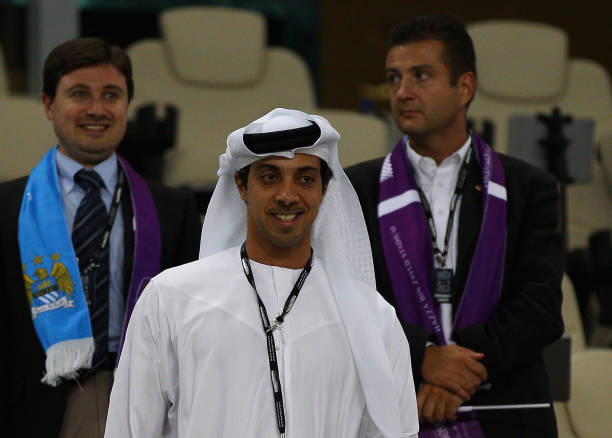
Suspicions of artificially inflated revenue and hidden payments
At the heart of the case lies a fundamental question: did Manchester City present a financial situation that differed from reality in order to comply with the economic control rules of English and European soccer?
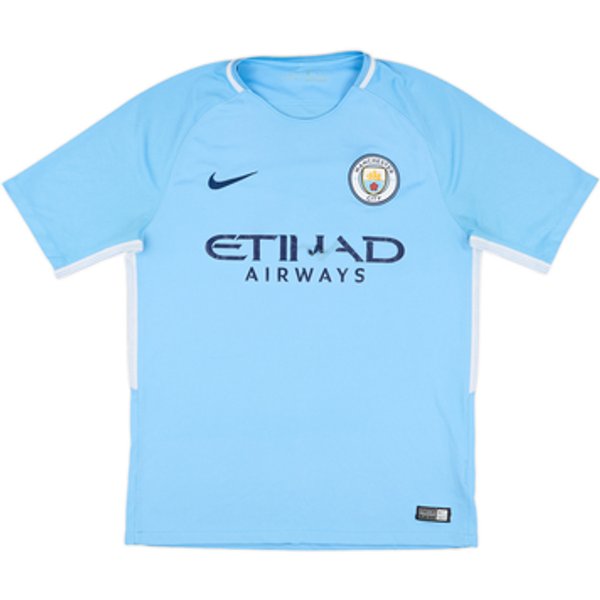
The charges mainly concern the period from the 2009-10 season through 2017-18. The Premier League alleges, among other things, that the club failed to provide accurate financial information regarding its revenue, expenses and certain contracts. A significant part of the case concerns commercial revenue, with suspicions that certain sponsorship agreements allowed the club to report higher amounts than those actually paid by its commercial partners.
One of the examples regularly cited concerns Etisalat. According to the evidence reported in the case, a contract presented as being worth nearly €19.5 million was allegedly funded directly by the sponsor to the tune of only around €1.8 million, with the remainder attributed to payments coming from the Abu Dhabi United Group, which was linked to the club’s owner. Similar questions were raised regarding several contracts with Etihad Airways. The stakes were significant: financial fair play rules are specifically designed to prevent an owner from directly injecting additional funds into their club by making them appear as commercial revenue.
The case also concerns the salaries of players and coaches. The Premier League alleges that City failed to disclose the entirety of certain payments included in contracts. Roberto Mancini’s case is particularly emblematic. During his time at Manchester City, between 2009 and 2013, the Italian officially received a salary corresponding to his managerial contract. At the same time, he was allegedly paid for consulting work with Al-Jazira, an Abu Dhabi-based club, under an arrangement that would have significantly increased his overall compensation. Mancini acknowledged on September 28 that he had a “double contract,” while maintaining that the issue did not concern him and that Manchester City was not guilty.
The case also includes allegations concerning the compensation of certain players and their image rights. The general argument put forward by the Premier League is therefore that a system was in place that allowed certain expenses to be understated in official accounts or certain revenues to be presented as coming from commercial partners when, according to the prosecution, part of the money had been funded through other means.
A case that goes beyond financial fair play
The City case is not limited to possible manipulation of revenue or salaries. Another particularly important aspect concerns the club’s cooperation with the Premier League’s investigators.
After the Football Leaks revelations published by Der Spiegel in 2018, the Premier League launched its own investigation. The leaked documents suggested, among other things, that Manchester City’s owner could indirectly fund part of sponsorship agreements presented as commercial revenue for the club. The Premier League subsequently requested numerous documents and pieces of information from City in order to establish the reality of its finances.
That is where another conflict emerged. Manchester City repeatedly challenged the Premier League’s requests and the procedure put in place to investigate the club. In 2020, a tribunal ordered City to hand over certain documents requested by the league. The British courts subsequently upheld the validity of the procedure. The refusal or delay in providing documents ultimately became a separate part of the charges.
This aspect also explains why the case became much broader than a simple financial fair play matter. The Premier League alleges that the club failed to meet its cooperation obligations throughout several seasons of investigation. In 2020, Manchester City had already been ordered to pay €10 million by the Court of Arbitration for Sport for its failure to cooperate with a UEFA investigation, after seeing the other European sanctions overturned on appeal.
The European context is important. In February 2020, UEFA had initially banned City from its European competitions for two seasons and imposed a €30 million fine. The Court of Arbitration for Sport later overturned the exclusion and reduced the fine to €10 million, finding in particular that the allegations concerning certain sponsorship agreements had not been sufficiently established within the UEFA proceedings, while still sanctioning the club for its failure to cooperate.
The current case is therefore different: it is being examined by an independent commission within the Premier League and covers a much broader set of rules and time periods. The charges announced in 2023 included allegations concerning financial information, player and manager compensation, profitability and sustainability rules, as well as cooperation with the investigation.
A punishement that could go far beyond a simple fine
The finding of guilt does not yet represent the final stage of the case. The question now dominating proceedings is the punishment. And on that front, the Premier League has a particularly wide range of options.
Manchester City could theoretically be fined, docked points or subjected to other restrictions. In the most severe scenarios discussed for several years, expulsion from the Premier League is also possible. A sufficiently large points deduction could itself have major sporting consequences, potentially even resulting in relegation. The club should be able to appeal whatever punishment is ultimately imposed.
Another particularly sensitive question concerns the trophies won during the period covered by the charges. Manchester City won several Premier League titles during that period, notably in 2012, 2014 and 2018, before entering an even more dominant era under Pep Guardiola. The possibility of challenging certain titles has been discussed since the beginning of the case, but it remains legally complex and, at this stage, is not an established decision.
That is precisely what makes this case historic. Manchester City continued to win while the proceedings moved forward: the club won several domestic titles and, in 2023, the Champions League, before completing the first four-peat of consecutive Premier League titles in history in 2024. Throughout that time, the allegations remained in the background of the entire project.
Manchester City, for its part, has maintained its line of defense. Following the verdict revelations, chairman Khaldoon Al Mubarak said that the club’s confidence in its ability to prove its innocence remained intact. The club has also stated that the proceedings are not over and that important stages still remain.
The Manchester City case is therefore far from over. But after nearly eight years of investigation, a trial lasting several weeks and 115 charges, the case has now reached a major turning point. For the Premier League, the task now is to determine how to punish a club found guilty of almost all of the offenses examined. For Manchester City, the stakes go far beyond a potential fine: they directly concern the sporting trajectory built since the Abu Dhabi takeover in 2008 and, potentially, how this period will be remembered in the history of English soccer.