

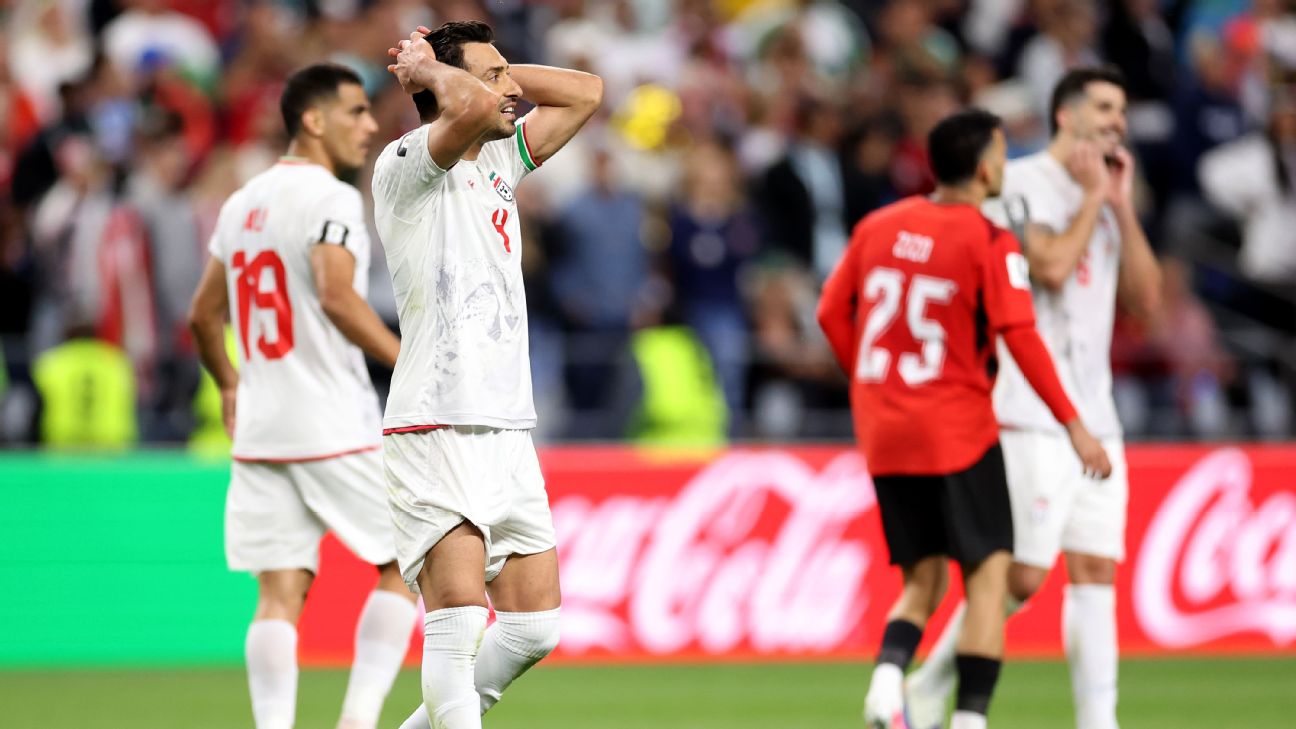
Mohamed Salah will walk out at AT&T Stadium on July 3 with Egypt in the World Cup Round of 32, a stage the Pharaohs have not reached in decades. Six days after drawing 1-1 with Iran in their group finale, Hossam Hassan’s side now face Australia, a team that squeezed through the expanded 48-team group phase on points accumulated across a mixed campaign. For both nations, this is genuinely new knockout-round ground at this level, and there is no head-to-head history between them to draw from.
What’s at stake
This is a straight knockout tie in the expanded 2026 World Cup Round of 32. Neither team has anything to manage mathematically at this point; it is win or go home. Egypt finished their group with a win over New Zealand, a draw against Belgium, and a 1-1 draw with Iran to advance. Australia took one win (2-0 over Turkey), one loss (0-2 to the USA), and a goalless draw with Paraguay. Both sides scraped through rather than dominated their groups, which makes the prize here, a place in the last 16, more meaningful given the paths taken to reach it.
A victory for Egypt would represent the furthest the Pharaohs have advanced at a World Cup in the modern era and would validate Hossam Hassan’s decision-making across the group stage. For Australia, reaching the last 16 would match or surpass the run Tony Popovic’s squad came into the tournament hoping to replicate from 2022. A loss ends the tournament immediately for the beaten side, with no second chances in the new format at this stage.
How they got here
Egypt’s last five competitive results read: W, D, D, L, W (Russia friendly, Brazil friendly, draw vs Belgium, win vs New Zealand, draw vs Iran). The group-stage pattern shows a team capable of taking points against strong opposition, Belgium were held 1-1, but also one that has struggled to put results beyond doubt. The 3-1 win over New Zealand was their most convincing performance, and the Iran draw that closed the group was enough to advance. Australia’s last five: L (Mexico friendly), D (Switzerland friendly), W vs Turkey 2-0, L vs USA 0-2, D vs Paraguay 0-0. Tony Popovic’s side scored twice against Turkey in their opener then went quiet, failing to score in their final two group matches.
Neither team arrived in this round with a settled group-stage position to protect. The standings data in context covers a separate group and is not applicable to Australia or Egypt directly. What the results show is that Australia have gone three matches without scoring heading into this knockout game, while Egypt have found the net in four of their last five across all competitions.
Key battle to watch
Mohamed Salah against Australia’s defensive line is the central tactical question of this match. Salah is in the Egypt squad and has been central to their attack throughout the tournament. Australia’s backline, organized around Harry Souttar and Milos Degenek, held Turkey and Paraguay without conceding but was carved open by the USA. If Salah drops into half-spaces to receive and drive at goal, rather than staying wide and static, Souttar’s ability to track lateral movement off the ball will define how well Australia contain Egypt’s best threat. On the other side, Australia’s forward line, including Mathew Leckie and Awer Mabil, will test Egypt’s fullbacks in transition, particularly if Australia play on the counter as they did in stretches against Turkey.
Key Stats
World Cup knockout bracket

Knockout results, aggregate scores across legs; winners in bold, penalty shootouts noted.
Head to Head
Our Prediction
Egypt’s group stage form, specifically their ability to avoid defeat against Belgium and pick up the win over New Zealand, suggests a team with a functioning defensive structure and a match-winner in Salah. Australia’s three-match scoring drought is a real problem at the knockout stage. Egypt look the more balanced side right now and are likely to control enough of the game to advance, though Australia’s organization means this will not be straightforward.
 Australia
 Egypt
Egypt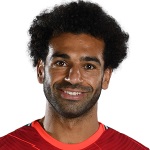 Mohamed Salah