

On June 25, 1982, in Gijón, northern Spain, the soccer world witnessed one of the greatest scandals in World Cup history. A World Cup match between West Germany and Austria quickly turned into a parody of soccer in front of a global audience. Passes became meaningless, attacks disappeared, and the players practically stopped competing. More than forty years later, the match remains one of the greatest traumas in World Cup history. Because it exposed the flaws of FIFA’s tournament format. Because it permanently damaged the image of two European national teams. And above all, because it crushed the dream of a heroic Algerian side.

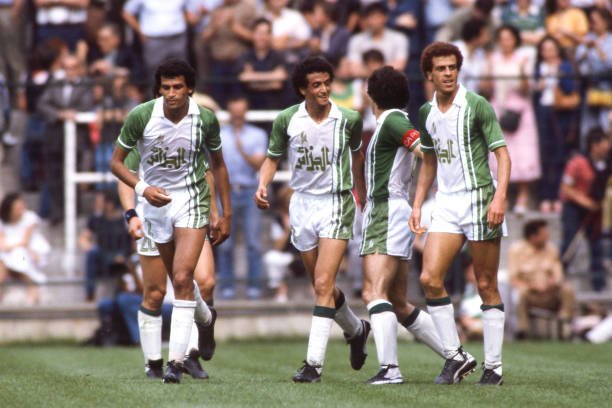
Algeria shakes the group and disrputs the established order
The 1982 World Cup was supposed to be routine for West Germany. Finalists in the previous two tournaments and reigning European champions, the Germans arrived in Spain convinced of their superiority. Austria, meanwhile, possessed an experienced and talented generation capable of reaching the knockout stage.
Almost nobody was talking about Algeria.
Yet in the opening game, the Desert Foxes shocked the world by defeating West Germany 2-1. Rabah Madjer, Lakhdar Belloumi, and their teammates played a fast, technical, attacking brand of soccer that completely surprised the Germans. German media had approached the game with open arrogance beforehand, with some players already predicting how many goals they would score.
That Algerian victory completely changed the dynamics of the group. Before the final game between West Germany and Austria, the math became simple: a German victory by one or two goals would qualify both European neighbors while eliminating Algeria.
The problem was that the Germans already knew exactly what result they needed before kickoff.
At the time, the final group-stage matches were not played simultaneously.
A match played… then abandoned
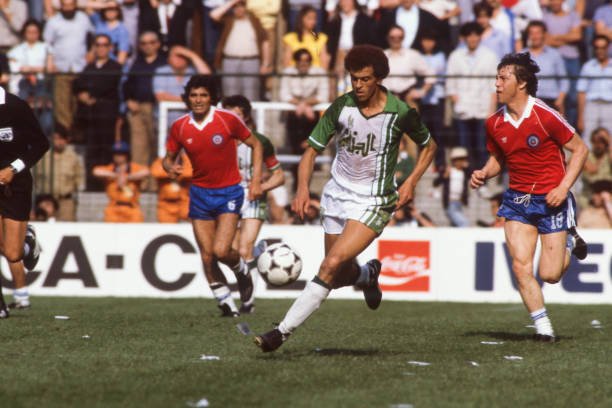
On June 25, 1982, in Gijón, the atmosphere already felt tense from kickoff. Austria knew a narrow defeat would be enough. West Germany knew precisely which scoreline would send them through.
After only ten minutes, Horst Hrubesch scored for the Germans. At that exact moment, both teams were qualified.
And suddenly, the match stopped.
Not officially. But in reality, yes.
The Germans stopped seriously attacking. The Austrians stopped pressing. Passes became sideways and harmless. For more than 80 minutes, both teams simply kept possession without trying to play real soccer.
The Spanish crowd quickly understood what was unfolding in front of them. Fans waved white handkerchiefs. Chants of “Fuera! Fuera!” (“Out! Out!”) echoed through the stadium. Some journalists even walked out of the press box before the end because the spectacle had become so grotesque.
The German commentator on public broadcaster ARD famously urged viewers to turn off their televisions — an almost unimaginable moment in sports broadcasting.
Meanwhile, Algeria, who had completed its matches the previous day with four points, watched helplessly from its hotel as qualification slipped away.
Officially, no rules had been broken. But for a huge part of the world, soccer lost something that day.
The scandal changed World cup forever
The “Match of Shame” immediately caused outrage around the world. FIFA, embarrassed by the situation, could not punish either team because there was no proof of corruption or explicit collusion. Yet the image of the tournament had been severely damaged.
West Germany would eventually reach the final, losing to Italy, but that generation would forever remain associated with Gijón. In Austria as well, the match became a permanent stain on the history of the national team.
Most importantly, the scandal forced FIFA to permanently change the organization of future World Cups.
Since 1986, all final group-stage matches have been played at the same time in order to prevent teams from knowing in advance which result benefits them. Today, simultaneous kickoffs feel completely normal in modern soccer — but the rule was born directly from the disgrace of 1982.
Algeria, meanwhile, entered soccer history as the victim of the scandal. Their tournament remains one of the greatest African performances of that era and an enduring symbol of sporting injustice.
 Algeria
 Germany