

As the 2026 FIFA World Cup approaches, African national teams arrive with unprecedented ambition. Morocco, historic semifinalists in 2022, want to prove their run was no accident. Senegal, still powered by a gifted generation, hopes to finally break through another ceiling. But before these modern ambitions, every African achievement at the World Cup felt like a shockwave across the soccer world. For decades, African teams were viewed by major European and South American nations as entertaining outsiders rather than serious contenders. Yet over time, they built their legacy through performances that permanently changed how the continent was perceived.
This piece is part of more of our all-time great football stories.
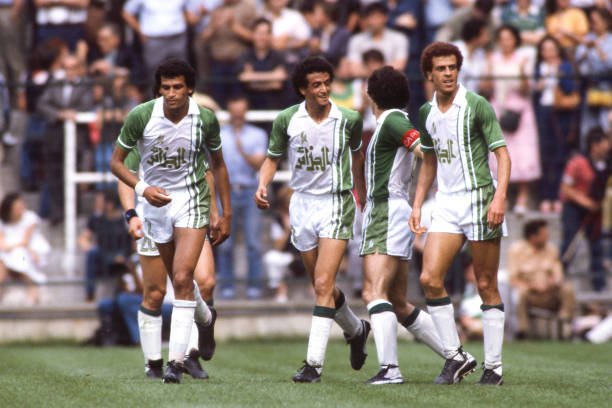
Algeria’s win over West Germany in 1982: a shock without a fairytale ending
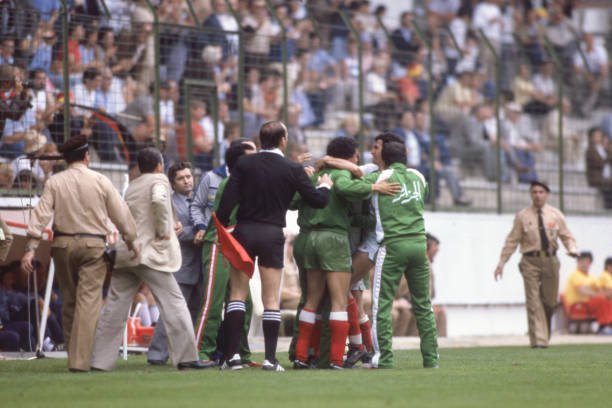
On June 16, 1982, Algeria produced what was then considered one of the greatest upsets in World Cup history. Facing West Germany, the reigning European champions and one of the tournament favorites, the Desert Foxes won 2-1 thanks to goals from Rabah Madjer and Lakhdar Belloumi.
The world discovered an Algerian side that was quick, fearless and tactically sharp. The Germans, meanwhile, had walked into the match with open arrogance, some players talking beforehand about how many goals they expected to score.
The victory quickly became much bigger than soccer itself. At a time when African soccer was still heavily underestimated, Algeria proved that a nation from the continent could defeat a global powerhouse on the biggest stage imaginable.
But the story would end in heartbreak. Despite earning another victory against Chile, Algeria was eliminated after the infamous “Disgrace of Gijón” between West Germany and Austria — the scandalous match in which both European teams effectively stopped playing once the scoreline suited them.
The outrage surrounding that match eventually pushed FIFA to introduce simultaneous final group-stage games at future World Cups.
Algeria did not advance further, but symbolically, the team opened the door for future African generations.

Senegal 2002: when the Lions roared at the world
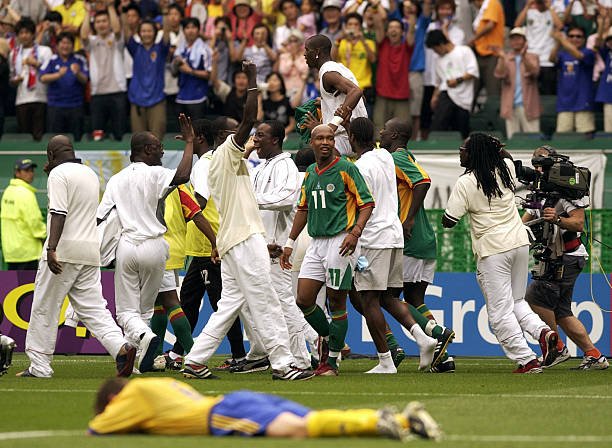
Senegal entered the 2002 World Cup as complete newcomers. Their very first World Cup match immediately gave them a monumental challenge: defending world and European champions France in the tournament opener.
The script seemed already written.
Instead, on May 31, 2002, the Lions of Teranga stunned the soccer world. Thanks to a goal from Papa Bouba Diop, Senegal beat France 1-0 in a performance built on physical power and fearless discipline.
The image of the Senegalese players dancing around their goal scorer instantly became iconic.
But Senegal did not stop there. Led by El-Hadji Diouf, the team reached the quarterfinals after eliminating Sweden thanks to Henri Camara’s golden goal.
This squad captivated the world not only because of its results, but also because of its joyful and attacking style of soccer. In just a few weeks, Senegal became one of the tournament’s biggest sensations and proved that African soccer was capable not only of isolated upsets, but also of deep and consistent World Cup runs.

Cameroon 1990 : pioneers
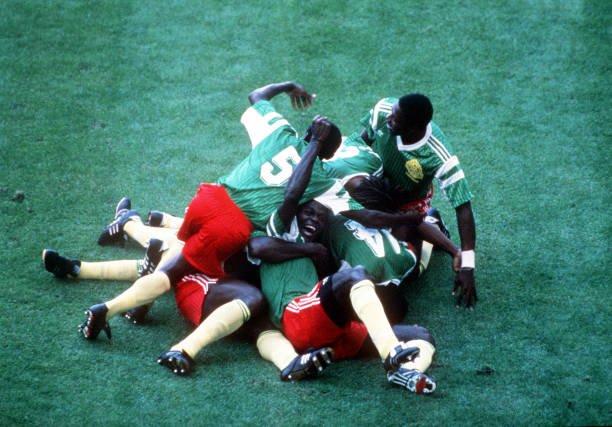
Before Senegal, before Ghana, and before Morocco, there was Roger Milla’s Cameroon.
In 1990, nobody expected the Indomitable Lions to make history. Yet from the very first game, Cameroon shocked the entire world by defeating Diego Maradona’s reigning world champions Argentina.
That victory launched an unforgettable run.
Driven by the incredible energy of Roger Milla, then 38 years old, Cameroon defeated Romania and became the first African nation ever to reach the World Cup quarterfinals. Milla’s legendary celebrations near the corner flag became one of the defining images in World Cup history.
The quarterfinal against England remains one of the greatest matches the tournament has ever seen. Cameroon led 2-1 in extra time and believed it was on the verge of an impossible achievement before eventually losing 3-2.
Despite the elimination, that team permanently transformed global perceptions of African soccer. For the first time, an African nation was no longer viewed as a fun outsider, but as a genuine threat to the traditional powers of world soccer.

Ghana 2010 : one kick away from eternity
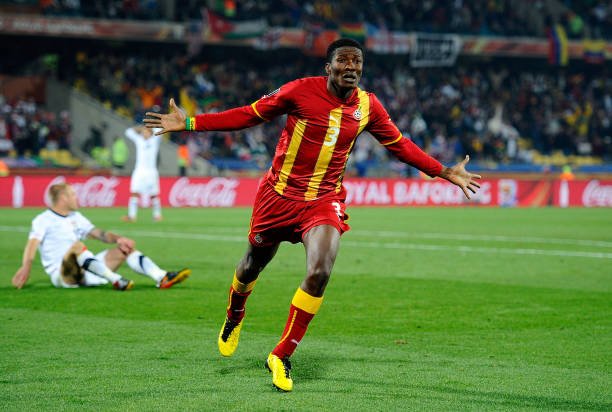
The 2010 World Cup took place in South Africa, the first World Cup ever hosted on African soil. Ghana quickly became the continent’s last remaining hope.
The Black Stars defeated the United States in the Round of 16 and found themselves one game away from a historic semifinal against Uruguay.
The quarterfinal descended into pure drama.
In the final seconds of extra time, Dominic Adiyiah’s header was stopped on the goal line by the hands of Luis Suárez. The Uruguayan was sent off, and Ghana received a penalty that could make them the first African semifinalist in World Cup history.
Asamoah Gyan stepped up.
His shot crashed off the crossbar.
Minutes later, Ghana lost in the penalty shootout.
That defeat remains perhaps the cruelest moment in African soccer history. Ghana had history at its feet, then watched the dream vanish in the space of a few seconds.
Yet the team carried an entire continent on its shoulders for weeks during a World Cup hosted in Africa for the very first time.

Morocco 2022: the furthest any African team has gone
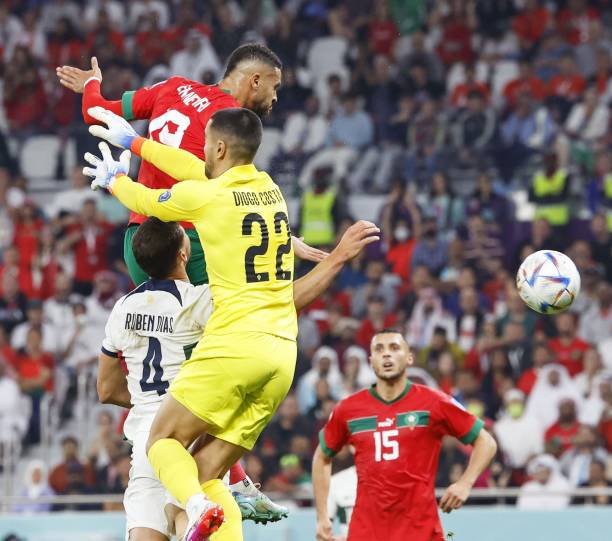
Morocco did not simply produce an upset in 2022. The Atlas Lions changed history.
Before them, no African nation had ever reached a World Cup semifinal. Yet Morocco accomplished the unthinkable through a run that often felt surreal.
Belgium was defeated. Spain was eliminated on penalties. Then came Cristiano Ronaldo’s Portugal, overcome through extraordinary defensive organization and the brilliance of goalkeeper Yassine Bounou.
Under manager Walid Regragui, Morocco impressed with tactical discipline, defensive intensity and sheer collective belief. Global audiences discovered a team that could suffer, resist and frustrate the biggest nations in world soccer.
But beyond the field, Morocco’s journey carried enormous cultural and symbolic meaning. Across Africa and throughout the Arab world, the team became a source of collective pride. The images of players celebrating victories with their mothers also deeply resonated around the globe.
Even after losing to France in the semifinals and Croatia in the third-place match, Morocco left Qatar having achieved the greatest accomplishment in African soccer history.
Because in 2022, for the first time, Africa did more than dream about reaching the top of world soccer.
It touched it.

 Algeria
 Morocco