

“No one ever hates teams that don’t win.”
That single sentence may perfectly capture the Argentine paradox.
Argentina is probably the most polarizing national team in world soccer. For many, it represents the sport’s ultimate romantic ideal: Diego Maradona, Lionel Messi, La Bombonera packed to the rafters, endless chants, and an unmatched popular passion. For others, however, it embodies the exact opposite: arrogance, constant provocation, gamesmanship elevated to an art form, and a brand of soccer nationalism that many find impossible to embrace.
Canal+’s French documentary It’s Not a Bad Thing to Love Argentina, directed by Hervé Mathoux, begins with precisely that contradiction. Why does a team capable of inspiring millions of fans also generate such intense hostility, particularly in Europe? The answer extends far beyond soccer. It touches on history, national identity, and the unique way Argentines understand competition.

Soccer as national identity
Argentina, soccer is not simply a sport.
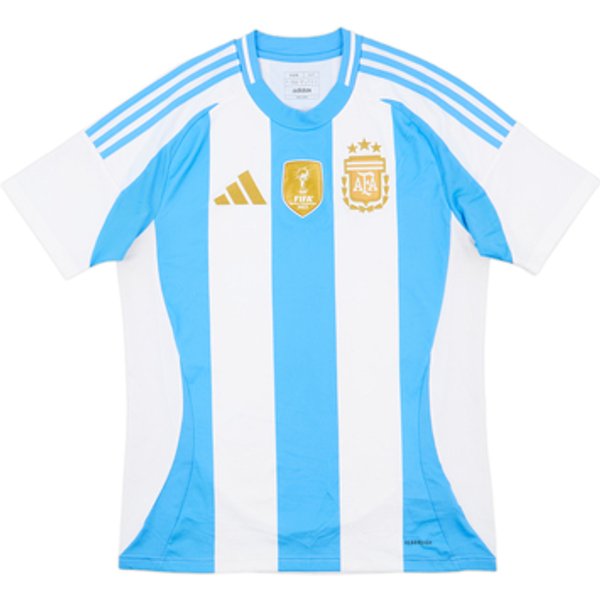
Sociologist Pablo Alabarces argues that soccer serves as one of the central narratives of Argentine national identity. Since the beginning of the 20th century, the national team has become an instrument of nation-building, where every victory carries meaning far beyond the field.
Within that framework, losing is never just losing. Winning becomes proof of the superiority of an entire soccer culture. Victories are celebrated as symbolic triumphs over the world’s great powers, particularly those in Europe.
That worldview helps foster a mentality in which the obsession with winning can sometimes justify behaviors that, from the outside, appear provocative or unsportsmanlike.
Vivezza Criolla : a philosophy that divides options
It is impossible to understand Argentina without discussing viveza criolla.
This cultural concept refers to the belief that a clever person knows how to bend the rules, exploit loopholes, and seize every possible advantage.
In Argentine soccer, that mentality has often been celebrated.
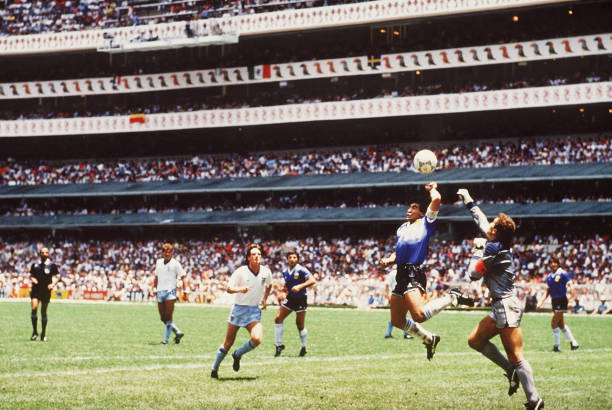
Diego Maradona’s infamous “Hand of God” goal in 1986 remains the most famous example: an act of cheating that was openly embraced and transformed into a patriotic symbol in the aftermath of the Falklands War.
That culture has never truly disappeared.
Today, it can still be seen in:
- tactical fouls;
- deliberate time-wasting;
- verbal taunting;
- celebrations designed to unsettle opponents.
What many Argentines view as cleverness or competitive intelligence is often seen elsewhere as poor sportsmanship.
Aguante : celebrating confrontation

Pablo Alabarces’ research on Argentine supporters shows that the concept of aguante—roughly translated as “endurance” or “standing your ground”—lies at the heart of the country’s soccer culture.
Aguante is about far more than simply supporting your team.
It also celebrates:
- masculinity;
- physical courage;
- the willingness to answer provocation;
- verbal—and sometimes physical—confrontation.
Within this culture, never backing down is considered a virtue.
That mentality also shapes the national team’s players. From Javier Mascherano to Emiliano Martínez, Juan Sebastián Verón, Leandro Paredes, and Rodrigo De Paul, many have openly embraced the idea that winning also requires dominating the psychological battle.
Paredes’ infamous shot toward the Netherlands bench during the unforgettable 2022 World Cup quarterfinal perfectly illustrated that mindset.
To Argentine fans, this reflects competitive fire.
To opposing supporters, it often comes across as arrogance.
A team that embrace the villain role

Few national teams have embraced the role of the villain quite like Argentina.
The Albiceleste has never appeared overly concerned with being universally loved.
If anything, its players sometimes seem to enjoy getting under their opponents’ skin.
No player embodies that culture more than Emiliano Martínez.
Since the 2022 World Cup, the goalkeeper has become the face of Argentina’s provocative identity through:
- controversial celebrations following the World Cup Final;
- his dancing before penalty shootouts;
- obscene gestures while receiving the Golden Glove trophy;
- repeated mockery of opposing teams.
In Argentina, many see him as an extraordinary competitor.
Elsewhere, he is frequently portrayed as one of the most disliked athletes of his generation.
The 2022 World Cup dramatically altered Argentina’s international image.
Before Qatar, Lionel Messi enjoyed an almost universally positive reputation.
Winning the World Cup, however, fundamentally changed perceptions of the national team.
The heated confrontation with the Netherlands after the quarterfinal remains one of the tournament’s defining moments. Messi’s now-famous “¿Qué mirás, bobo?” (“What are you looking at, fool?”) directed toward a Dutch player instantly became one of the tournament’s most viral moments.
Days later, several Argentine players continued provoking opponents during their championship celebrations.
Yet it was in 2024 that the controversy reached another level.
Following Argentina’s victory in the 2024 Copa América, several Argentine internationals were filmed on Enzo Fernández’s phone singing a chant containing racist and transphobic language directed in particular at French players of African descent.
The footage sparked widespread international outrage, created diplomatic tensions, and reinforced the image of a national team many already considered disrespectful far beyond the boundaries of the field.
It is also the starting point of Hervé Mathoux’s documentary, which attempts to separate stereotypes from a far more nuanced reality.
An arrogance rooted in a unique national identity
Argentina has long cultivated a distinctive image of itself within South America.
Pablo Alabarces argues that the country has frequently defined itself as the continent’s most “European” nation, positioning itself in contrast to the stereotype of a more “tropical” Brazil.
That self-perception has fostered a sense of exceptionalism that also finds expression in the country’s sporting narratives.
Such confidence can easily be interpreted by opponents as arrogance.
Recent success has only reinforced that perception.
Over the past two decades, several major episodes have helped shape Argentina’s modern reputation.
In 2006, Argentina exited the World Cup after losing a tense penalty shootout to Germany in a quarterfinal filled with confrontation and hostility.
In 2007, a bitter rivalry with Chile intensified during the FIFA U-20 World Cup. Argentina’s provocations following Chile’s semifinal defeat left lasting resentment, which many Chilean supporters felt was finally avenged during the Copa América Finals of 2015 and 2016.
Five years later came the 2021 Copa América.
Winning the tournament on Brazilian soil was celebrated throughout Argentina as a historic act of revenge while reigniting a renewed sense of national superiority.
Then came 2022.
Argentina’s third World Cup triumph amplified every existing criticism. The confrontations with the Netherlands, Emiliano Martínez’s repeated provocations, and the celebrations following the final became defining images for many neutral observers.
Finally, the 2024 Copa América once again fueled the controversy, as the racist chant sung by several Argentine players triggered an international debate that extended well beyond the world of soccer.
Hated… because it wins ?
Anthropologist Christian Bromberger argues that great teams become extraordinarily powerful symbols of identity. As a result, they inevitably attract admiration, jealousy, and symbolic rivalry.
Argentina combines several characteristics that are rarely found together:
- it boasts two of the greatest icons in soccer history in Diego Maradona and Lionel Messi;
- it proudly claims a unique soccer culture;
- it openly embraces provocation;
- it celebrates a form of competitive cunning that many others condemn;
- and it wins.
Since 2021, the Albiceleste has captured two Copa América titles, one Finalissima, and one FIFA World Cup.
Every new trophy strengthens its legacy.
It also deepens the resentment felt by many of its rivals.
That may ultimately be the central conclusion of Hervé Mathoux’s documentary.
Argentina is not simply disliked because it provokes opponents or because it sometimes pushes the boundaries of fair play.
It is disliked because it represents a radically different vision of soccer—one in which victory takes precedence over elegance, confrontation is considered part of the spectacle, and national identity is expressed as much through the songs in the stands as through the action on the field.
That uniqueness fascinates as much as it irritates, making the Albiceleste one of the most admired—and one of the most disliked—national teams in the history of world soccer.