

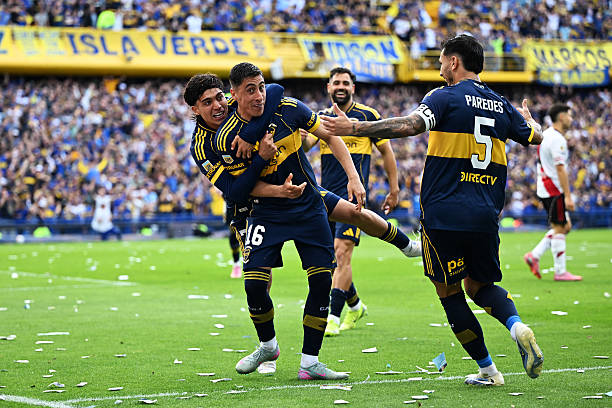
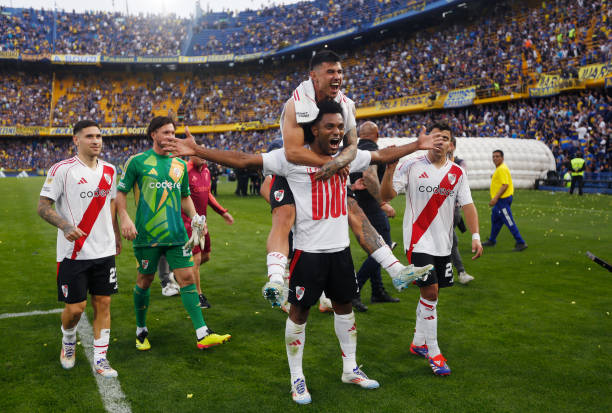
Boca Juniors vs River Plate, known across Argentina as the Superclásico, is widely called the most intense rivalry in world soccer. The two Buenos Aires giants have met more than 260 times since 1913, and a single result can define an entire season. No other fixture on the planet mixes this much history, noise, and raw emotion.
- Total Superclásicos since 1913: 266
How it started
Both clubs were born in the same working class corner of Buenos Aires. River Plate and Boca Juniors were founded a few years apart in the early 1900s in La Boca, the dockside neighborhood shaped by Italian immigration. They played their first official match on August 24, 1913, a game River won 2-1.
The split came when River moved north to the wealthier district of Núñez during the 1920s and 30s. Boca stayed rooted in La Boca, and the geography slowly turned into identity. One club became the team of the port and the people, the other the team of ambition and money.
That contrast still fuels the fixture today. It is not only a match between two teams, it is a clash between two versions of Argentina.
Two clubs, two identities
The nicknames tell the whole story. Boca fans are the Xeneizes, a nod to the Genoese sailors who filled La Boca, and they call themselves La Mitad Más Uno, meaning half of the country plus one. River earned the tag Los Millonarios, the Millionaires, after a run of expensive signings in the 1930s.
Their homes match the myth. Boca play at La Bombonera, a steep and narrow bowl that traps sound and shakes when the crowd jumps. River play at the Monumental, the biggest stadium in Argentina and the usual home of the national team.
- All time top scorer in the fixture: Ángel Labruna, 16 goals
The night in Madrid
The rivalry reached a peak the sport had never seen before in late 2018. For the first time ever, Boca and River met in the final of the Copa Libertadores, South America’s version of the Champions League. The first leg at La Bombonera ended 2-2 in a breathless swing of a game.
The second leg descended into chaos. Before kickoff at the Monumental, River supporters attacked the Boca team bus, injuring players and forcing repeated delays. CONMEBOL eventually moved the deciding match out of the continent entirely, all the way to the Santiago Bernabéu in Madrid.
There, on December 9, 2018, River won 3-1 after extra time. Juan Fernando Quintero smashed in a stunning long range strike, Gonzalo Martínez added a late third, and River lifted the trophy 5-3 on aggregate. It remains the single biggest moment in the history of the fixture.
River’s aggregate score in the 2018 final: 5-3
Why it feels different from everything else
No other derby carries this weight at both club and national level at the same time. Roughly seven in ten Argentine fans support either Boca or River, so the Superclásico is not just a city rivalry, it is the whole country picking a side. Players who have gone on to Europe often say the buildup is unlike anything they felt again.
The atmosphere is the real selling point. Storms of confetti, relentless singing, smoke, and a pressure that has broken careers and created legends. Diego Maradona, Alfredo Di Stéfano, Carlos Tevez, and Marcelo Gallardo all left their mark on this stage, and each new generation is measured against them.
What it means going forward
The rivalry stays incredibly close, which is exactly why it endures. Across more than a century, Boca hold a slim overall lead in wins, yet River have owned many of the recent headlines, including that 2018 final and several league nights since. Every meeting resets the argument from zero.
For a US audience, the timing has never been better. American interest in South American soccer keeps climbing, streaming access keeps improving, and each Superclásico now reaches US screens with both English and Spanish coverage.
Where to watch Boca vs River in the US
League Superclásicos are shown in the United States on Fanatiz, which carries Argentina’s Liga Profesional. When the two clubs meet in the Copa Libertadores, the match airs on beIN Sports, available through services like Fubo, Sling TV, and Fanatiz. From 2027, TelevisaUnivision takes over the Spanish language Libertadores rights in the US.
FAQ
Why is Boca vs River called the Superclásico? Because it is the biggest club match in Argentina and one of the most watched rivalries on earth. Both teams come from Buenos Aires, and together they hold the loyalty of most of the country.
Who has won more Superclásicos, Boca or River? Across all meetings since 1913, Boca hold a narrow overall edge in total wins, though the gap is small and River have taken many of the most famous recent games, including the 2018 Copa Libertadores final.
What happened in the 2018 Copa Libertadores final? Boca and River drew the first leg 2-2, then the second leg was moved to Madrid after an attack on the Boca bus. River won that game 3-1 after extra time to take the title 5-3 on aggregate.
Where can I watch Boca vs River in the US? League Superclásicos stream on Fanatiz, while Copa Libertadores meetings are carried by beIN Sports through Fubo, Sling TV, and Fanatiz. Both offer English and Spanish commentary.
 Argentina